Vomit on a mattress is one of those mid-night problems that feels worse than it is. The good news: if you act within the first 30 minutes, almost any mattress can be fully restored. The bad news: most people make the same two mistakes - they scrub instead of blot, and they soak the bed in water trying to rinse the smell out. Both push pathogens and odor deeper into the foam.
This is the workflow we use in the Banner Mattress review lab when test units come back contaminated. Five phases: contain, blot, treat, deodorize, disinfect, dry. It works on memory foam, hybrid, latex, and innerspring beds. We will flag the spots where foam-specific care matters.
TL;DR - The 6-Minute Version
- Strip bedding immediately and wash on the hottest cycle the fabric allows.
- Scrape solids with a disposable utensil into a trash bag.
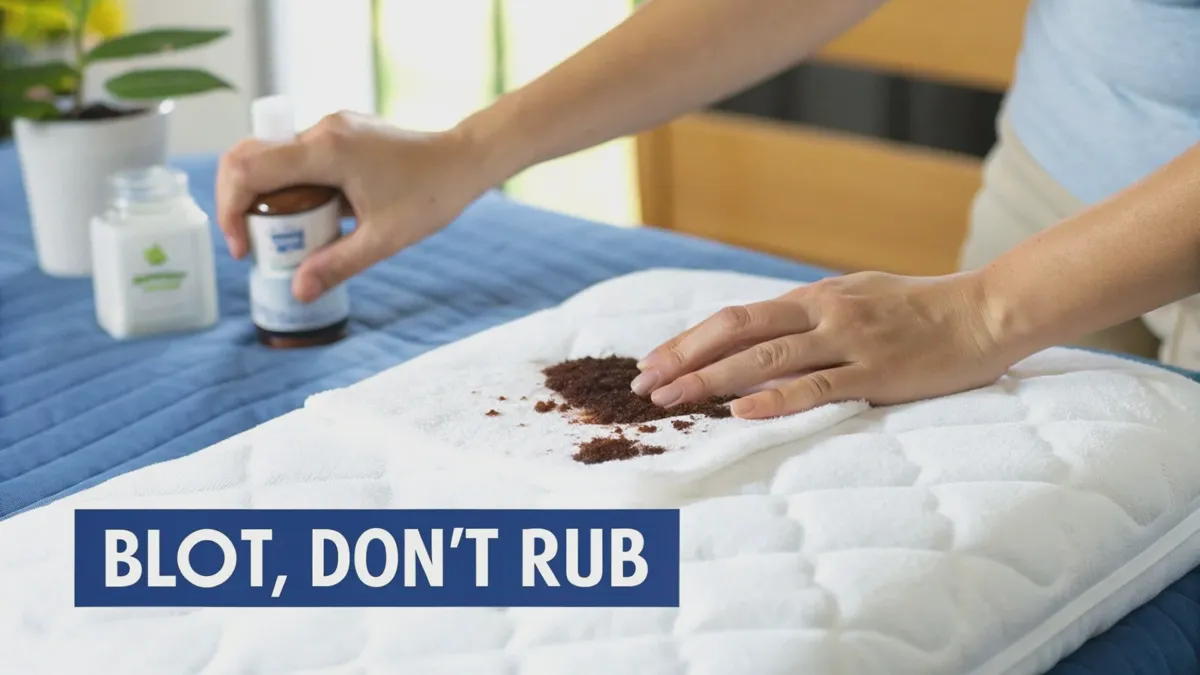
- Blot - never rub - with paper towels until no more liquid lifts.
- Spray a mix of 1 cup hydrogen peroxide, 3 tbsp baking soda, and a squirt of dish soap onto the stain. Let sit 15 minutes.
- Blot again, then cover the area with dry baking soda for 8+ hours and vacuum.
- Air-dry fully (6-12 hours, fan on) before re-dressing.
What You Will Need
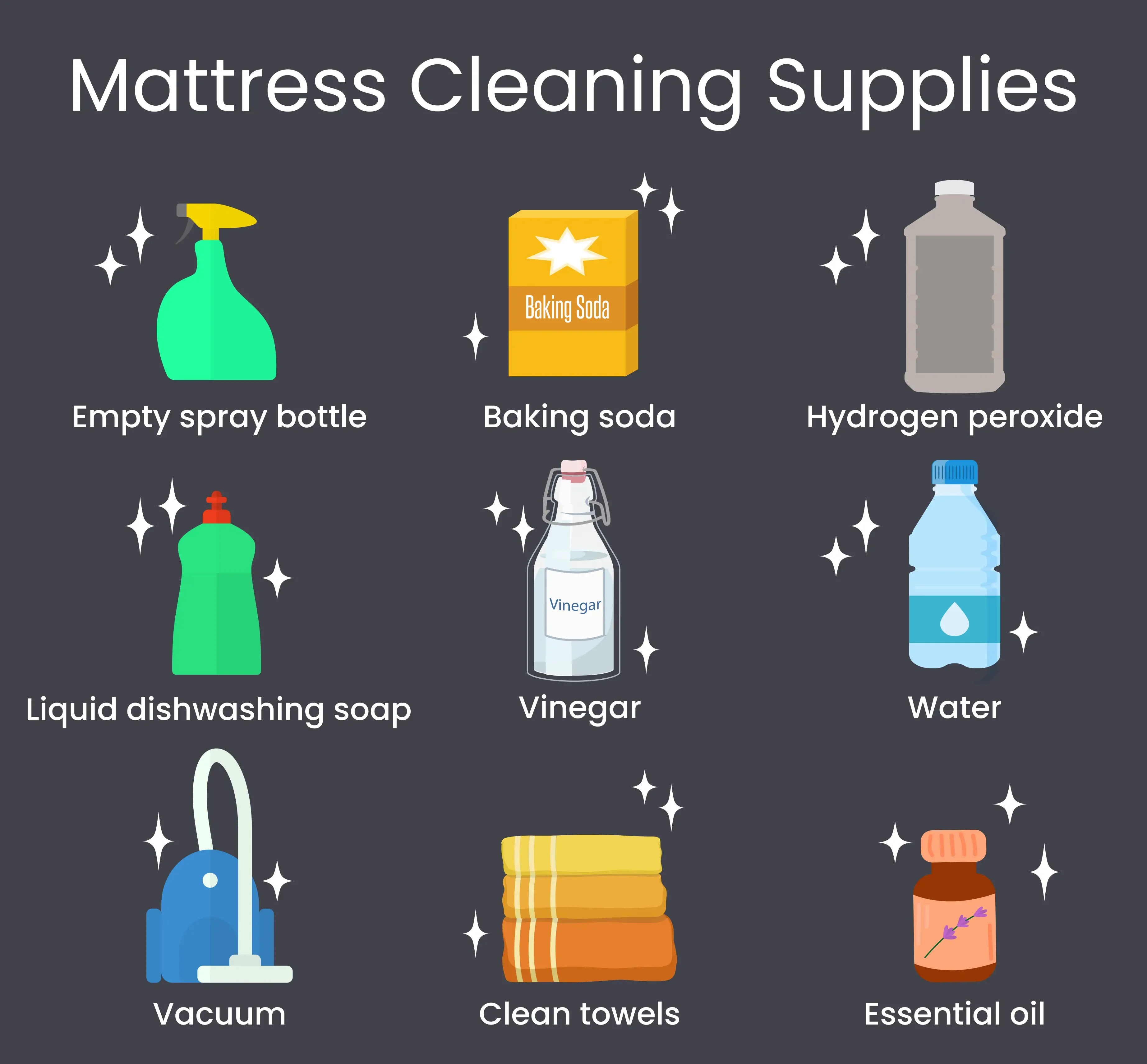
Most of this is already in the house. Skip the trip to the store unless you are out of hydrogen peroxide.
- Disposable gloves and a mask (vomit carries norovirus, rotavirus, and other GI pathogens)
- Paper towels and 2-3 clean white microfiber cloths
- A plastic spoon or scraper plus a sealable trash bag
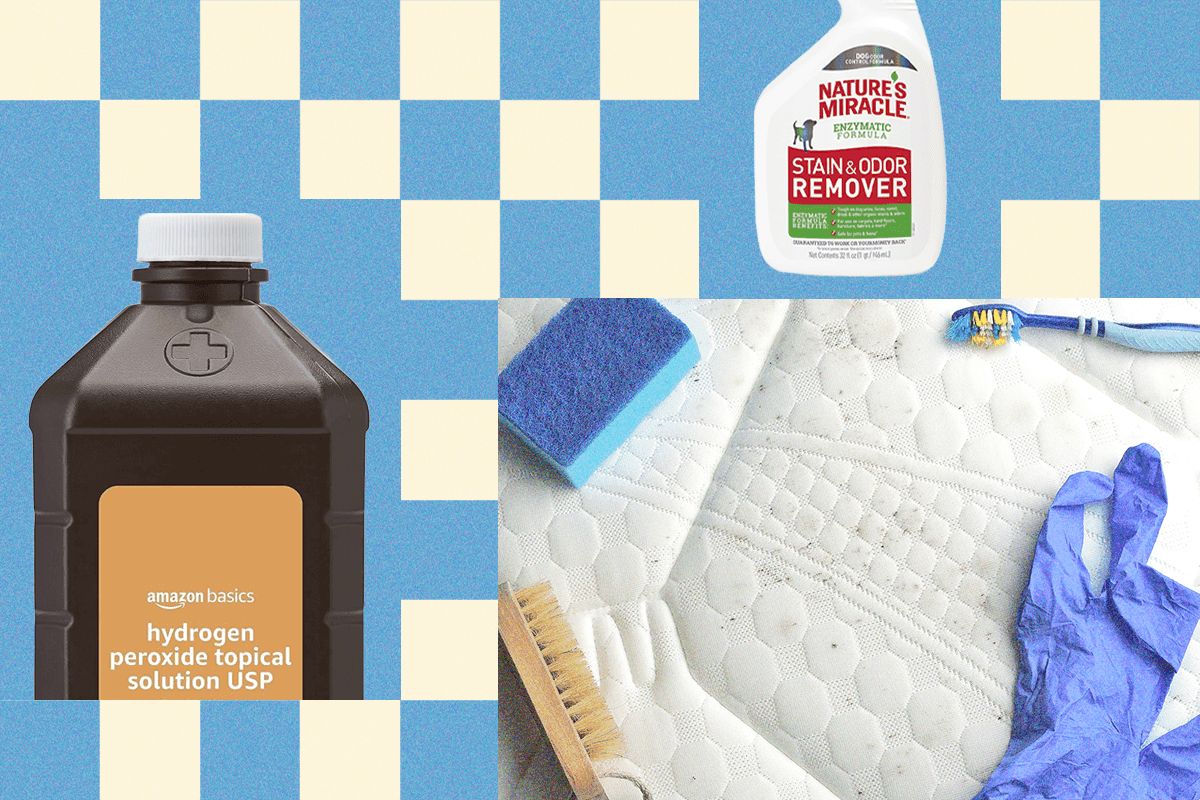
- 3% hydrogen peroxide, baking soda, mild dish soap, white vinegar
- An empty spray bottle and a vacuum with an upholstery attachment
- Optional but excellent: an enzyme cleaner (Nature's Miracle, Rocco & Roxie) for protein-based stains
Step 1: Contain and Strip the Bed
Glove up. Pull every layer off the bed - sheets, mattress protector, pillow shams - and bag anything that took a direct hit. If the bedding is washable, run it on the hottest cycle the care label allows with detergent plus a half-cup of white vinegar in the rinse. If it soaked through to a non-washable down comforter, dry-clean it; do not attempt to spot clean down at home.
Step 2: Scrape Solids, Then Blot
Use a disposable spoon or scraper to lift solids into a trash bag - do not press down. Then take dry paper towels and blot the wet area. Press, lift, replace; press, lift, replace. Work from the outside of the stain toward the center so you do not enlarge it. Keep going until a fresh towel comes up barely damp.
On memory foam, this blotting phase is where most damage gets prevented. Foam is open-cell - every drop you fail to blot now is a drop you have to chase out later with airflow. Take an extra five minutes here.
Step 3: Treat the Stain
Mix 1 cup of 3% hydrogen peroxide, 3 tablespoons of baking soda, and one teaspoon of mild dish soap in a spray bottle. Mist the stain until damp, not soaked. Let it sit for 15 minutes - the peroxide breaks down the proteins and bleaches discoloration, the baking soda neutralizes acid, and the dish soap lifts residue.
If the stain is set or you are dealing with old vomit, swap in an enzyme cleaner instead. Enzymes literally digest the organic matter and are the only product that reliably eliminates stuck-in odor. Spray, wait the full dwell time on the bottle (usually 10-15 minutes), then blot.
Vinegar-only method (gentler, slower): mix equal parts white vinegar and warm water. Spray, wait 10 minutes, blot. Use this on natural latex or any mattress under warranty that prohibits peroxide - check the manufacturer's care guide first.
Step 4: Deodorize With Baking Soda
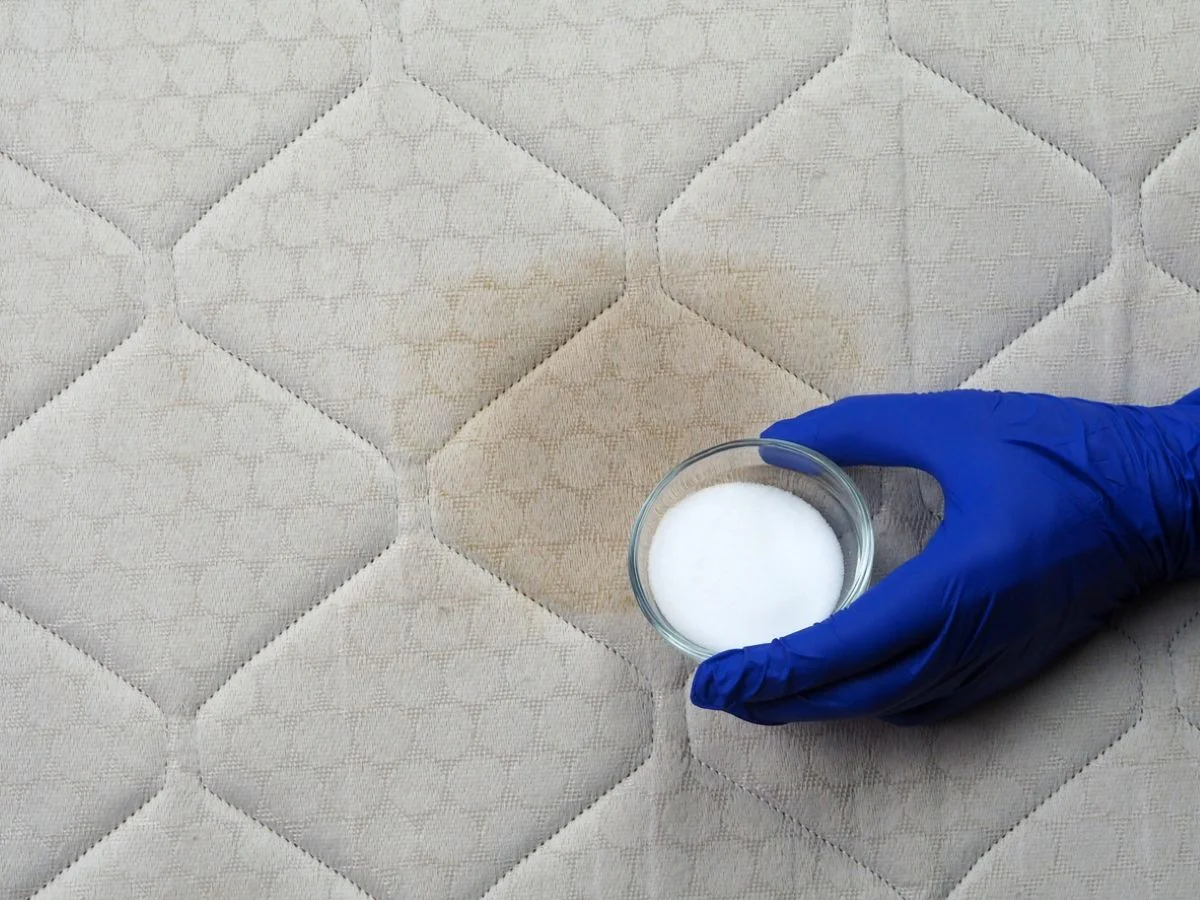
Once the treated area is blotted and damp (not wet), sift a thick layer of dry baking soda across the entire stained zone - at least an inch beyond the visible edge. Leave it for a minimum of 8 hours, ideally overnight. The baking soda pulls residual moisture and odor out as it dries.
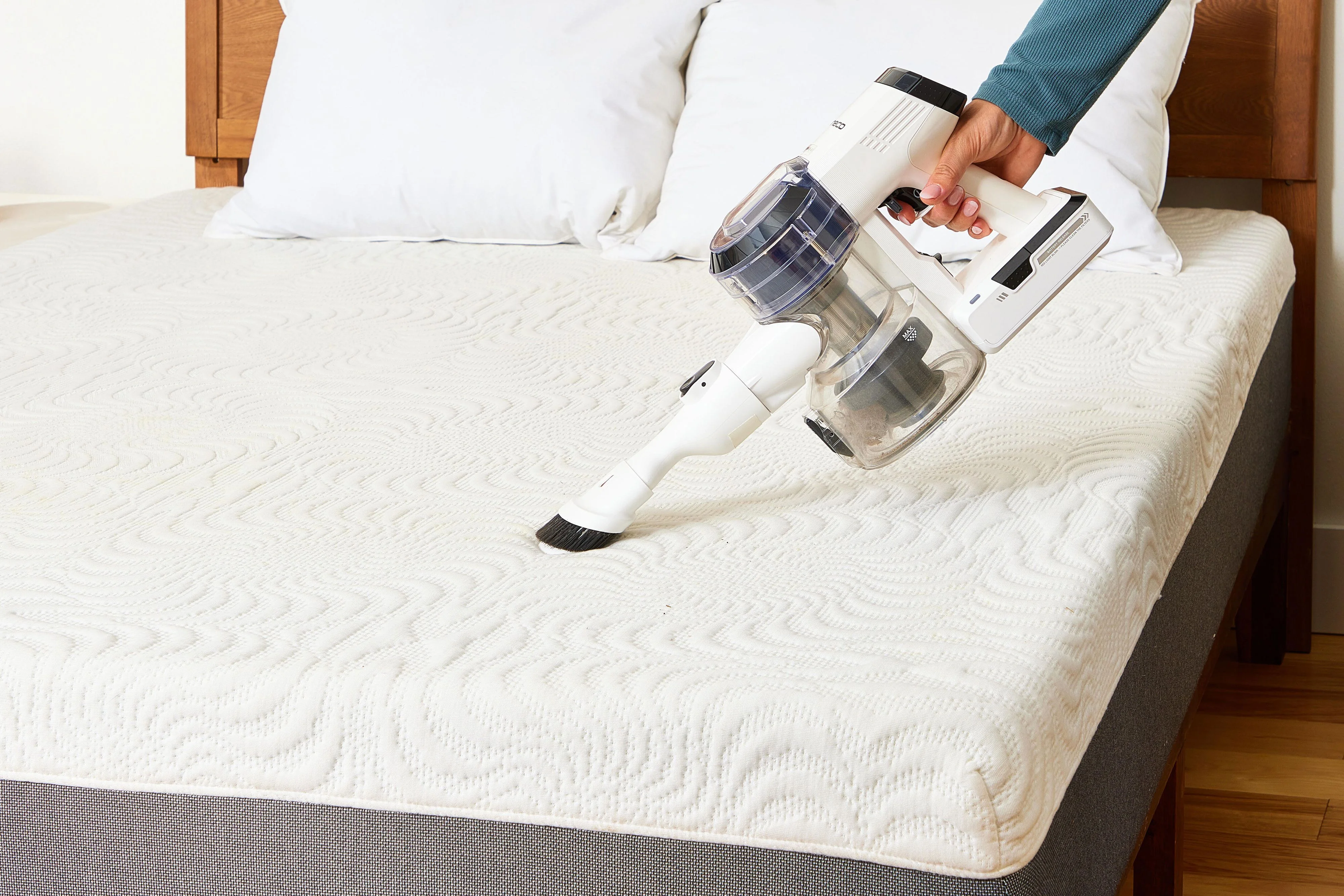
In the morning, vacuum it all up with the upholstery attachment. If you still smell anything, repeat - baking soda is cheap and a second pass costs you 30 seconds plus another night.
Step 5: Disinfect
Stomach bugs survive on fabric for days. After the stain is gone, lightly mist the area with 3% hydrogen peroxide (straight, not diluted) and let it air-dry. Peroxide kills norovirus and most GI pathogens. Avoid bleach on the mattress itself - it eats foam, weakens fibers, and almost always leaves a yellow halo.
Step 6: Dry Completely Before Re-Dressing
This is the step everyone shortcuts and regrets two weeks later when mildew sets in. Stand the mattress on its side if you can, point a box fan at it, and open the windows. Plan on 6-12 hours of active airflow. Avoid heat guns and hairdryers held within 8 inches - they melt foam adhesives and can void your warranty.
Run your hand across the spot before remaking the bed. If it feels even slightly cool or damp, give it more time. A bone-dry mattress is a mold-free mattress.
Do
- Blot from the outside of the stain inward to keep it from spreading.
- Use 3% hydrogen peroxide plus baking soda and dish soap as your default cleaning spray.
- Run an enzyme cleaner on set or smelly stains - it digests the protein.
- Air-dry for at least 6-12 hours with a fan before re-dressing the bed.
- Hot-wash all bedding with detergent plus a half-cup of white vinegar.
Don't
- Don't rub or scrub - it grinds vomit deeper into the fibers.
- Don't soak the mattress with water; you'll trap moisture and grow mold.
- Don't use bleach on the mattress surface; it damages foam and yellows fabric.
- Don't apply heat guns or hairdryers up close - they melt adhesives and void warranties.
- Don't skip the disinfection step; GI viruses survive on fabric for days.
Mattress-Type Notes
Memory foam: stick with the peroxide-baking-soda-dish-soap mix or an enzyme cleaner. Avoid vinegar in large doses - its acidity can break down some foam over repeated cleanings. Always over-dry foam beds; they hold moisture longer than you think.
Hybrid and innerspring: more forgiving. Vinegar, peroxide, and enzyme cleaners are all fair game. The bigger risk is moisture wicking down into the coils, where it can rust over time, so still keep the mattress as dry as possible.
Latex: avoid hydrogen peroxide and aggressive solvents. Stick to mild dish soap diluted in cool water, blotted on with a microfiber cloth. Latex naturally resists microbes, so disinfection demands are lower.
Pillow-top or quilted-cover beds: clean only the cover surface. Do not push liquid into the quilted layer - it has nowhere to drain.
Prevention: The Five-Dollar Fix You Should Already Own
A waterproof mattress protector is the single best decision you can make for any mattress, full stop. It catches vomit (and urine, sweat, spilled wine) at the protector layer instead of the mattress itself, turning a 12-hour cleanup into a 30-second wash cycle. It also keeps the bed warranty intact - most warranties void on staining.
Look for a fitted protector with a TPU or polyurethane membrane, not vinyl (vinyl crackles and sleeps hot). Cotton-terry top layer is the sweet spot for breathability.
Frequently Asked Questions
Can I use bleach to clean vomit off a mattress?
No. Bleach degrades polyurethane foam, weakens cotton and polyester fibers, and almost always leaves a yellow halo around the cleaned area. Hydrogen peroxide is the disinfectant you want - it kills norovirus and most GI pathogens without trashing the mattress.
How do I get the smell out if the stain is gone?
Two passes with baking soda usually does it: cover the area, leave 8+ hours, vacuum, repeat. If the smell persists, it's almost always residual protein deeper in the foam - switch to an enzyme cleaner, dwell 15 minutes, blot, then re-deodorize with baking soda.
What if the vomit soaked all the way through to the box spring?
Strip the bed, stand both pieces on edge, and treat each side independently. Foam mattresses may need 24+ hours of fan-driven airflow to dry through. If the box spring fabric is heavily soaked, sometimes the smarter call is to replace the box spring - they're far cheaper than the mattress itself.
How long should I wait before sleeping on the mattress again?
Wait until it is fully dry - that's the rule. For surface stains, 6-12 hours of active airflow is usually enough. For deep saturation, give it 24 hours minimum. Sleeping on a damp mattress is the fastest route to mildew.
Will this method void my mattress warranty?
Most warranties void on visible stains, regardless of cleaning method, so cleaning quickly is what protects you. The methods above are foam-safe at the dilutions listed. If you own a Saatva, Tempurpedic, Purple, or other premium brand, double-check their care guide - some explicitly require a dry-clean-only approach.
Protect the Mattress Before the Next Accident
A good waterproof protector saves the bed and the warranty. Read our breakdown of the five we tested in the Banner lab.