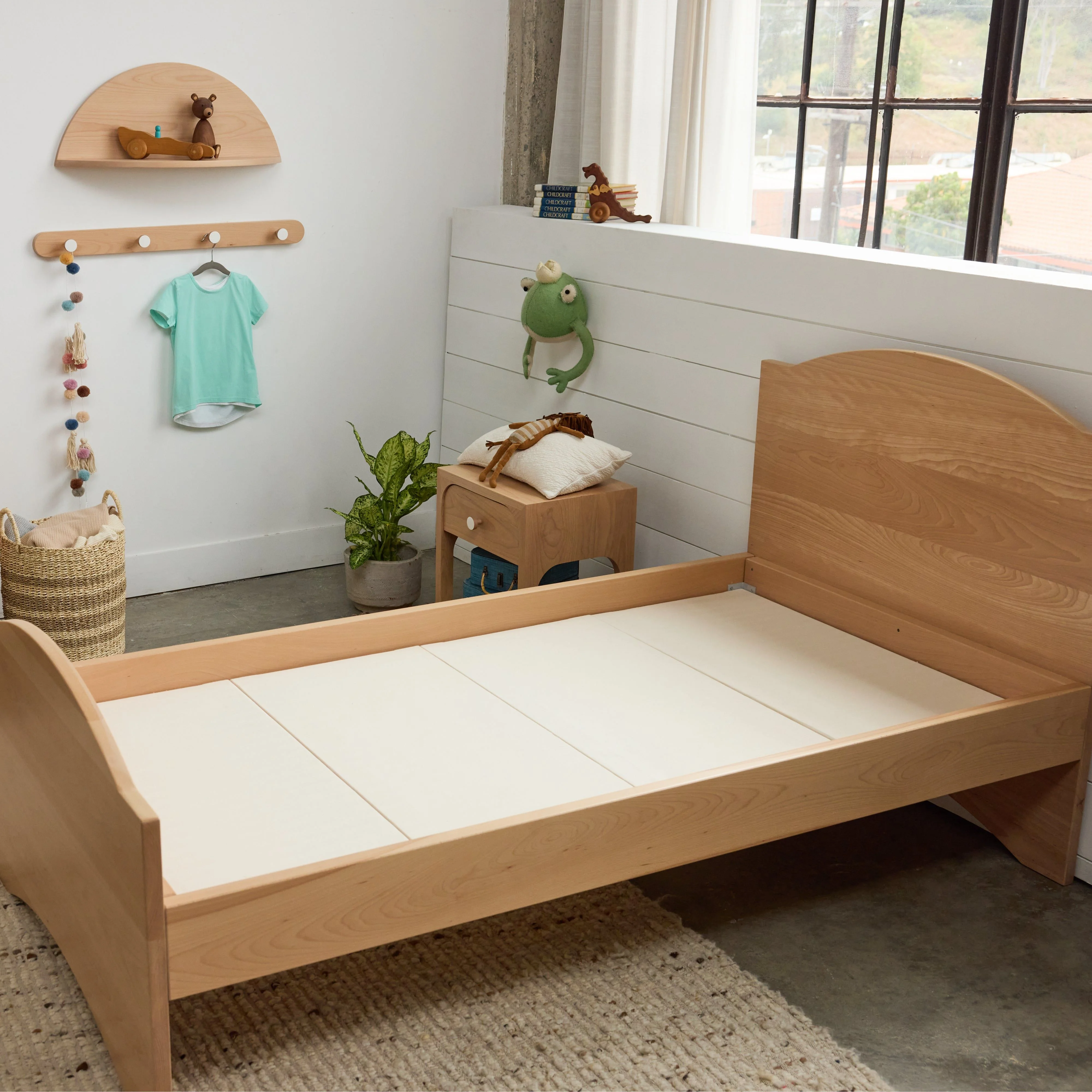
A bunkie board is a thin, rigid panel - usually 1 to 3 inches thick - that sits directly between your bed frame and mattress to give it a flat, fully supported surface. It is the cheapest, lowest-profile foundation you can buy, and on a platform bed with widely spaced slats it is often the difference between a mattress that lasts 10 years and one that sags inside of two.
After a decade of fitting bunkie boards under everything from kids' bunk beds to king-size memory foam in our Riverside and Redlands stores, we've boiled the decision down to four questions: do you need one at all, what thickness, what material, and what size? Get those right and the rest of the spec sheet (assembly, noise, warranty) takes care of itself.
Quick answers
Do I actually need a bunkie board?
Yes, if your platform bed has slats more than 3 inches apart, if you sleep on memory foam or latex, or if your manufacturer requires a flat surface to keep the warranty valid. No, if you already have a solid platform, a box spring under an innerspring, or slats spaced under 3 inches apart.
How thick should a bunkie board be?
1.5 to 2 inches is the sweet spot for most queens and kings. Thinner (1 inch) is fine for twin and full mattresses on solid bed frames. Thicker (3 inches) starts overlapping with low-profile box springs and adds bulk you usually don't want.
Plywood, solid wood, or steel?
Solid wood (pine, poplar) or steel are the durable picks. Avoid bare plywood and particleboard - both warp under humidity and crack along the grain when a heavier sleeper rolls onto an edge.
How wide can the slats be?
Under 3 inches apart for memory foam and latex. Most foam mattress warranties (Tempurpedic, Saatva, Nectar, Purple, Helix) explicitly require it. For hybrids and innersprings you can usually go up to 4 inches, but tighter is always safer.
Step 1: Decide whether you actually need one
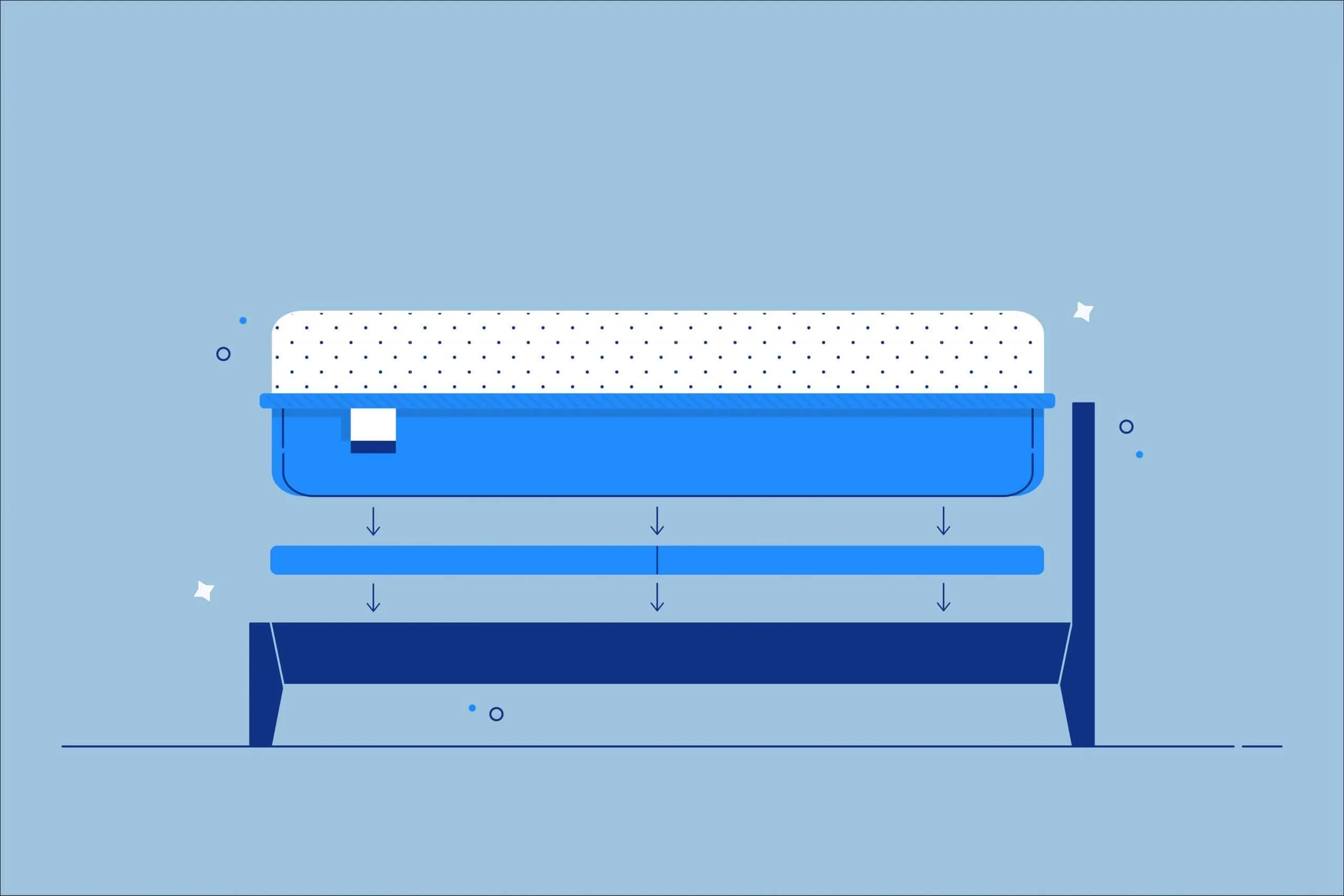
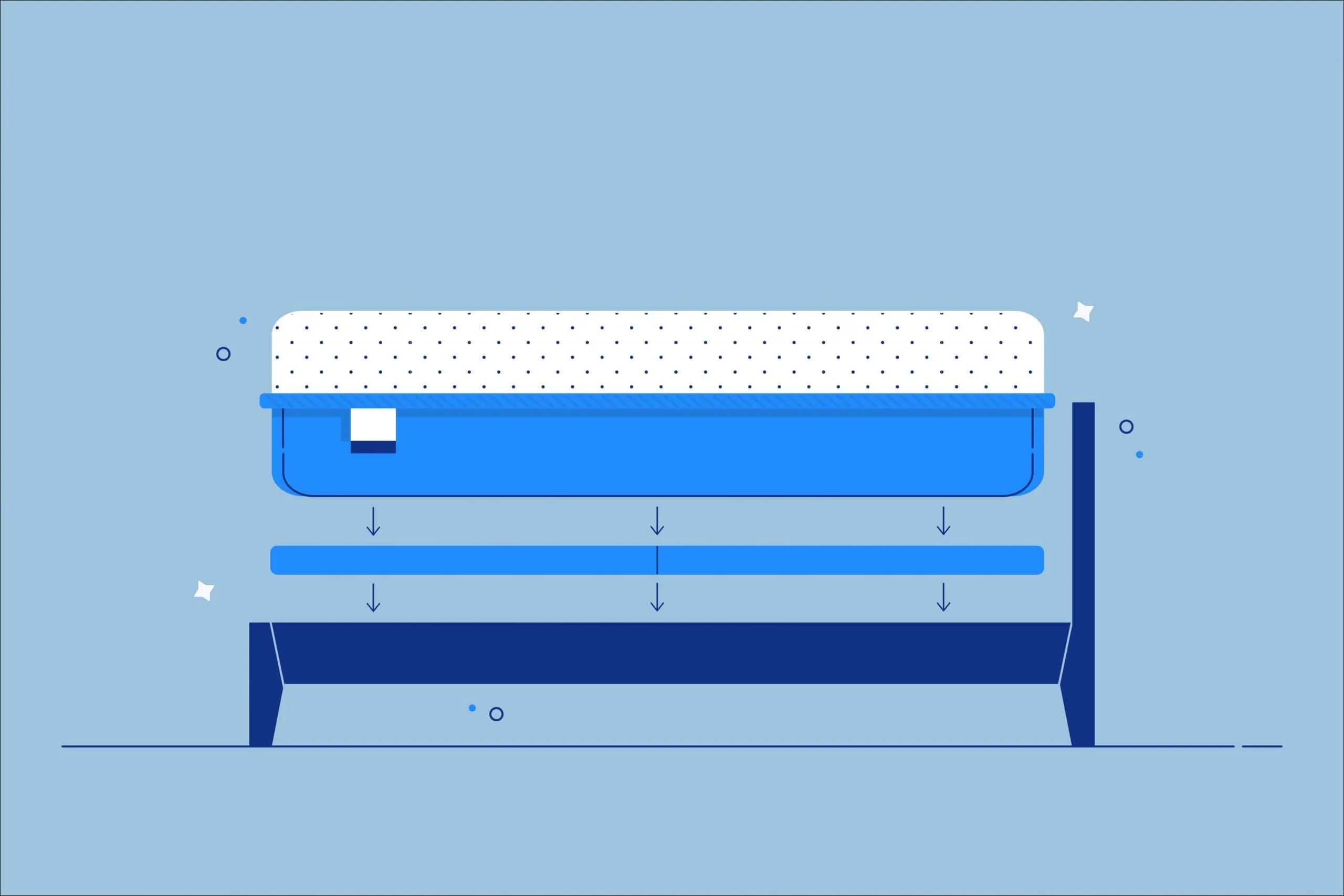
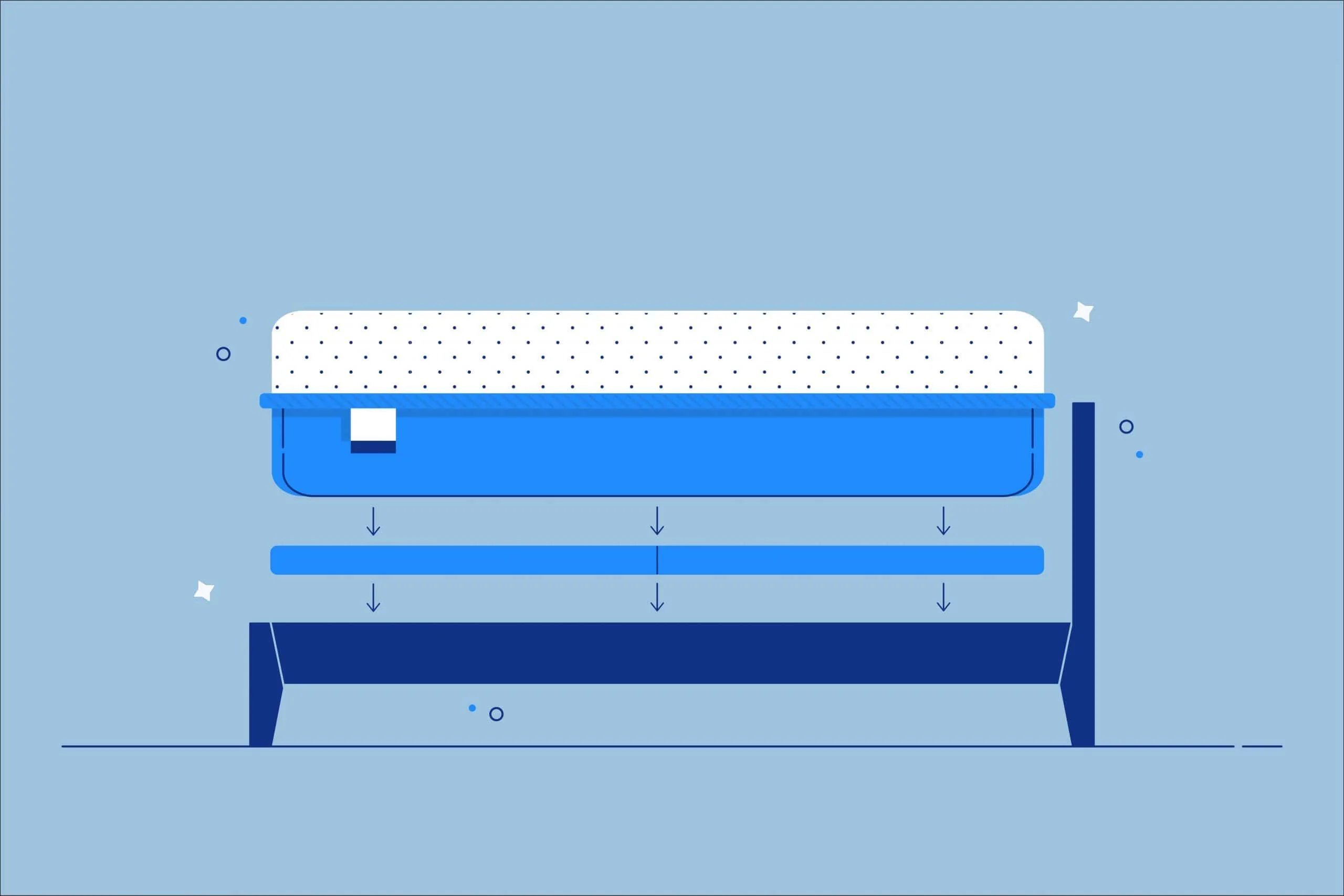
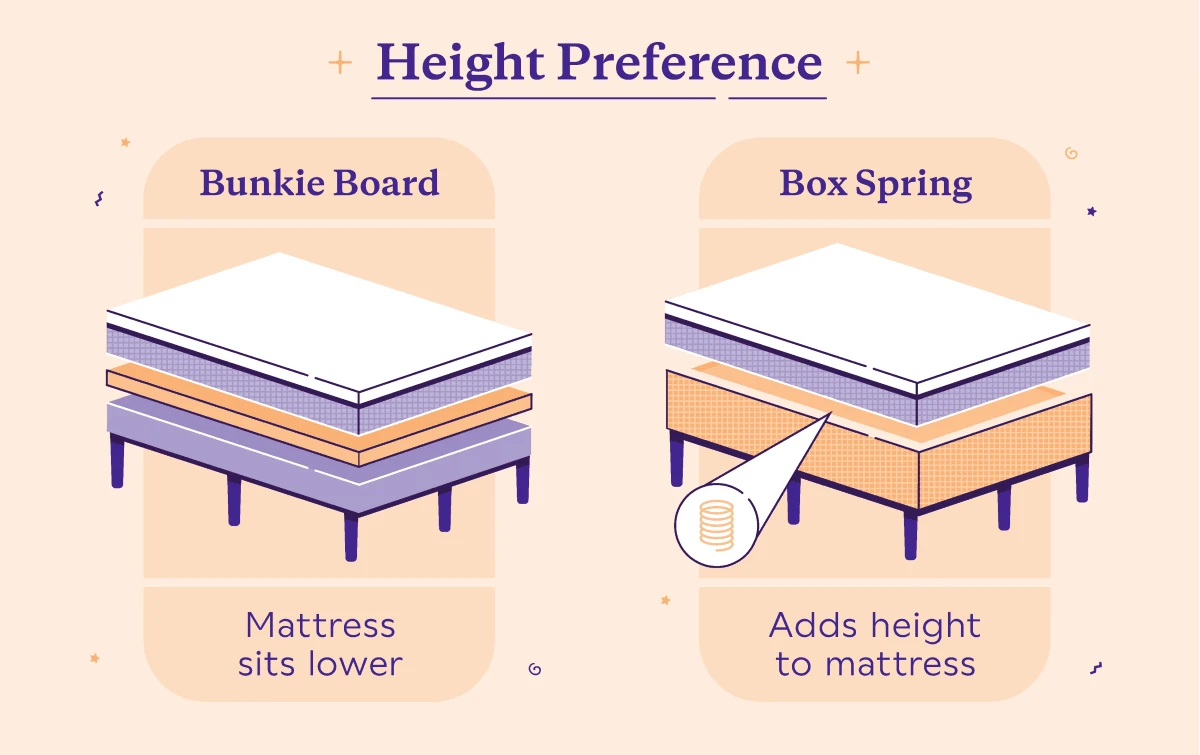
A bunkie board's only job is to turn an uneven or partially supported surface into a flat, rigid plane. If your bed already provides that, you do not need one. The diagram below shows where it sits in the stack and how much shorter the bed becomes compared to a traditional box spring.
Use a bunkie board when
- Your platform bed has slats spaced more than 3 inches apart
- You sleep on memory foam, latex, or hybrid (these need a flat base, not flexing slats)
- You're using a daybed, trundle, or bunk bed and need a low-profile foundation
- Your mattress warranty (Saatva, Tempurpedic, Nectar, Purple, Helix) requires a solid surface
- You want to keep a low bed height for aesthetics or accessibility
Skip the bunkie board when
- Your platform already has solid plywood or slats spaced under 3 inches apart
- You have an innerspring mattress on a working box spring (the box spring already does this job)
- Your bed frame manufacturer specifically requires a box spring (some traditional frames need the height)
- You want any bounce or flex in the foundation - a bunkie board is rigid by design
Step 2: Pick the thickness
Thickness is the most over-thought spec on the list. Most mattress brands specify only that the surface be flat and rigid - they do not require a particular thickness. What thickness does affect is bed height and edge stability.
- 1 inch - twin and full mattresses, kids' bunk beds, daybeds. Cheapest, lightest, easiest to fit through doorways.
- 1.5 to 2 inches - the safe default for queens and kings under any mattress type. Strong enough for two adults plus a hybrid mattress without flex.
- 3 inches - rare. Useful only if you specifically want to raise bed height by a few inches without buying a new frame. At this point a low-profile box spring is usually a better buy.
If your mattress is over 12 inches thick or you and your partner total over 400 pounds, step up to 2 inches and confirm the board is solid wood or steel - not plywood.
Step 3: Pick the material
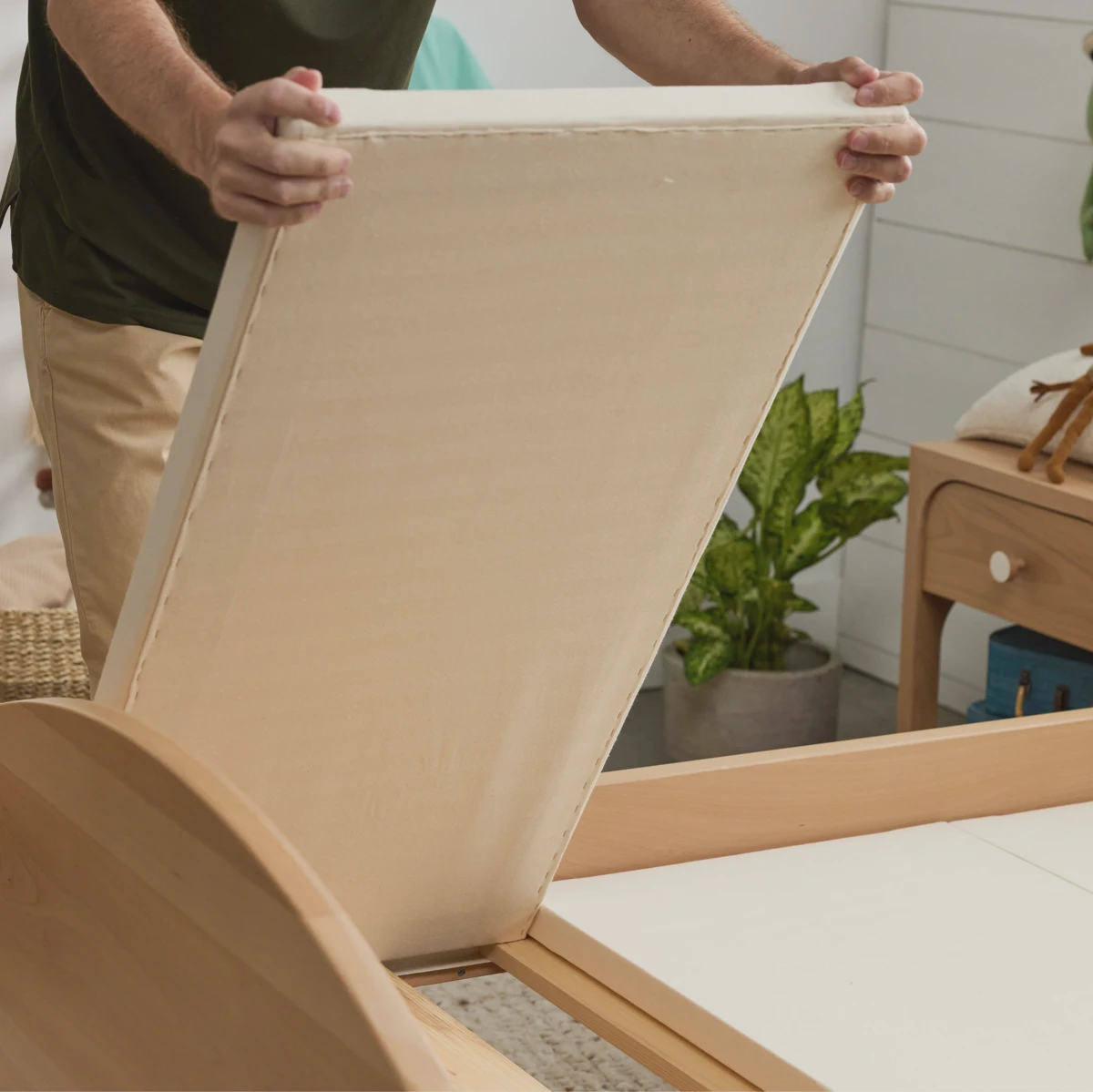
Materials are where cheap bunkie boards fail. Here is what we have seen hold up - and what fails - across hundreds of in-store warranty claims.
Materials worth buying
- Solid pine or poplar slats - strong, quiet, holds up for 10+ years if kept dry
- Steel frame with wood inserts - best for over-400-pound combined sleeper weight
- Hybrid wood-and-metal - splits the difference on cost and durability
Materials to avoid
- Bare plywood - warps under humidity, splinters at the edges within 2 to 3 years
- Particleboard or MDF - cracks along the grain the first time someone sits on the edge
- All-foam 'bunkie' alternatives - these are not bunkie boards, they compress and void most warranties
Step 4: Size it to your mattress, not your frame
Always size a bunkie board to the mattress, not to the inside of your bed frame. A board that is half an inch too small will let the mattress sag at the edges; a board that is too large rides up on the rails and rocks.
Standard mattress dimensions to match:
- Twin: 38 by 75 inches
- Twin XL: 38 by 80 inches
- Full: 54 by 75 inches
- Queen: 60 by 80 inches
- King: 76 by 80 inches
- California King: 72 by 84 inches
King-size bunkie boards almost always ship in two halves. That is not a quality compromise - it is the only way they fit through a standard doorway. Look for a model with a center seam reinforcement or a full-width center slat.
What about the warranty?
If your mattress is still under warranty, read the foundation clause before you buy a bunkie board. The major brands we sell all require either a solid surface or slats spaced under 3 inches apart:
- Tempurpedic - flat, solid surface or slats no more than 2.75 inches apart
- Saatva - slats no more than 4 inches apart, with center support for queen and up
- Nectar and DreamCloud - slats no more than 5 inches apart, but they recommend bunkie boards for any platform bed
- Purple - flat, solid surface required for the GelFlex grid to work properly
- Helix - slats no more than 5 inches apart
When in doubt, a 1.5-inch solid-wood bunkie board satisfies every mainstream warranty in our showroom - it is the cheapest insurance you can buy on a four-figure mattress.
Need help matching a bunkie board to your mattress?
Our team in Riverside, Redlands, and Yucaipa fits bunkie boards to mattresses every day. Bring in your mattress make and model and we'll size, spec, and confirm warranty compatibility on the spot.