Air mattresses are a lifesaver for guests, camping, dorms, and the occasional moving-day stopgap - but the default experience (cold vinyl, sliding sheets, hip-pinching pressure) is rough. The good news: most of what makes an air bed uncomfortable is fixable in under an hour with stuff you can pick up at any home store. Below are nine tips, ordered roughly by impact, with a short FAQ at the end.
Why People Still Choose an Air Mattress
Air beds win on three fronts: adjustable firmness (turn a knob and the bed gets softer or firmer), portability (deflate it and shove it in a closet), and price - a queen runs $80 to $250 versus $800+ for a low-end spring mattress. Some raised models (18"+ tall, with built-in pumps) are even pitched at people with back pain or limited mobility because they're easier to get in and out of than a low foam roll-up.
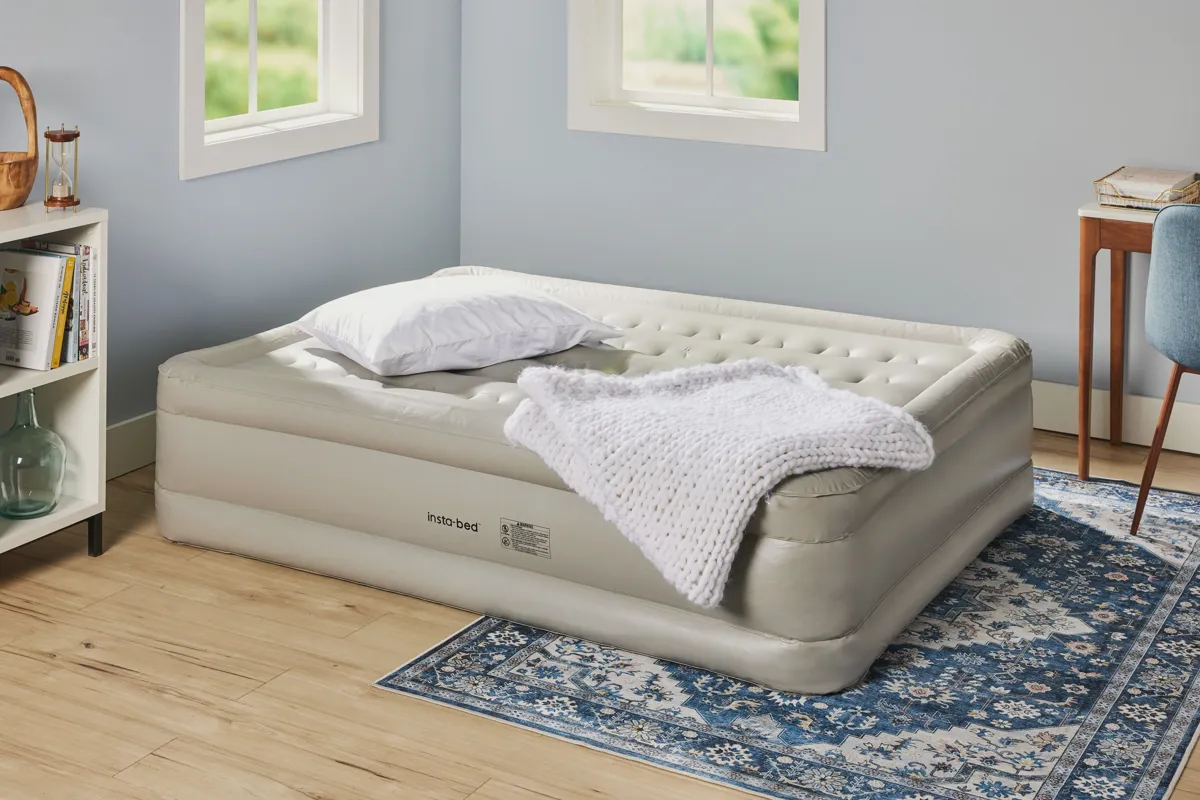
1. Add a Mattress Topper (the Single Biggest Upgrade)
If you do nothing else on this list, do this. A 2-3 inch topper eliminates the "plastic balloon" feel, evens out pressure on hips and shoulders, and adds insulation between you and the cold air inside the mattress.
Which topper material to pick:
- Memory foam (2-3") - best all-around choice for pressure relief. Side sleepers and anyone with hip pain feel the difference immediately. Look for gel-infused or open-cell foam if you sleep hot.
- Latex (2") - bouncier than memory foam, sleeps cooler, more durable. Good if you dislike the "sinking" feel of memory foam.
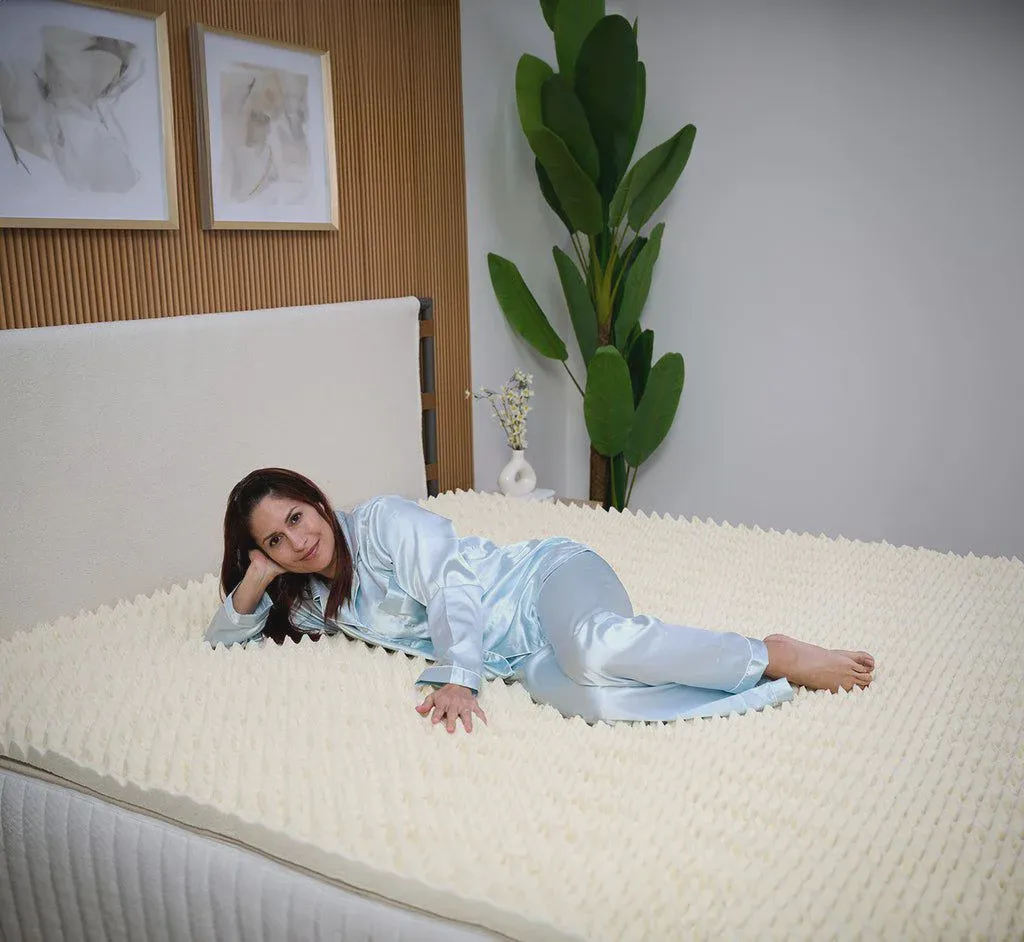
- Egg-crate / convoluted foam (1.5-2") - cheapest option (~$25-40), surprisingly effective for short-term use. The peaks-and-valleys surface adds airflow and softens pressure points.
- Down or down-alternative pillow top - adds plushness but no real pressure relief. Best layered on top of a foam topper, not as a substitute.
Match the topper size to the mattress - a queen topper on a queen air bed. Anchor it with a deep-pocket fitted sheet (14"+ pocket) so it doesn't shift overnight.
2. Don't Over-Inflate
This is the most common mistake. A rock-hard air mattress feels supportive for about ten minutes, then turns into a pressure trap on your shoulders and hips. New mattresses also stretch - they'll feel firmer the first night and lose 10-15% of pressure over the first 3-5 nights as the seams settle.
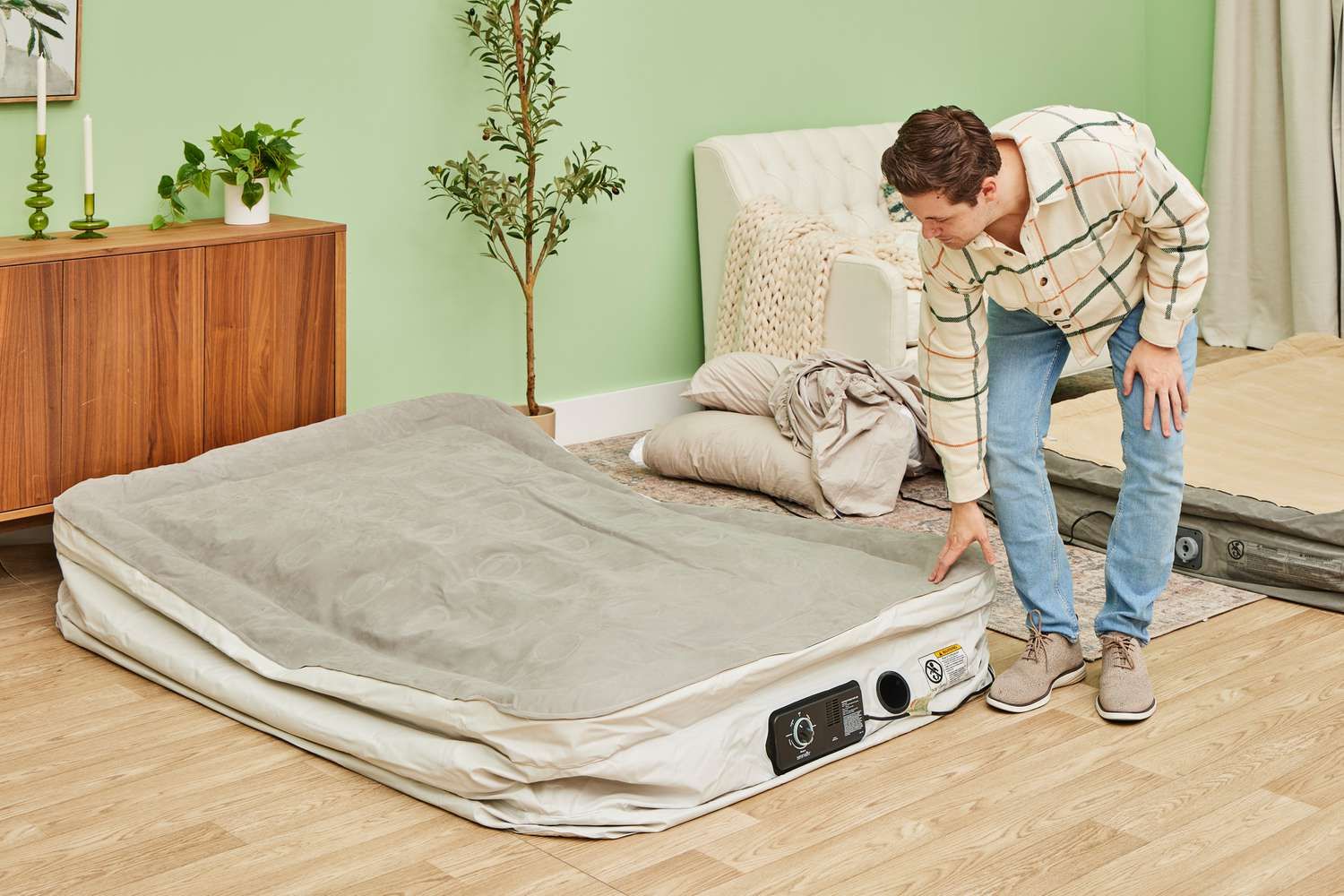
Rule of thumb: inflate until the surface is firm but you can still press a flat hand into it about half an inch. If you wake up with hip or shoulder pain, let out air in 10-second bursts until you find the sweet spot. An electric pump with a pressure gauge makes this easier than the manual squeeze test.
3. Anchor the Sheets
Regular fitted sheets pop off air mattresses constantly because vinyl has zero grip and the bed flexes when you move. Three fixes that work:
- Deep-pocket fitted sheets (14-18" pocket) - wrap further under the mattress and stay put.
- Sheet suspenders / sheet straps - elastic straps that clip under the mattress at the four corners. Three-way grips work best.
- A fitted-sheet-style mattress pad - a quilted pad with elastic skirt acts as a base layer that grabs the topper and the fitted sheet on top of it.
Avoid silky/satin sheets on an air bed; cotton percale or jersey grips far better.
4. Insulate Underneath (Especially in Cold Rooms)
The air inside the mattress matches the room temperature, and on a cold floor it can drop into the 50s overnight. That's why air beds feel chilly even with a comforter - the cold is coming from below.
- At home: put a wool blanket, comforter, or thick rug under the mattress.
- Camping: a closed-cell foam pad or a folded sleeping bag underneath blocks ground heat loss far better than the sleeping bag on top of you.
- Bonus: a heated mattress pad on a low setting (set on top, under the fitted sheet) is the fastest way to make a guest air bed feel hotel-grade in winter.
5. Elevate the Mattress Off the Floor
Getting the bed 10-18 inches off the ground does three things at once: easier to climb in and out of, less floor draft and dust, and noticeably warmer. Options ordered cheapest to nicest:
- Folding metal bed frame ($30-60) - same kind used under regular box springs.
- Camping cot - works for narrower mattresses (twin/full).
- Box spring or low platform - if you already own one, it's the most stable option.
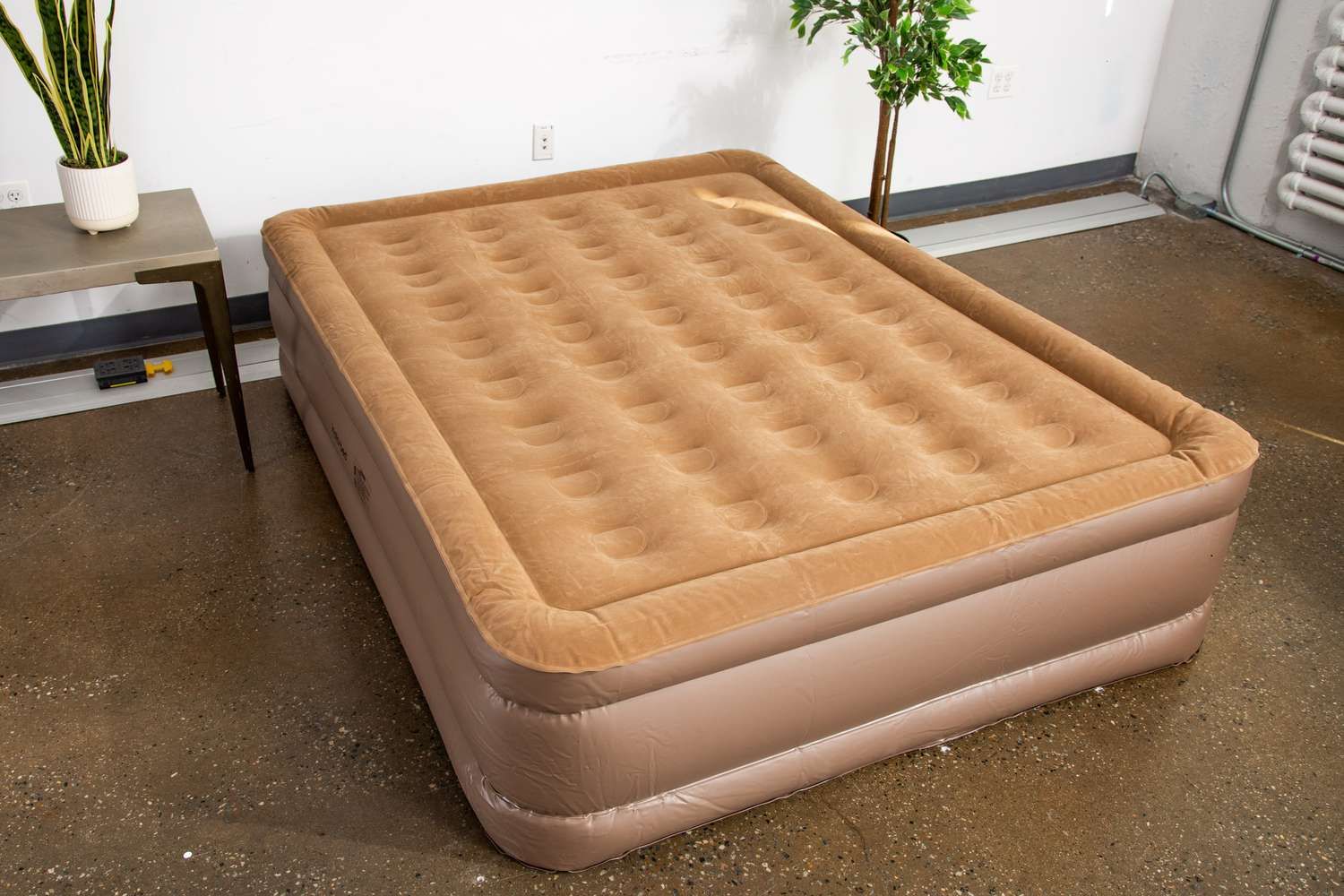
- A raised air mattress (18-22" tall, built-in pump) - buys you the height without a separate frame.
6. Stop the Squeak and Slide
Vinyl on hardwood or tile is a noise machine. Two cheap fixes:
- A non-slip rug pad (the kind sold for area rugs) under the mattress kills both squeak and slide.
- Push the bed against a wall so it can't drift, and the wall doubles as a headboard for stacked pillows.
7. Patch Slow Leaks the Right Way
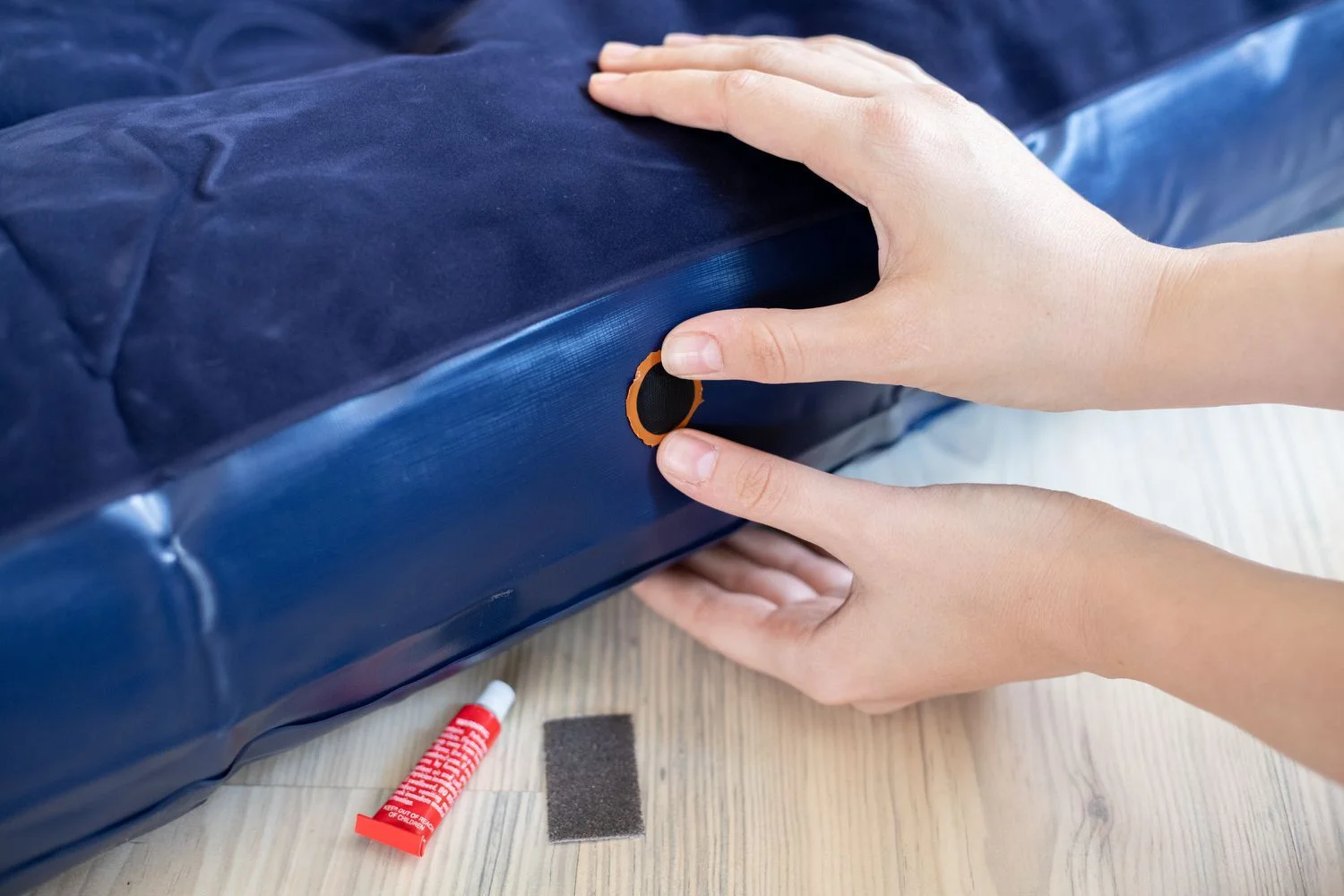
Slow deflation overnight is almost always a tiny pinhole, not a manufacturing defect. To find it: inflate fully, brush soapy water across the seams and surface, watch for bubbles. Mark the leak with a Sharpie.
Repair options, in order:
- The patch kit that came with the mattress - vinyl glue + patch is the most durable fix.
- A bicycle tire patch kit - same chemistry, costs $5.
- Heavy-duty repair tape (e.g. Gorilla tape) - emergency only, holds for a few weeks but lifts at the edges.
Let glue cure for at least 12 hours before re-inflating. Don't try to patch leaks near the seams or pump housing - those are warranty replacements.
8. Use the Right Pillow
People under-pillow on air mattresses because they associate "camping setup" with "rough it." An air bed is softer than a real mattress, so your head sinks slightly more - meaning a thicker pillow (or two stacked) keeps your neck neutral. Side sleepers especially need a firmer, taller pillow than they'd use at home.
9. Store It Properly So It Lasts
Punctures and seam splits usually happen at storage time, not during use. To pack one away:
- Wipe down the surface with a damp cloth, let it dry fully (mildew loves trapped moisture).
- Open all valves and gently press air out from one end to the other - don't fold and crush.
- Roll loosely; tight folds crack the vinyl over time.
- Tie with ribbon or soft fabric - never elastic bands or string that can cut into the rolled vinyl.
- Store in the original bag in a cool, dry place. Avoid attics (heat) and garages (cold cycling).
How to Keep an Air Mattress From Going Flat Overnight
If the bed deflates by morning every time, it's almost always one of:
- A real leak. Run the soapy-water test (see Tip 7).
- Cold air contraction. Air contracts when it cools, so a bed inflated in a warm room and slept on in a cold one will feel softer by 4 a.m. - top it up before bed in the same temperature you'll sleep in.
- A new mattress stretching. Expect 10-15% pressure loss the first 3-5 nights as the seams settle. Re-inflate before bed; it stabilizes after a week.
Frequently asked questions
What's the single best thing to put on top of an air mattress?
A 2-3 inch memory foam topper. It does more for comfort than every other tip on this list combined.
Are air mattresses bad for your back?
Not inherently - over-inflated ones are. A correctly inflated mattress with a foam topper offers similar pressure distribution to a soft-medium spring mattress. For chronic back pain, look at adjustable air models with zoned firmness.
Can you use an air mattress every night long-term?
You can, but most consumer-grade air beds are rated for 1-3 years of nightly use before seam fatigue. Premium adjustable air beds (Sleep Number, etc.) are built for daily use.
Why does my air mattress feel cold even with blankets?
The air inside is matching the floor temperature. Insulate underneath (Tip 4) before adding more blankets on top.
Should I deflate an air mattress during the day?
No - fully inflated puts less stress on the seams than a half-flat mattress. Leave it inflated for the duration of the trip or guest stay.
The Bottom Line
An air mattress will never feel exactly like a real bed, but the gap closes fast once you stop treating it like a finished product. A foam topper, deep-pocket sheets, an insulating layer underneath, and the right inflation pressure get you about 80% of the way there for under $100. Everything else on this list is fine-tuning.