
The honest answer most retailers won't lead with: the average residential loft bed is rated for 200-250 pounds total - and that figure already includes your mattress. IKEA, for example, tests its loft and bunk frames to 220 lb, regardless of how robust they look. Heavy-duty adult-rated lofts climb to 1,000-2,000 lb per platform, but they're a different category of furniture - and a different price tag.
If you're shopping a loft bed for a teen, a college dorm, a guest room, or a small adult apartment, the difference between 220 lb and 600 lb of capacity isn't a marketing detail - it's the difference between a frame that sags after a year and one your kids can grow into. This guide breaks down what loft bed weight limits actually mean, how the spec changes with material and size, and how to verify a frame can carry the load you're putting on it.
Loft bed weight limits at a glance
Capacity ranges vary widely by category. Use this as a sanity check against any product page:
- Standard twin metal loft (kids/teens): 200-250 lb (mattress included)
- IKEA loft & bunk beds: 220 lb tested limit
- Solid-wood twin loft (e.g., Max & Lily): 400 lb
- Full-size loft beds: 400-600 lb
- Heavy-duty adult/college loft beds: 1,000-2,000 lb per platform (steel-reinforced, often custom-welded)
Whatever number is on the box, treat it as a static load - you sleeping flat. Sitting up suddenly, jumping, or two people climbing on at once creates dynamic load that can exceed the rating even if your bodyweight is well below it.
How the weight rating actually works (and what counts toward it)
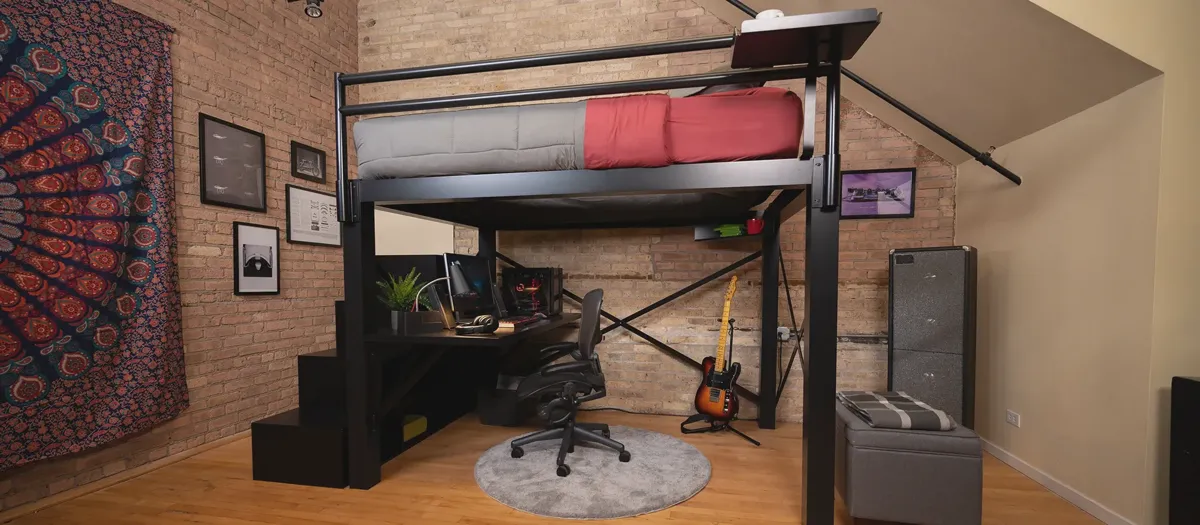
The single biggest mistake first-time buyers make is forgetting that the rated capacity includes your mattress, bedding, and anything stored on the platform - not just your bodyweight. A standard 8-inch innerspring twin mattress weighs 35-50 lb; a 10-inch hybrid or memory foam can run 60-100 lb. On a 220-lb-rated frame, a heavy hybrid mattress alone eats nearly half the capacity.
Manufacturers also distinguish between two load types:
- Static load: steady, evenly distributed weight (the published number is almost always static).
- Dynamic load: sudden force from sitting, climbing, or movement - can spike 1.5-3x the static figure for a fraction of a second.
That's why a 250-lb-rated bed can crack under a 180-lb sleeper who flops down hard or has a partner climb up. The rule of thumb: your sleeper weight + mattress should not exceed 70-75% of the published static rating if you want long-term durability.
Capacity by frame material
Material matters more than dimensions. Two twin lofts with identical footprints can have wildly different ratings depending on what they're built from.
Thin tubular steel (the budget default)
Most $150-$300 loft beds on Amazon and Walmart are built from 1-1.25" tubular steel, often with a wall thickness under 1.5 mm. These typically rate 200-250 lb and rely heavily on cross-bracing for rigidity. They're fine for kids and lighter teens, but tend to develop sway and creak after 12-18 months of regular use.
Solid hardwood (pine, oak, maple)
Solid-wood frames from brands like Max & Lily, Donco, and Maxtrix typically rate 350-500 lb. Wood handles dynamic load better than thin steel because it flexes slightly instead of fatiguing at weld points. The trade-off: more weight to ship and assemble, and a higher price - usually $400-$900 for a twin.
Heavy-gauge welded steel (adult/college)
Brands like CollegeBedLofts and Adult Bunk Beds use 14-gauge or thicker welded steel and publish ratings of 1,000-2,000 lb per sleeping platform. These are the only loft beds genuinely engineered for two adults or sleepers over 250 lb. Expect $900-$2,500.
How size changes capacity
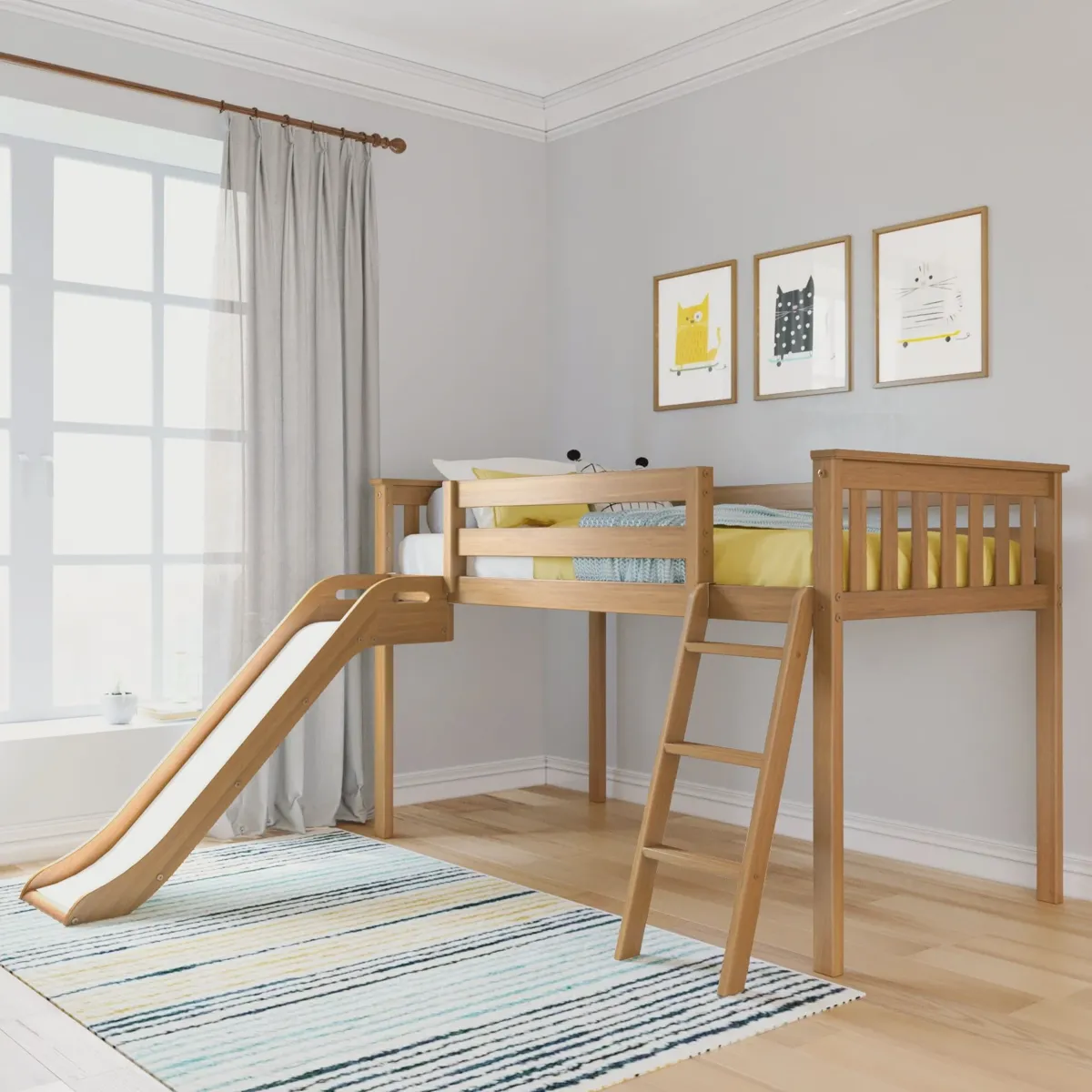
Bigger isn't automatically stronger. A queen loft has more sleeping area but also longer unsupported spans, which means it needs proportionally beefier slats and posts to hit the same per-square-inch rating.
- Twin (38" x 75"): 200-400 lb typical, up to 1,000 lb on adult-rated steel.
- Twin XL (38" x 80"): similar to twin, common in college lofts.
- Full (54" x 75"): 400-600 lb on residential frames; up to 2,000 lb on adult builds.
- Queen loft (60" x 80"): almost exclusively a heavy-duty/adult category - expect 800-2,000 lb ratings, with center support beams required.
Safety standards and certifications worth checking
U.S. loft and bunk beds are subject to 16 CFR Part 1213 (CPSC bunk-bed safety standard) and the voluntary ASTM F1427 spec, which dictate guardrail height, mattress-foundation gap, and ladder strength - but neither standard mandates a specific weight rating. That's why two beds can both be "compliant" yet have wildly different capacity numbers.
When comparing two products, look for:
- An explicit static-load rating in the product specs (not just a marketing number on the listing image).
- Slat material and spacing - solid wood slats <3" apart on metal supports beat plywood platforms.
- Mattress thickness limits - exceeding the spec can negate the warranty even if you're under the weight rating.
- JPMA or GreenGuard certification (signals more rigorous internal testing, especially on kids' frames).
How to test the weight limit on a loft bed you already own
If you've inherited a frame or lost the manual, you can sanity-check capacity without destroying it:
- Inspect every joint. Look for elongated bolt holes, splits at slat ends, or gaps between metal posts and brackets - all signs the frame is already at or beyond its limit.
- Static load test. Place sandbags or weight plates totaling your sleeper weight + mattress at the center of the platform. Leave for 30 minutes. Measure deflection at the slats - more than 1/2" in the middle is a warning sign.
- Listen and feel during normal use. Persistent creaking, side-to-side sway when you sit up, or visible flex in posts means the frame is being stressed. Don't "bounce test" a loft bed - that's how warranties get voided and ER visits happen.
- Call the manufacturer. Most brands publish capacity by SKU and will confirm with a serial number or photo of the assembly label.
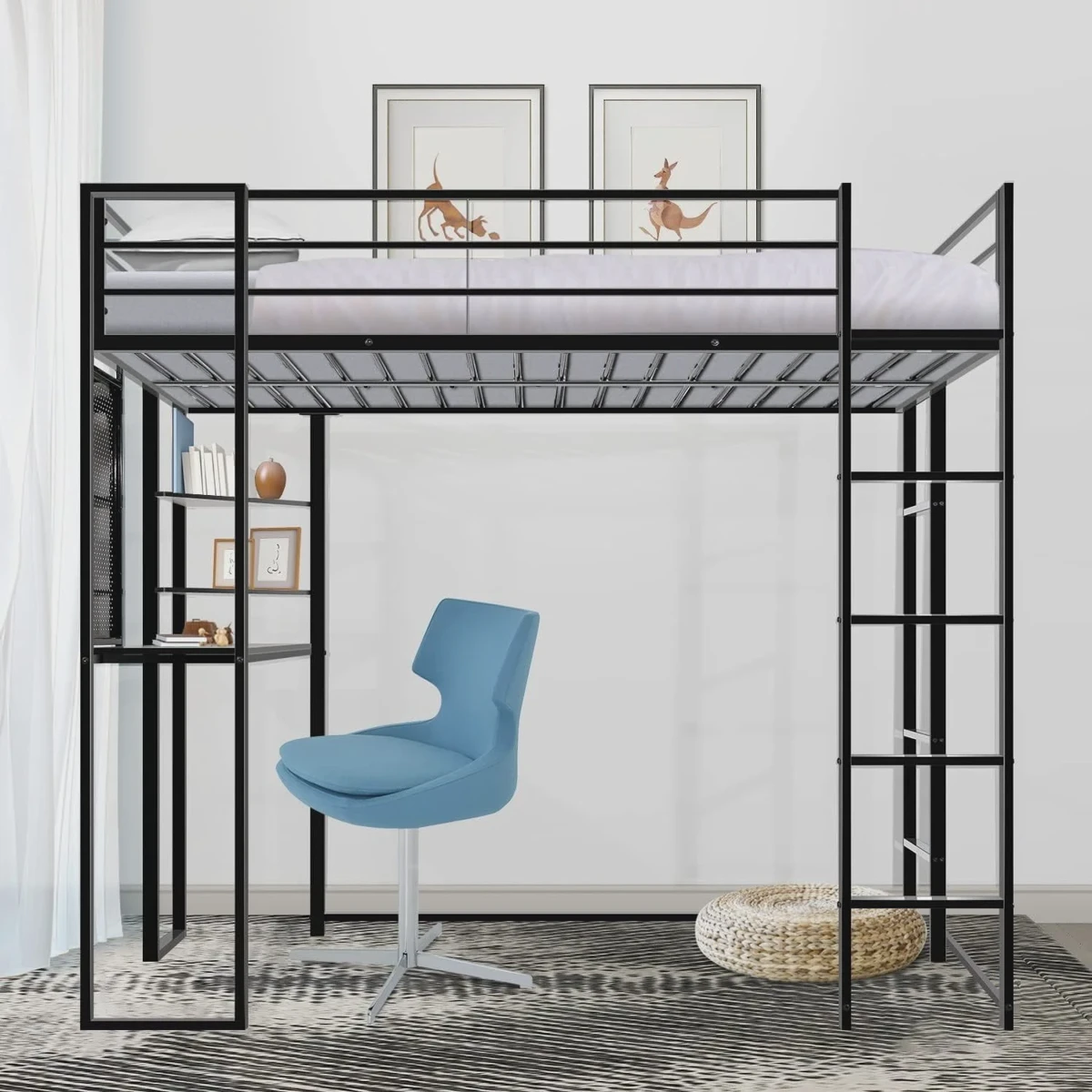
How to safely push a loft bed's capacity higher
You can't legitimately exceed a manufacturer's rating, but you can make a marginal frame meaningfully more durable - and stop premature sagging - with three upgrades:
- Add a center support beam. A 2x4 or steel rail running lengthwise under the slats reduces span deflection by 30-40%. Most 250-lb-rated twins benefit dramatically from this single change.
- Anchor the frame to a wall stud. Loft beds fail in shear (sideways force) before they fail in compression. Two L-brackets into studs eliminate sway and let the frame carry vertical load more efficiently.
- Replace plywood with hardwood slats. Swap thin platform sheets for 3/4" oak or maple slats spaced ~2.5" apart. Better mattress airflow, dramatically better load distribution.
If you regularly need more capacity than these upgrades can deliver - sleepers over 250 lb, a couple sharing the platform, or storage that adds 100+ lb - the right answer isn't reinforcement. It's an adult-rated frame engineered for the load from day one.
Don't forget: the mattress matters too
A loft bed's weight limit only protects you if the mattress on top is the right thickness and weight for the frame. Most loft beds cap mattress thickness at 6-8 inches so the guardrail still rises 5+ inches above the sleep surface (a CPSC requirement). Choosing a 12-inch hybrid because it was on sale is one of the easiest ways to silently exceed both the weight and clearance specs at the same time.
If you're matching a mattress to a loft frame, our team's deeper picks - including thinner profiles built specifically for bunks and lofts - live in our mattress and bed-frame buying guides.
Bottom line
Most loft beds hold 200-250 lb total, including a mattress under 8 inches thick. Move to solid wood or full size and you're looking at 400-600 lb. Adult-rated welded-steel frames climb into four digits per platform but cost accordingly. The number on the spec sheet is a static load - aim to use no more than 70-75% of it, factor your mattress into the math, and inspect joints annually. Do that, and a well-chosen loft bed lasts a decade.
Frame height also factors into pest exposure - if you're elevated and wondering can a rat climb a bed.
Loft bed weight capacity FAQs
Does the loft bed weight limit include the mattress?
Yes. Almost every published capacity is a total static load - sleeper, mattress, bedding, and anything stored on the platform combined. A 10-12 inch hybrid mattress can weigh 60-100 lb on its own, so subtract that from the rated number before estimating how much room you have for the sleeper.
How much weight can an IKEA loft bed hold?
IKEA tests its loft and bunk beds to 220 lb total static load, regardless of frame style. Their twin platform beds are rated higher (300 lb), and full/queen/king bedframes are tested to 600 lb, but loft and bunk frames sit at the 220 lb tier.
Can two adults sleep on a loft bed?
Only on adult-rated frames. Standard residential loft beds rated 200-400 lb are designed for one sleeper; the load math (two adults + mattress) almost always exceeds the static rating. Adult-rated steel lofts published at 1,000-2,000 lb per platform are the only category genuinely engineered for two-adult use.
How can I tell if my loft bed is overloaded?
Watch for elongated bolt holes, slat deflection greater than 1/2 inch under sleeping load, side-to-side sway when sitting up, persistent creaking that worsens over time, and visible bowing in metal posts or wood rails. Any of these means the frame is being stressed beyond its safe range, even if you're technically under the rated weight.
Is the weight limit different for the top bunk vs the bottom?
Yes. On bunk beds, top bunks are typically rated lower than the bottom because the upper platform sits on smaller-diameter posts and has less cross-bracing below it. A common split is 250 lb top / 400-600 lb bottom on solid-wood twin-over-full bunks.
Can I add reinforcement to safely raise a loft bed's weight limit?
You can extend a frame's useful life with center support beams, wall anchoring, and hardwood slats - but you cannot legitimately raise the manufacturer's rating. Reinforcement reduces sag and dynamic load spikes; it doesn't change the static rating or restore voided warranties.
Pairing the right mattress with your loft bed?
Loft and bunk frames cap mattress thickness at 6-8 inches for guardrail safety. Browse our reviews of low-profile, lightweight mattresses built specifically for elevated frames.