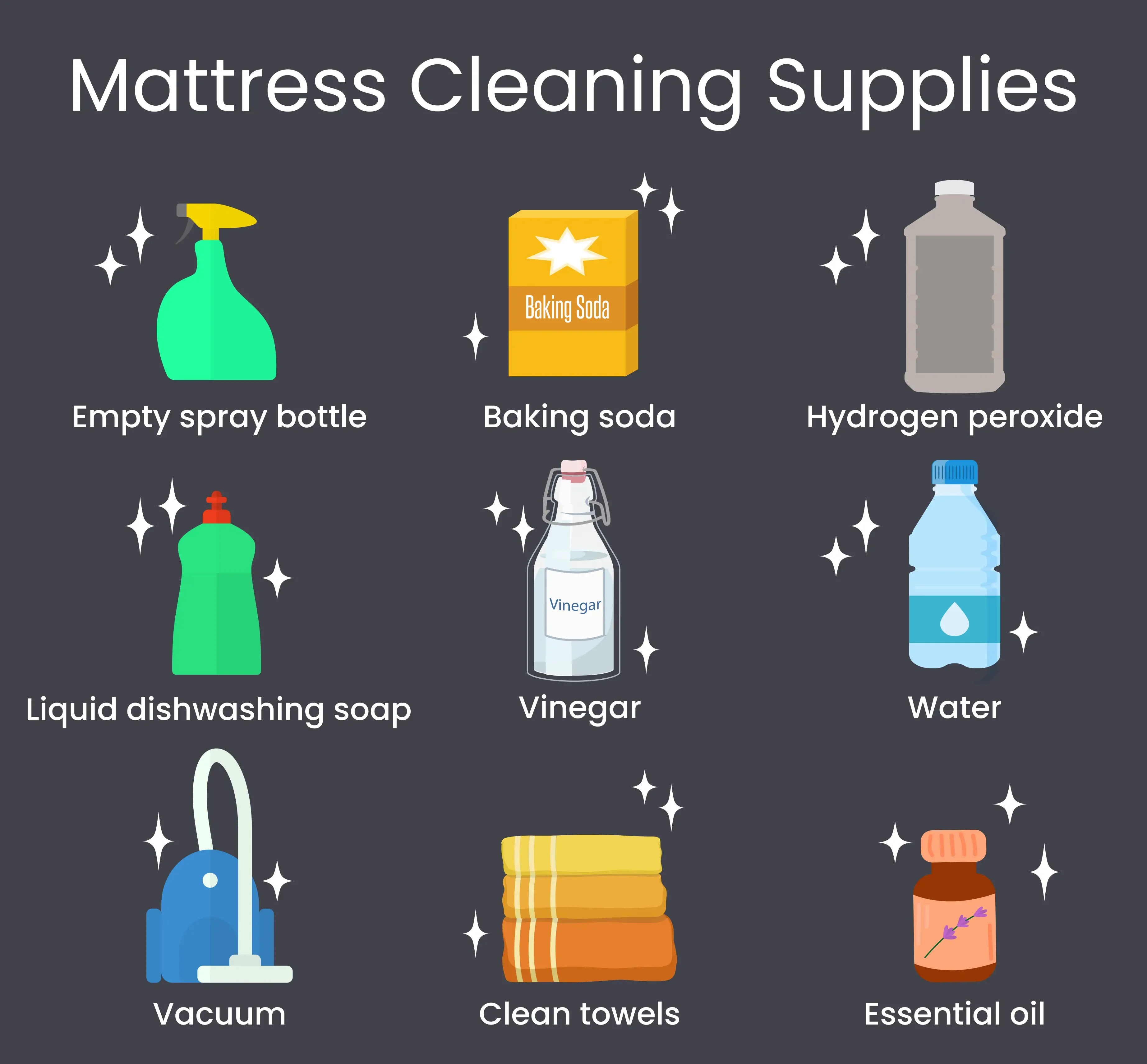
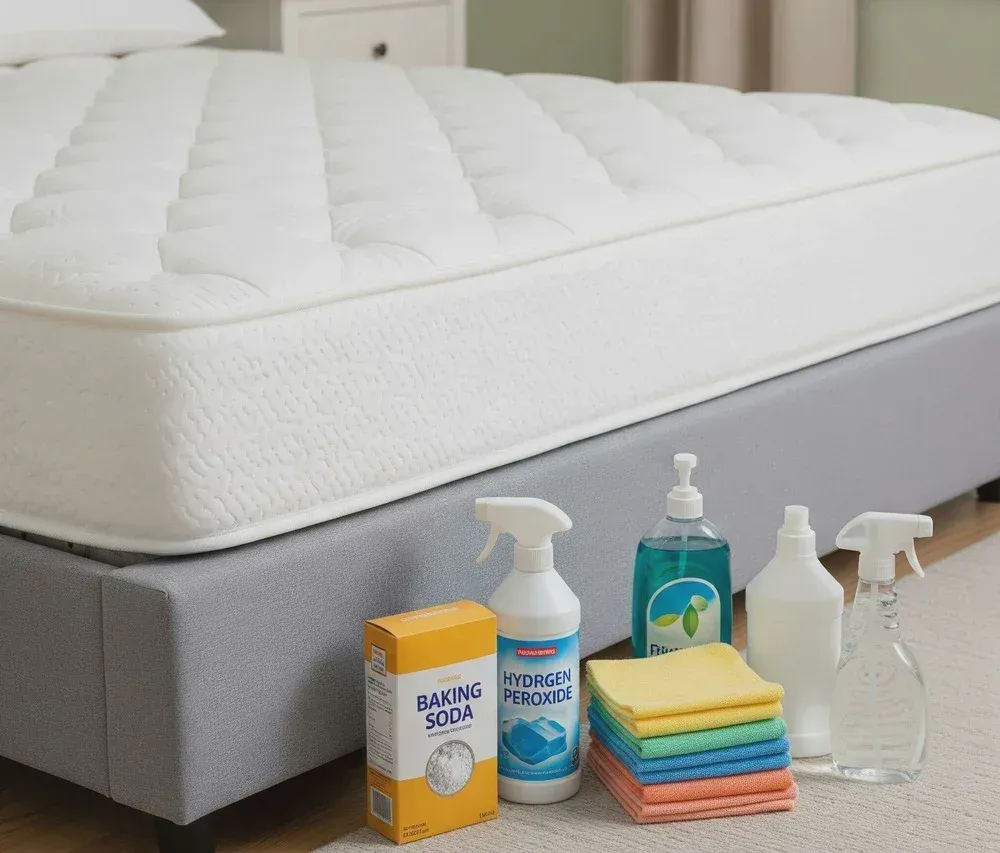
A vacuum makes mattress cleaning easier, but it isn't required. The job is really three tasks - pulling surface dust off, deodorizing the top layer, and spot-treating stains - and every one of them has a no-vacuum substitute. The fix is usually some combination of baking soda, white vinegar, hydrogen peroxide, a stiff brush, and direct sunlight.
Below are the seven methods our review team has tested in our cleaning lab - including the ones that work on memory foam (which you should never soak) and the right way to handle urine, sweat, and blood when you don't own a wet vac.
Before you start: a 60-second prep
- Strip every layer of bedding - sheets, mattress protector, encasement - and run them on the hottest cycle the labels allow. Hot water is what actually kills dust mites, not the wash itself.
- Open the windows. Mattress cleaning kicks up dust and the odor of vinegar or baking soda; ventilation matters.
- Have white cloths ready. Colored rags can transfer dye into damp upholstery - a stain-removal disaster on a $1,500 mattress.
- Check the care tag. Some Tempur-Pedic, Purple, and latex mattresses prohibit any liquid cleaner on the cover; if you see a circle with an X through it, skip the wet methods entirely and stick to baking soda + brushing.
Method 1: The baking soda deodorizer (everyone's default)
This is the no-vacuum equivalent of the standard "sprinkle, wait, vacuum off" routine - except you swap the vacuum step for a stiff brush. It's the single most effective way to refresh a mattress that just smells stale.
- Sift a generous, even layer of baking soda across the entire top of the mattress. About one full cup for a queen, two for a king. Don't pile it.
- Optional but strongly recommended: add 5-10 drops of lavender or eucalyptus essential oil to the baking soda before sprinkling. It boosts the deodorizing without leaving a chemical residue.
- Let it sit at least four hours. Overnight is better. The longer it sits, the more moisture and odor it pulls out of the top foam layer.
- Sweep the powder off with a stiff-bristled brush, a soft-bristled broom, or - in a pinch - a clean paint brush. Work in long, parallel strokes so the brush carries the powder off the edge instead of grinding it deeper.
- Wipe the surface down with a slightly damp microfiber cloth to capture the last residue.
If the mattress is still tacky to the touch after sweeping, you used too much powder - repeat step 5 and let it air-dry before remaking the bed.
Method 2: Spot cleaning with dish soap (general stains)
For coffee, food, makeup, or any unidentified stain, dish soap is gentler than commercial upholstery cleaners and won't leave residue.
- Mix one liter of cool water with one teaspoon of clear dish soap (Dawn works fine). Cool, not hot - heat sets protein stains.
- Dip a white microfiber cloth into the solution and wring it until it's barely damp. The mattress should never become wet - only the stain.
- Blot the stain from the outside in. Pressing in toward the center prevents the stain from spreading outward.
- Repeat with a fresh damp section of cloth (no soap) to rinse.
- Press a dry towel down hard for 30 seconds to wick moisture out, then point a fan at the spot until completely dry. Damp foam grows mold within 48 hours.
Method 3: Vinegar + baking soda (deep odor + light bacteria)
When baking soda alone doesn't cut it - for example, after a long stretch of summer sweating - combine it with white vinegar for a one-two punch.
- Fill a spray bottle with equal parts white vinegar and cool water. Mist the mattress lightly - a uniform haze, not wet patches.
- Immediately sprinkle baking soda over the misted area. You'll see a brief fizz; that's the reaction lifting residue out of the fibers.
- Cover the mattress with clean white towels and leave it 2-4 hours.
- Pull the towels off, brush away the baking soda, and let the mattress air-dry - outside in sunlight if possible.
Skip this method on memory foam mattresses thicker than 8" - the vinegar penetrates deeper than baking soda alone and the inner foam takes too long to dry.
Method 4: Hydrogen peroxide (urine, blood, and biological stains)
This is the method to use for the stains that ruin mattresses: urine, blood, sweat rings, vomit. Hydrogen peroxide breaks down the proteins so they can be lifted out - something dish soap and vinegar can't fully do.
- Blot up as much liquid as you possibly can with dry towels first. Stand on the towel if needed; the more you remove now, the less penetrates the foam.
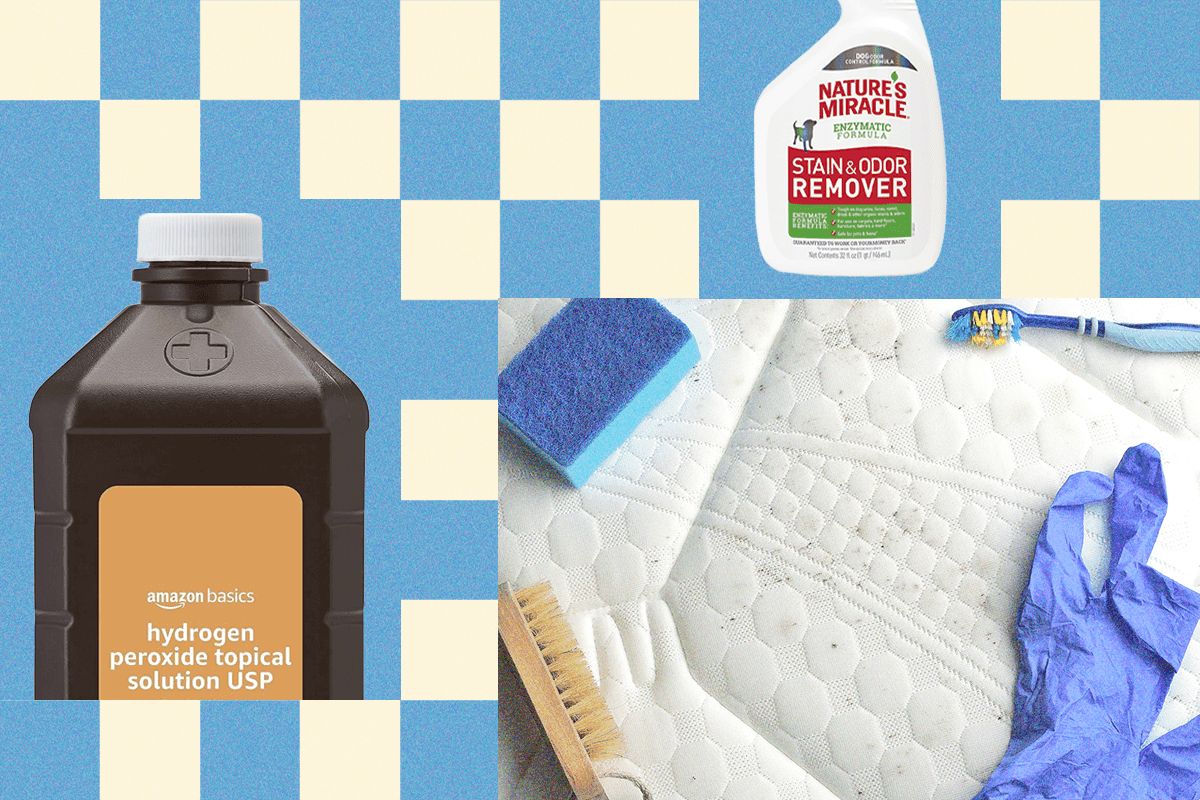
- Mix in a spray bottle: 1 cup 3% hydrogen peroxide, 3 tablespoons baking soda, and a small drop of dish soap. Shake gently - don't seal a pressurized bottle, the mixture off-gasses.
- Spray the stain until it's evenly damp. You'll see foaming. Let it sit 15-30 minutes.
- Blot with a clean damp white cloth (rinse and re-wring repeatedly until the cloth comes away clean).
- Sprinkle dry baking soda over the area and leave it 8 hours to absorb anything that worked its way in. Brush off.
Test peroxide on a hidden corner first - on dark or printed mattress covers it can lighten the fabric.
Method 5: The beat-and-thump (no chemicals at all)
If your mattress just needs the dust knocked out of it - say, you pulled it out of storage - physical agitation does what suction would. This works best on innerspring and hybrid mattresses; skip it on all-foam.
- Take the mattress outside on a dry day. Lean it against a fence or hang it over a sturdy railing.
- Beat it firmly with a broom handle, a tennis racquet, or a dedicated rug beater. Work in even rows, top to bottom.
- Flip and repeat on the other side.
- Leave it in direct sunlight for 2-4 hours afterward. UV light kills surface bacteria and dust mites for free.
Method 6: The damp-cloth wipe-down (memory foam-safe)
Memory foam is the trickiest to clean without a vacuum because it absorbs every drop of liquid you put on it. The safe approach is a barely-damp microfiber pass.
- Mix 2 cups warm water with 1 tablespoon mild laundry detergent in a bowl.
- Dip a microfiber cloth, wring until almost dry, and wipe the entire surface in long parallel strokes. Re-wring whenever the cloth picks up dirt.
- Follow with a second pass using a clean cloth wrung out in plain water to rinse.
- Stand a fan at the foot of the bed and run it 4+ hours. Do not put bedding back on until the cover is fully dry to the touch.
Method 7: Lint roller for surface debris
This sounds silly until you try it. A heavy-duty lint roller is shockingly effective at lifting hair, dust, and pet dander off a mattress cover - basically the surface job a vacuum brush attachment would do, just slower.
Use the wide kind sold for pet hair, not the slim lint rollers for clothes. Roll in overlapping rows, peeling off the used sheet every few passes. It's our go-to between deep-cleans and works well on every mattress type.
What about steam cleaners?
A handheld garment steamer is technically vacuum-free and does kill dust mites with high heat. But it pumps moisture into the mattress, and without a vacuum to extract it afterward you risk mildew. We only recommend steamers if you can get the mattress outside in direct sun for several hours afterward to dry - otherwise stick to dry methods.
When no-vacuum cleaning works
- Routine refresh - odors, light dust, no visible stains
- Spot stains caught within 24 hours
- Memory foam mattresses (vacuums often void the warranty anyway)
- Travel, dorms, or rentals where you don't own one
When you need a vacuum or a pro
- Heavy dust mite infestation - HEPA vacuum + encasement is the only real fix
- Old set-in stains older than a few weeks
- Mold or mildew already visible on the cover
- Bedbug suspicion - call a professional, do not try to DIY this
Frequently asked questions
How do you clean a mattress without a vacuum?
Sprinkle baking soda evenly across the mattress, let it sit at least 4 hours (overnight is better), then sweep it off with a stiff brush instead of vacuuming. For odors, add a vinegar mist before the baking soda. For stains, blot with a damp cloth and dish soap, or - for urine and blood - a mix of hydrogen peroxide, baking soda, and a drop of dish soap.
Can I clean a memory foam mattress without a vacuum?
Yes, and you should - vacuums can damage memory foam cell structure with too much suction, and many foam mattress warranties prohibit it. Stick to baking soda + brushing for deodorizing, and a barely-damp microfiber cloth for surface cleaning. Never soak memory foam.
How do I clean urine out of a mattress without a wet vac?
Blot up every drop of liquid you can with dry towels. Mix 1 cup of 3% hydrogen peroxide, 3 tablespoons of baking soda, and a small drop of dish soap. Spray onto the stain, let it foam for 15-30 minutes, blot with a clean damp cloth, then sprinkle dry baking soda overnight to absorb anything left. Brush off the next morning.
Does sunlight actually clean a mattress?
Yes - direct UV light kills surface bacteria, mold spores, and dust mites, and it dries any residual moisture from cleaning. Two to four hours outside on a dry day is enough. It won't remove stains or visible dirt, so pair it with one of the other methods.
How often should I deep-clean my mattress?
Every 6 months for routine deodorizing, and immediately for any spill or stain. If you have allergies or pets in the bed, every 3 months is more realistic. A washable mattress protector cuts the workload dramatically - most stains never reach the mattress at all.
Can I use baking soda on every mattress?
Almost. Baking soda is safe on innerspring, hybrid, latex, and memory foam mattresses. The one exception: pillow-top mattresses with a delicate quilted cover where the powder can work into the seams and clump. On those, brush very gently and consider a lint roller pass instead.
Protect what you just cleaned
A washable, waterproof mattress protector takes 80% of the work out of mattress cleaning by stopping spills, sweat, and dust mites before they reach the mattress itself. Browse our tested picks.