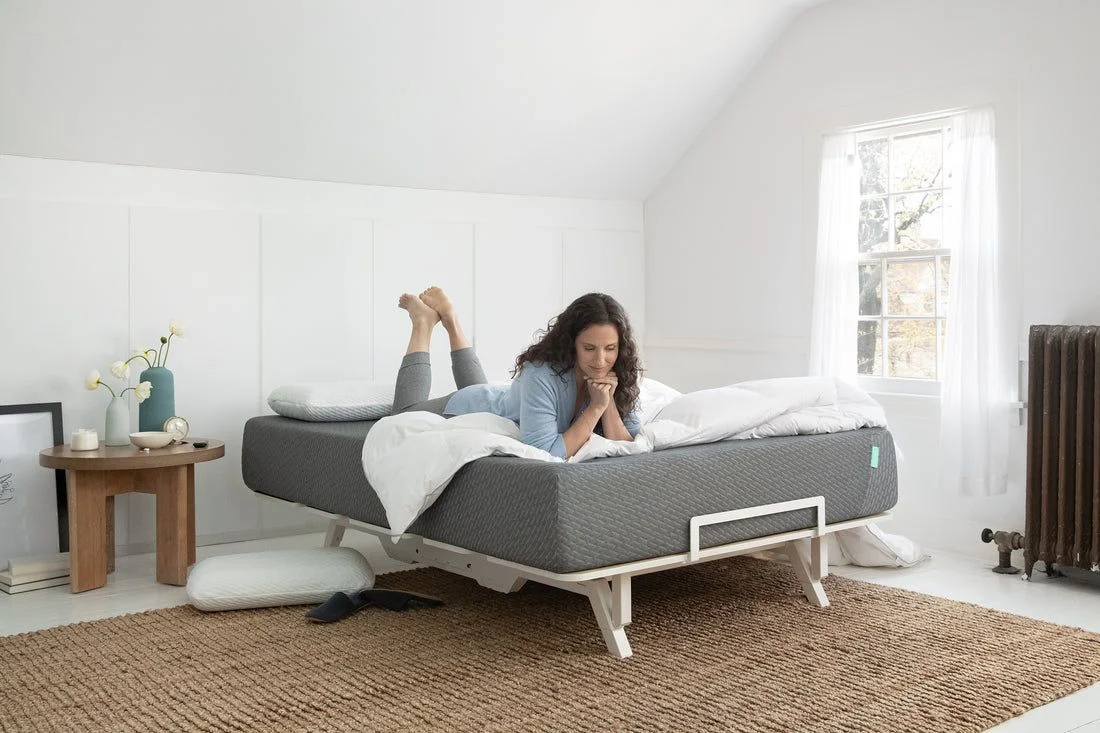

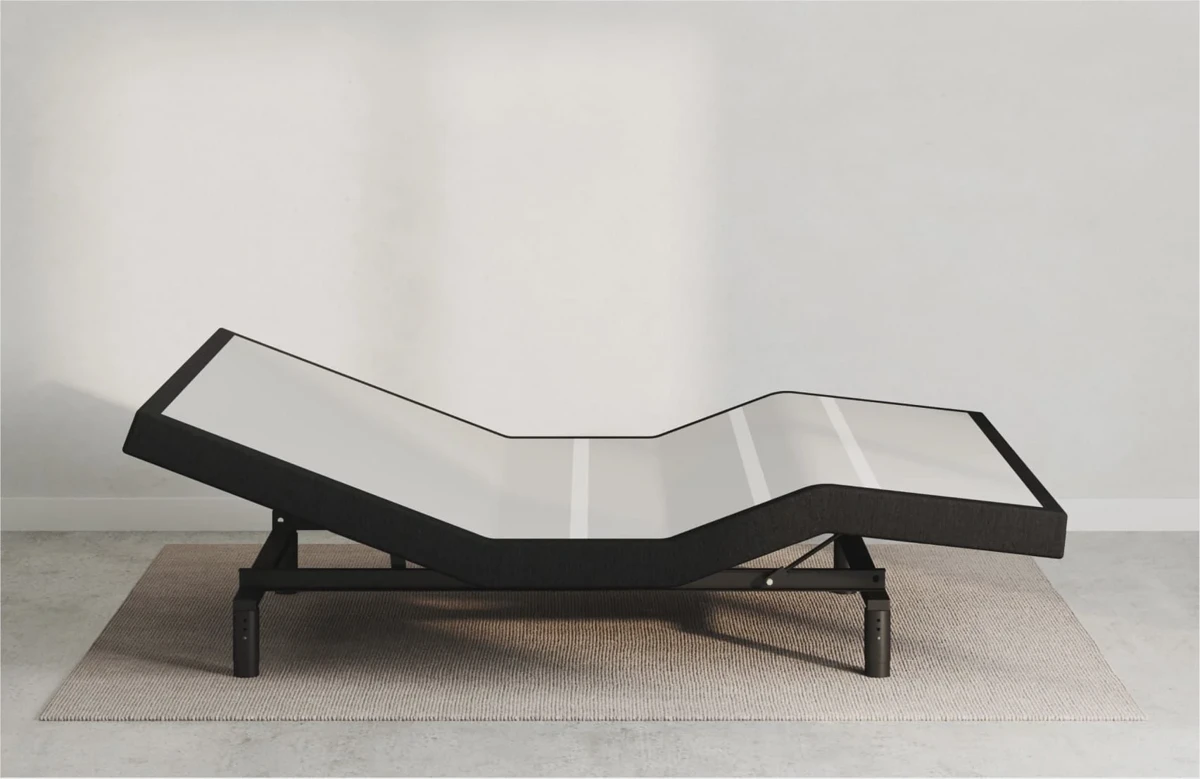
An adjustable base solves real problems - back pain, snoring, mild sleep apnea - but the exposed motor housing, metal legs, and dangling power cable do not exactly say "designer bedroom." The good news: you can hide all of it without compromising the lift mechanism. The methods below range from a $25 wrap-around bed skirt to a full panel-bed surround, and we flag the one trap most guides skip - never block the airflow vents on the motor.

1. Use a Bed Skirt Designed for Adjustable Bases
A standard fitted bed skirt does not survive an adjustable base - the moment the head lifts, the skirt bunches, slides, or pulls off. You need a skirt built for movement. Three styles work:
- Wrap-around (elasticized): stretches around the perimeter of the base. No lifting the mattress, no Velcro. Best for renters and anyone who wants a 10-minute install. $20-$45.
- Velcro-strip skirts: the hook side adheres to the base; the loop side lives on the skirt. Strongest hold for split-king bases where each side moves independently. $30-$60.
- Three-piece tailored: separate panels for each side and the foot, often with split corners. Highest design ceiling, but requires careful measuring of the drop so both sides hang evenly. $50-$120.
Whatever style you pick, measure the drop from the top of the base to the floor - not from the top of the mattress. A skirt that skims the floor (within 1 inch) hides the most without becoming a tripping hazard.
2. Surround the Base with a Panel or Platform Bed Frame
This is the option most one-line guides skip, and it is the one that reads most like a traditional bed. You place the adjustable base inside a four-sided panel bed (headboard, footboard, two side rails) so the metal disappears entirely behind wood or upholstery. Two non-negotiables:
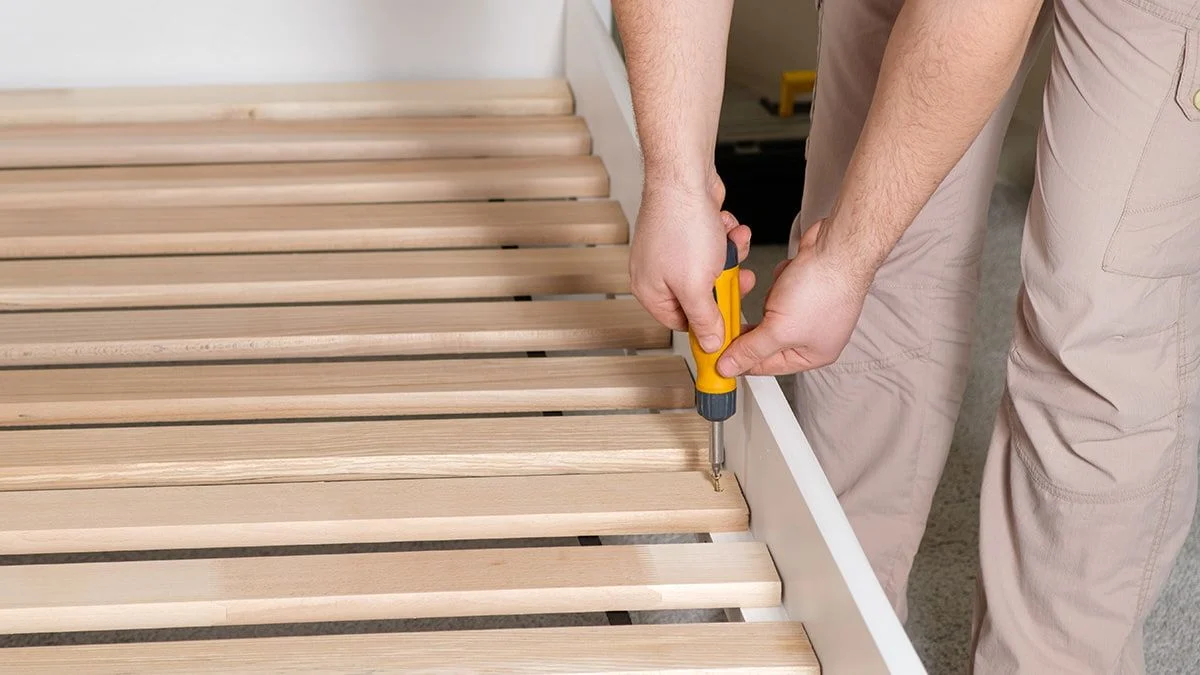
- Remove or skip the slats. The adjustable base is the foundation - slats fight the lift mechanism.
- Confirm clearance for the headboard. When the head section lifts, the mattress travels both up and slightly forward. If your panel headboard is rigid, leave 2-3 inches between the headboard face and the mattress edge, or use a "zero-clearance" base, which is engineered to lift without colliding with a fixed headboard.
Most modern adjustable bases ship with detachable headboard brackets - bolt the existing headboard directly to the base instead of leaning it against the wall, and the whole assembly moves as one unit.

3. Add a Statement Headboard
A tall upholstered or wooden headboard pulls the eye up and away from the base. Floating headboards (wall-mounted, not attached to the bed) are the cleanest option for adjustable beds because nothing on the headboard moves when the mattress lifts. Aim for a headboard at least 48 inches tall for a queen - anything shorter gets visually swallowed by the mattress.
4. Layer Oversized Bedding
An oversized comforter or coverlet - one size up from your mattress (a king comforter on a queen bed) - drapes past the base and onto the floor without needing a skirt at all. Pair with a folded throw at the foot for extra coverage. The trick is weight: lightweight cotton drapes naturally; heavy quilts can pull the bedding off-center every time the head section reclines.
5. Place a Bench, Trunk, or Bed Steps at the Foot
A storage bench, blanket trunk, or set of bed steps blocks the most-seen angle - the foot of the bed when you walk into the room. Choose something the same height as the base or 1-2 inches taller. Anything shorter leaves a visible strip of metal.
6. Flank the Bed with Tall Nightstands
Nightstands taller than the mattress top hide the base from the side angle entirely and make the bed read as a single piece of furniture. This is the cheapest cover-the-sides solution if you already own nightstands of the right height - no fabric, no carpentry.
7. Tame the Cables
Even a perfect bed skirt cannot hide a power cord and remote cable snaking across the floor. Two fixes:
- Adhesive cable channels: stick to the back of the headboard or the inside of the footboard rail; route the cord up and along the frame to a wall outlet.
- Velcro cable wraps: bundle the slack cable against the underside of the base - but never zip-tie or wrap cables tight against the motor housing, and keep the motor's vents clear so it does not overheat.
Why Hide an Adjustable Bed Frame at All?
Aesthetics is the obvious reason, but two practical motivations matter more:
- Dust protection. The motor and control box pull air through small vents; ambient dust shortens motor life. Skirts and panel surrounds reduce how much settles on the housing.
- Pet and child safety. Exposed bases are a pinch hazard during recline cycles. A skirt or surround is a soft barrier that keeps small hands and paws out of the moving parts.
Mistakes That Wreck the Mechanism
- Putting slats over the base. The base IS the foundation. Slats restrict the lift.
- Tucking a skirt under the mattress. Friction will rip the skirt the first time the head section lifts. The skirt must attach to the base, not the mattress.
- Blocking motor vents. Cable wraps, fabric, and storage drawers stuffed against the motor block airflow and shorten its life.
- Ignoring headboard clearance. If the headboard is fixed and the base is not zero-clearance, the lift cycle scuffs the headboard within weeks.
Adjustable Bed Frame FAQ
Can you put an adjustable bed frame inside a regular bed frame?
Yes, as long as the regular frame has open inside dimensions large enough for the base, no slats interfering with the lift, and either flexible headboard clearance or a zero-clearance base. Most panel beds and storage beds work; metal Hollywood frames usually do not.
What is a zero-clearance adjustable base?
A zero-clearance base lifts the mattress straight up rather than up-and-forward, so it can sit inside a fixed headboard panel bed without the mattress hitting the headboard during recline. Major brands including Tempurpedic, Saatva, and Reverie offer zero-clearance models.
Will a regular bed skirt work on an adjustable bed?
No. A traditional skirt sits between the mattress and box spring; on an adjustable base there is no box spring, and the skirt would slide off the moment the head section lifts. Use a wrap-around, Velcro, or three-piece skirt designed for adjustable bases.
How do I hide the cables on an adjustable bed?
Use adhesive cable channels along the back of the headboard or footboard, then route the cord straight to the wall outlet. Velcro wraps can bundle slack cable against the base - but keep the motor housing's vents completely clear of fabric or wraps.
Does hiding the frame void the warranty?
Bed skirts, oversized bedding, headboards, and panel surrounds do not void any major brand's warranty. What can void it: bolting non-approved hardware to the base, modifying the motor wiring, or blocking ventilation enough to cause overheating.
Bottom Line
The fastest fix is a wrap-around bed skirt and an oversized comforter - under $80, 15 minutes, no tools. The most polished fix is a panel-bed surround paired with a zero-clearance adjustable base, which makes the bed indistinguishable from a traditional one. Whichever route you take, keep the motor vents clear and confirm the headboard does not collide with the mattress during a full recline cycle. Done right, you keep every benefit of an adjustable bed and lose every visible reminder that it is one.