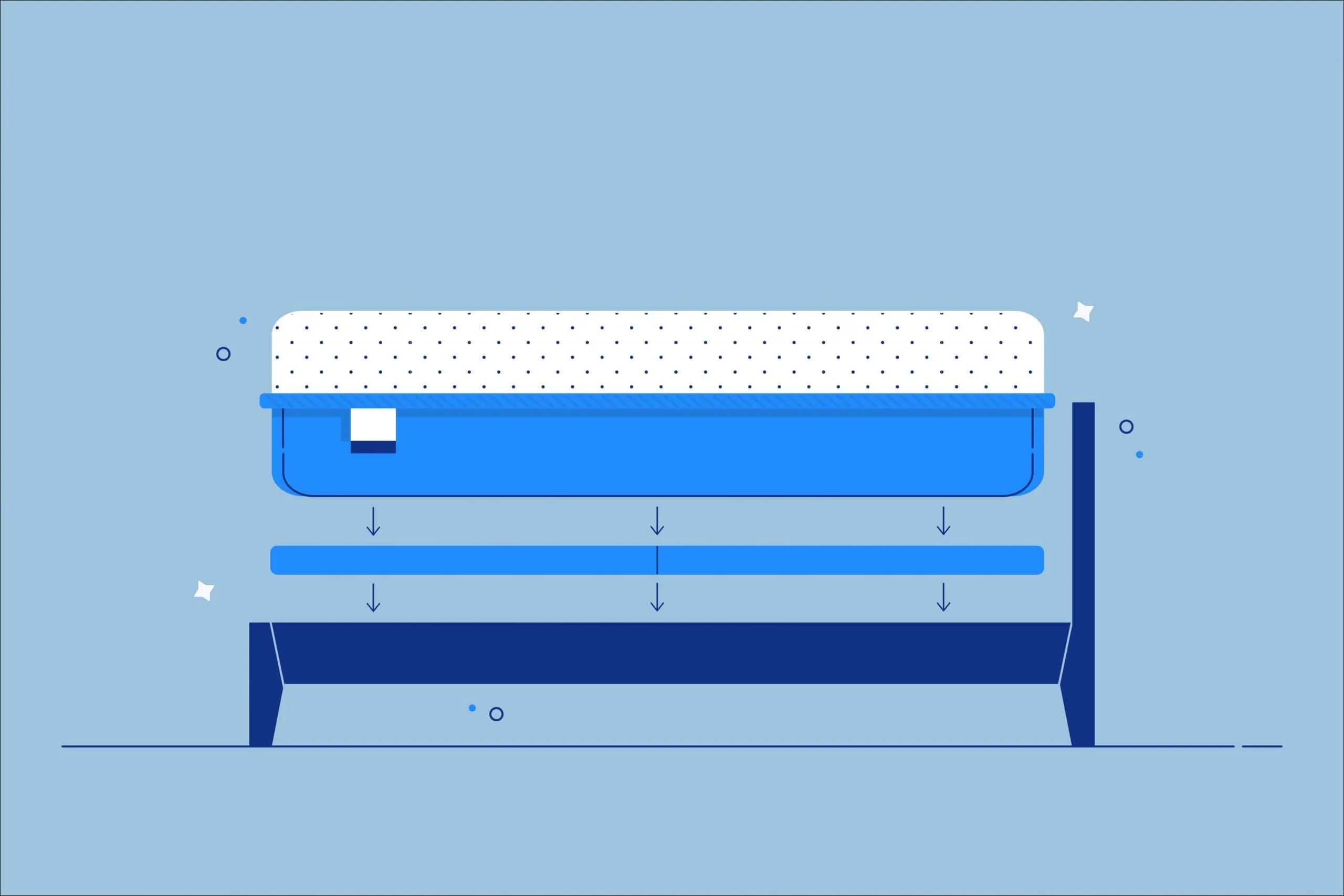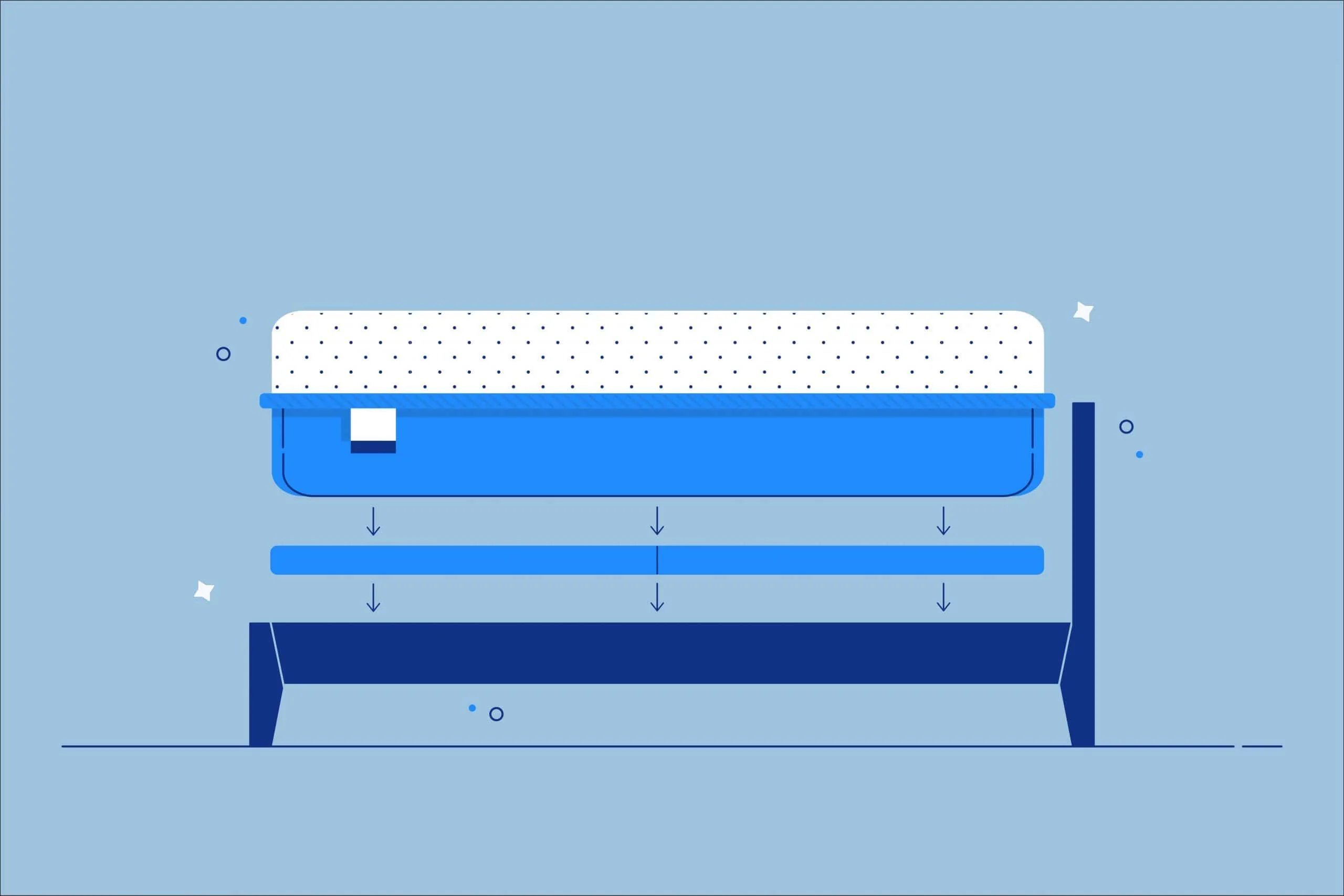
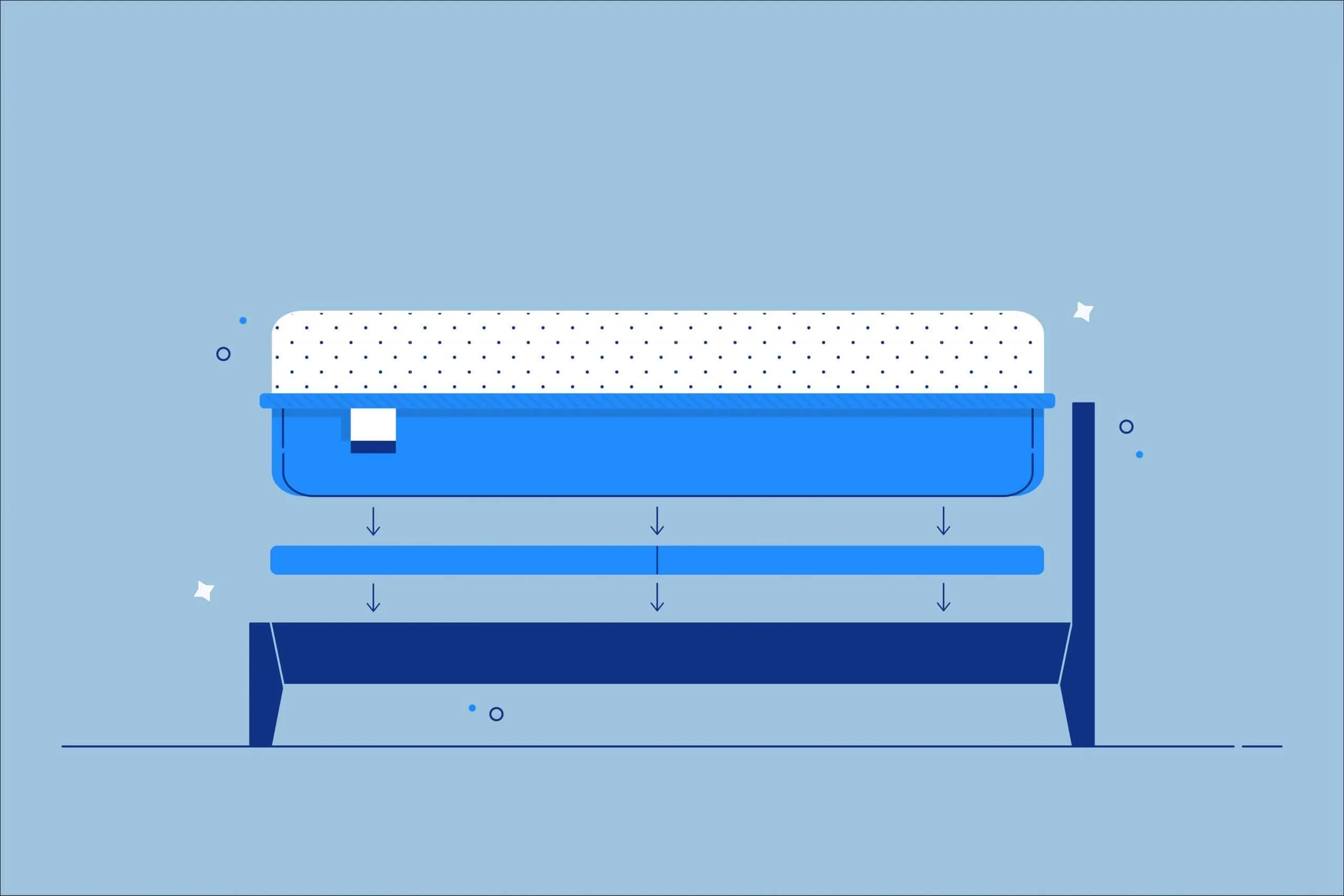
If your mattress sags between bed slats, slides on a platform frame, or feels softer than the day you bought it, a bunkie board is one of the cheapest fixes in the bedding aisle. The 1-to-3-inch flat panel slips between mattress and base to give foam and hybrid beds the rigid foundation they need - without adding the height of a box spring.
This guide explains what a bunkie board does, when you actually need one, how it compares with box springs and slats, and how to pick (or build) the right size.
What Is a Bunkie Board?
A bunkie board is a thin, rigid panel - usually plywood, particleboard, or steel covered in fabric - that sits directly under your mattress. Most are between 1 and 3 inches thick and weigh a fraction of what a box spring weighs.
Key characteristics:
- Significantly thinner than box springs (so the bed sits lower)
- Made from plywood, particleboard, MDF, or metal for a flat, unyielding surface
- Originally designed for bunk beds (hence "bunkie") to keep the upper bunk from riding too high
- Available in twin, twin XL, full, queen, king, and California king
- Lightweight, easy to maneuver, and ships flat
- Compatible with slatted bases, box springs, and platform beds
What Is the Purpose of a Bunkie Board?
The core job of a bunkie board is to provide a stable, fully supported surface for the mattress. It does four things at once:
Prevents sagging. A solid surface stops memory foam, latex, and hybrid mattresses from drooping into the gaps between bed slats - which protects the mattress and most manufacturer warranties.
Distributes weight evenly. With no flex points, body weight spreads across the whole bed instead of pushing into spaces between slats.
Keeps the profile low. A 1-3 inch board lets the mattress sit close to the floor - useful for low platform frames, daybeds, and bunk beds where a 6-inch box spring won't fit.
Reinforces tired frames. A bunkie board can extend the life of an older frame whose slats have started to bow without buying a new base.
Bunkie Board vs. Box Spring
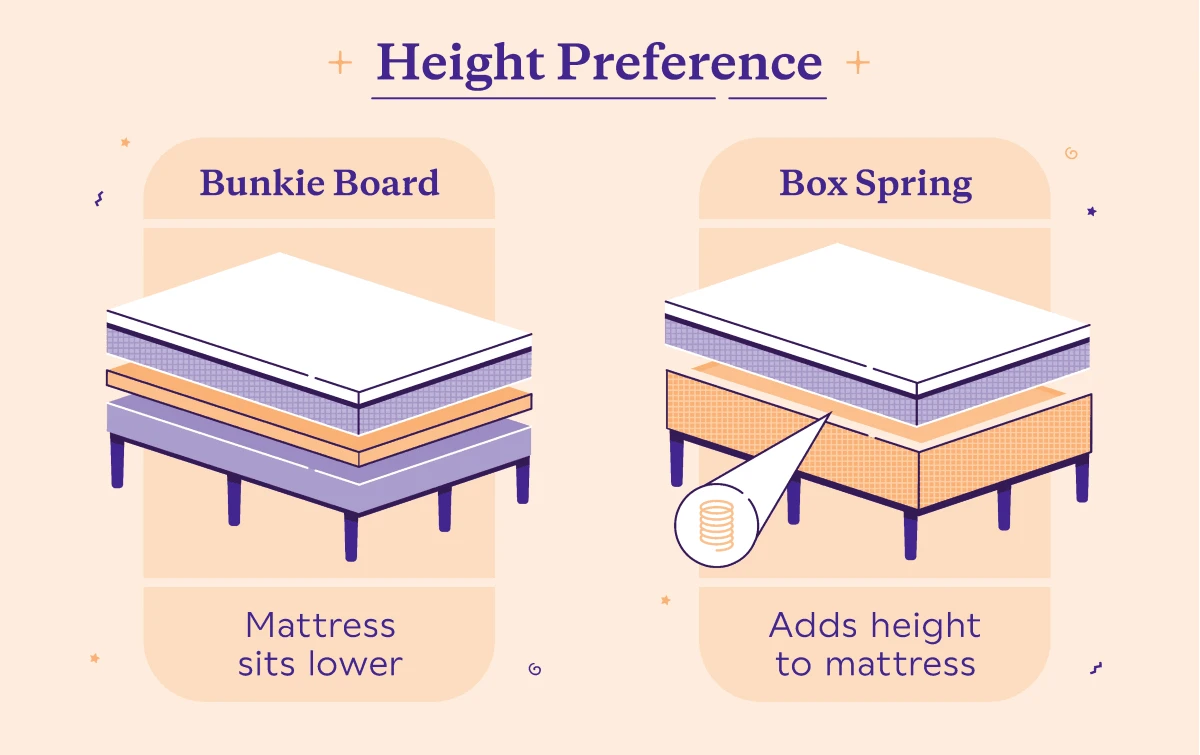
Bunkie boards and box springs both lift a mattress, but they aren't interchangeable. Most modern foam and hybrid mattresses are not compatible with traditional coil box springs - the give in the coils breaks the foam down over time.
Bunkie board - solid surface, ~1-3 inches thick, no internal coils, ideal for foam/hybrid mattresses on platform frames or wide-slat bases. Inexpensive and lightweight.
Box spring - ~6-9 inches tall, steel coils inside a wooden frame, designed to absorb shock for traditional innerspring mattresses. Adds height and bounce, but can sag and squeak as the coils wear.
If you have a low-profile platform bed and a foam or hybrid mattress, a bunkie board is almost always the better pick. If you have an innerspring on a basic metal bed frame, the box spring's shock absorption is still worth it.
Bunkie Board vs. Slats
Modern bed frames typically use wooden or metal slats. The rule of thumb from most mattress brands: slats should be no more than 2.75-3 inches apart to support a foam or hybrid mattress. If your slats are wider than that, the mattress will sag between them - and many warranties become void.
A bunkie board bridges those gaps with a continuous flat surface. The trade-off is airflow: slats let air circulate under the bed; a solid board doesn't. If you sleep hot, look for a bunkie board with breathable fabric edges or a slatted (not solid) design.
When You Actually Need a Bunkie Board
You probably need one if any of these apply:
- Your bed slats are spaced more than ~3 inches apart
- You own a memory foam, latex, or hybrid mattress on a platform frame
- Your mattress feels softer than it should and you suspect base sag
- You have a daybed, trundle, or bunk bed and the mattress slides around
- An older box spring still works but doesn't fully support a newer foam mattress
You probably don't need one if:
- Your platform bed already has a solid wood deck
- Your slats are narrowly spaced (≤ 3 inches)
- You have a traditional innerspring mattress on a healthy box spring
How to Use a Bunkie Board
Installation is the easiest part of mattress ownership: pull the mattress off, lay the bunkie board flat across the slats or box spring with the long edge running the same direction as the bed, and put the mattress back on top. Check that the board sits flush and doesn't rock.
A few specific use cases:
Foam mattresses. Memory foam and latex demand an unyielding base. A bunkie board over slats gives them the continuous support they're spec'd for.
Wide-slat platform beds. Most platform frames have slats at 3+ inch spacing. Drop a bunkie board over the slats - no need to replace the frame.
Reviving old frames. If a vintage bed frame's slats have started to bow but the rest is solid, a bunkie board restores a flat sleeping surface.
How to Pick the Right Bunkie Board
When shopping, weigh these:
- Thickness. Thicker boards (2-3 inches) are more rigid and last longer; thinner ones (1-1.5 inches) keep the bed lower.
- Material. Solid plywood is the strongest; particleboard is cheapest; covered steel is the longest-lived but heaviest.
- Construction. Folding or split-panel designs make moving and apartment delivery much easier.
- Cover. A fabric-wrapped board protects the underside of the mattress and looks better on open bed frames.
- Size match. Match the mattress size exactly - undersized boards leave unsupported corners.
- Price. Most bunkie boards run $50 to $150; paying significantly more rarely buys more support.
How to Build a DIY Bunkie Board
If you want exact dimensions or just want to save money, a DIY board is a one-afternoon project.
- Measure the inside of your bed frame - width, length, and the depth available below the mattress.
- Buy a sheet of 3/4-inch furniture-grade plywood at a home center; ask them to make the long cut for you.
- Cut the panel to the inside dimensions of the frame. For queen and king, cut two half-panels for easier handling.
- Sand every edge until smooth - splinters will tear up a mattress cover.
- Cover (optional) with a layer of upholstery fabric or felt, stapled to the underside, to protect the mattress.
- Install the board on the frame, confirm it sits flat, and replace the mattress.
Total cost is usually $30-$50 for materials and the board will outlast a cheap pre-made bunkie.
The Bottom Line
A bunkie board is the simplest way to give a foam or hybrid mattress the rigid, low-profile foundation it needs. If your slats are wide, your platform bed is too soft, or your old frame is starting to sag, a $50-$150 board solves the problem without replacing the bed. Match the size to your mattress, pick a thickness that fits your frame, and you'll get years of better support - and probably a longer mattress lifespan along with it.
Frequently Asked Questions
Is a bunkie board necessary?
Only if your bed frame cant fully support your mattress on its own. If you have a foam or hybrid mattress on slats spaced wider than ~3 inches, on a wood platform with no solid deck, or on a tired box spring, a bunkie board prevents sagging and protects your warranty. If you have an innerspring on a healthy box spring or a platform bed with a solid wood deck, you dont need one.
Can you sleep on a bunkie board alone?
Not directly - a bunkie board is meant to support a mattress, not replace one. It can substitute for a box spring on a platform bed and gives you a firm, low-profile setup, but you still need a mattress on top.
Is a bunkie board just plywood?
Most are. A typical bunkie board is a 1-3 inch panel of plywood, particleboard, or MDF, often wrapped in fabric. Some are made from steel or have a slatted construction for better airflow. A DIY 3/4 inch plywood panel cut to your bed dimensions works the same way.
Can you put a bunkie board on a regular bed frame?
Yes. A bunkie board can sit directly on a metal bed frame, on top of an existing box spring for added rigidity, or across slats on a platform bed. Just make sure the frame is wide enough to fully support the boards edges.
Does a bunkie board reduce mattress airflow?
A solid bunkie board does block some airflow versus open slats, which can matter for hot sleepers and all-foam mattresses. If overheating is a concern, look for a slatted bunkie board or one with breathable fabric edges.
Need a new mattress to go with that bunkie board?
Browse our independent reviews of memory foam, hybrid, and innerspring picks across every major brand.