
A bolster pillow is a long, narrow, firm cushion - usually cylindrical but sometimes rectangular or wedge-shaped - designed to support the neck, back, knees, or limbs while you sleep, read, lounge, or recover from injury. Unlike a standard bed pillow, a bolster's elongated shape lets you tuck it between your knees, hug it to relieve shoulder pressure, prop it under your lumbar spine, or run it across the headboard as a decorative anchor.
Below: where bolsters came from, the seven situations they're worth using for, the sizes and fills that actually matter, how they compare to body pillows and wedge pillows, and how to keep one clean.
Where the Bolster Pillow Comes From
The English word bolster descends from Old English belg (meaning "bag" or "cushion"). But the long firm pillow itself predates the word by centuries, and shows up across multiple traditions:
- Asia. In Vietnam, Indonesia, Malaysia, and parts of Korea, the gối ôm (literally "hugging pillow") has been a household staple for generations - traditionally bamboo or stuffed with kapok, hugged for cooling and emotional comfort.
- Europe. In 17th- and 18th-century European homes, a single firm bolster ran the full width of the bed under a stack of softer pillows, raising the sleeper into the half-upright posture preferred at the time.
- South Asia. Indian masnad and takiya bolsters were used for floor-seated reclining at meals and majlis-style gatherings.
The shape stayed; the materials evolved. Today's bolster pillow is just as likely to be memory foam wrapped in linen as feathers in cotton ticking.
What Is a Bolster Pillow Used For? 7 Situations Where It Earns Its Spot
A bolster solves problems a regular pillow can't, because its shape stays put under load. The seven most useful applications:
1. Between the knees for side sleepers. Slipping a bolster between your knees stops the top knee from collapsing forward, which keeps the pelvis level and the lumbar spine aligned. The American Chiropractic Association recommends this position for anyone with chronic lower-back pain who sleeps on their side.
2. Under the knees for back sleepers. Elevating the knees about 15-30 degrees flattens the lower back into the mattress, reducing the unsupported arch that otherwise tightens the lumbar paraspinals overnight. A 6-by-16-inch cervical bolster works; a 12-inch round works better.
3. Lumbar support while sitting. Wedged behind your lower back in an office chair, recliner, or car seat, a small rectangular bolster preserves the natural lordotic curve and offloads the discs you'd otherwise crush against the seatback.
4. Pregnancy support. A 42- to 54-inch bolster gives a pregnant side sleeper somewhere to rest the top leg and the bump simultaneously without needing a full C-shaped body pillow.
5. Post-surgical recovery. After abdominal, hip, knee, or shoulder surgery, a bolster splints the surgical site (held against the chest after a C-section, under the knee after ACL repair, behind the back after shoulder work) so you're not bracing with your own muscles every time you move.
6. Yoga, meditation, and restorative practice. Long firm bolsters are core props in Iyengar and restorative yoga - placed under the spine for supported fish, under the knees for savasana, or under the hips for supported bridge.
7. Decorative bed styling. A single bolster spanning the headboard, or a pair flanking the European shams, is a finishing element in hotel-style bedding. Functionally optional; visually load-bearing.
Bolster Sizes - What Each One Is For
There is no single "standard" bolster, but the market clusters around four sizes, each with a clear use case:
Cervical bolster - roughly 6 × 16 inches. A small half-round or full cylinder, sized to slot under the neck or knees. The right pick if you want orthopedic support without buying a full-length pillow.
Throw bolster - roughly 7 × 18 inches. Decorative size, used in pairs on a sofa or chair. Comfortable to hug; too small to span a queen headboard.
Standard bedroom bolster - roughly 9 × 36 inches or 9 × 42 inches. The classic across-the-headboard size on a queen. Big enough to sleep with between the knees; small enough to leave on the bed during the day.
King / hugging bolster - roughly 9 × 54 inches and up. Spans a king headboard, doubles as a body pillow, common in Southeast Asian bedrooms.
If you only buy one, the 9 × 36 to 9 × 42 size is the most flexible - decorative, sleep-supportive, and not awkward in the laundry.
Fills - What's Actually Inside, and How It Sleeps
Fill drives both feel and lifespan. The five common options, ranked from firmest to softest:
Buckwheat hulls. The firmest fill on this list. Conforms perfectly, doesn't compress overnight, never overheats. Heavy. Rustles when you move. Excellent for cervical or knee support; uncomfortable to hug.
Memory foam (solid or shredded). Shredded foam is the modern default - firm but pliable, fluffable, and good at holding shape for 3-5 years. Solid memory foam holds even firmer but can sleep warm; look for gel-infused or open-cell variants.
Microbead. Tiny polystyrene pellets. Very lightweight, conforms loosely, popular in travel bolsters. Goes flat fast (12-18 months); not suitable as a primary support pillow.
Polyester fiberfill. The cheap, washable default. Plush and forgiving, but compresses quickly - expect to replace or refluff every 1-2 years. Fine for decorative bolsters; weak for orthopedic use.
Down and feather. Luxurious feel, excellent breathability, infinitely fluffable. Loses its shape under sustained pressure (so it's poor between-the-knees support) and needs a tightly woven cover or feathers will work their way through. Avoid if you have allergies.
A practical rule: buckwheat or memory foam for support, polyester for decor, down for snuggle.
Cylindrical, Rectangular, or Wedge - Shape Variants
The classic bolster is a true cylinder. Two variants you'll also see on the market:
Half-round / D-shaped. Flat on one side, curved on the other. Sits more stably under the lower back or behind the neck without rolling. Common in cervical bolsters.
Rectangular bolster. Long flat brick rather than a tube. Gives broader contact area against a sofa back or headboard; reads more "modern" decoratively.
Wedge bolster. A foam wedge with a triangular cross-section. Different category, really - overlaps with wedge pillows used for acid reflux, post-surgical elevation, or upright reading. If you specifically need head-of-bed elevation, a wedge will outperform a cylinder.
Bolster Pillow vs. Body Pillow vs. Wedge Pillow
These three get conflated; they aren't interchangeable.
Bolster vs. body pillow. Body pillows are typically 20 × 54 inches, soft, and shaped (C, U, J, I) to wrap around the torso. They're built for hugging an entire side. Bolsters are shorter, firmer, and a true cylinder - better for targeted support (between knees, under neck) than for full-body containment. If you want one pillow you can hug and sleep with all night, a body pillow wins. If you want firm leg or neck support that won't squash, a bolster wins.
Bolster vs. wedge pillow. Wedge pillows are triangular and designed to elevate the head and torso at a fixed 30-45 degree angle for reflux, sleep apnea, or recovery. Bolsters can lift, but they roll and they don't hold a sleeping incline reliably. For nightly elevation, buy a wedge.
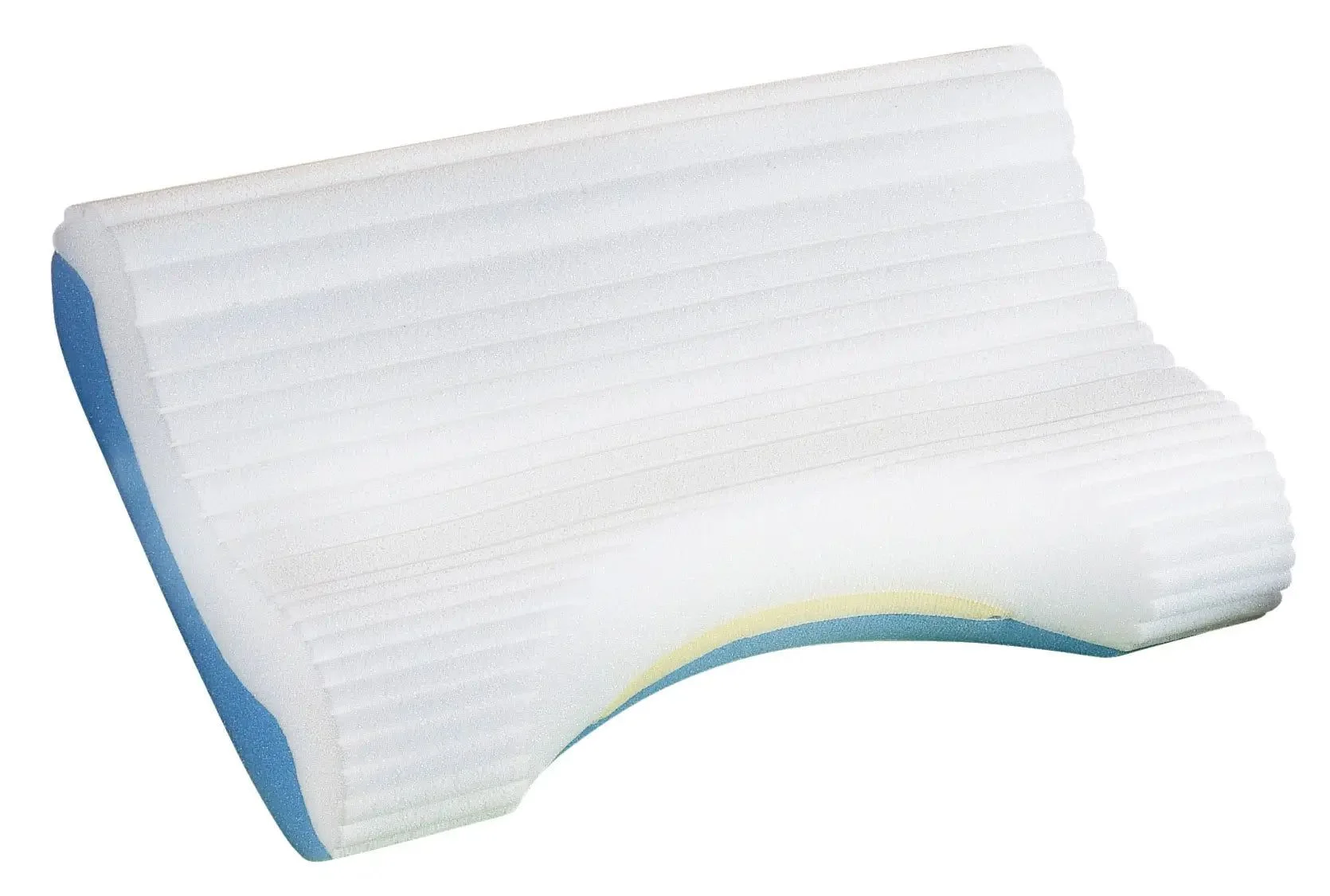
Bolster vs. neck/cervical pillow. A cervical pillow is contoured to your neck's specific shape; a small cylindrical bolster is a generic curve. The bolster is cheaper and more versatile. The cervical pillow fits one job better.
How to Care for a Bolster Pillow
Care depends on fill, but the universal rules:
- Vacuum the cover monthly with the upholstery attachment to lift dust, hair, and skin cells before they migrate inward.
- Spot-clean stains immediately with mild detergent and a damp cloth - don't soak fills like memory foam, buckwheat, or down.
- Wash removable covers per their care label (most cotton/linen covers are machine-cold, gentle).
- Refluff weekly. Hold it at both ends, squeeze toward the middle, then snap it back. Restores loft for polyester, down, and shredded foam.
- Air it out monthly. Twenty minutes of indirect sun kills dust mites and refreshes fabric.
- Store cool and dry. Heat and humidity break down foam and invite mildew in down.
- Replace when it stops bouncing back. Polyester and down: 1-2 years. Memory foam: 3-5 years. Buckwheat: refresh hulls at year 5.
Frequently Asked Questions
(See FAQ block below - covers sleeping with a bolster, between-the-knees use, washing, and pregnancy positioning.)
The Short Version
A bolster pillow is the most versatile pillow you don't already own. The 9 × 36-inch shredded-memory-foam version covers 80% of use cases - between the knees, under the lumbar, behind the head while reading, across the bed for styling - and lasts longer than any throw pillow you'll buy. If your sleep posture is the problem you're trying to solve, that's the one to start with.

Bolster Pillow FAQs
Is it good to sleep with a bolster pillow?
Yes, if you have shoulder, hip, or lower-back discomfort. The firm shape gives your knees, arms, or lumbar spine a place to rest, which keeps the pelvis level and the spine aligned. Side sleepers and pregnant sleepers benefit most.
Should I sleep with a bolster between my knees?
If you sleep on your side, yes - between-the-knees positioning prevents the top knee from collapsing forward, which keeps the pelvis level and the lumbar spine neutral. Use a 9 × 36-inch firm bolster; a too-soft pillow will compress and lose the support.
Can you wash a bolster pillow?
Wash the cover, not the fill. Most cotton or linen covers are machine-cold, gentle cycle. Memory foam, buckwheat, and down inserts should be spot-cleaned with mild detergent and air-dried - never submerged. Polyester fiberfill bolsters can usually be machine-washed if the care label allows.
What size bolster pillow should I buy?
For sleep support, choose a 9 × 36 to 9 × 42 inch bolster - large enough to slot between the knees or behind the lumbar spine, small enough to fit a queen bed. For decoration only, 7 × 18 inches is the standard throw size. Cervical bolsters are usually 6 × 16 inches.
Are bolster pillows good for pregnancy?
They can work well for second- and third-trimester side sleeping. A 42- to 54-inch bolster supports the top leg and the bump simultaneously. If you also want torso and back support in one pillow, a C- or U-shaped body pillow is more comprehensive.
What is the difference between a bolster pillow and a body pillow?
A bolster is a firm cylindrical pillow (typically 9 × 36-42 inches) used for targeted support - between the knees, under the neck, or behind the lumbar spine. A body pillow is longer (around 20 × 54 inches), softer, and often C, U, or J-shaped to wrap around the entire torso. Bolsters are firmer; body pillows are more enveloping.
Need a pillow that fits how you actually sleep?
Browse our full pillow buying guide for picks by sleep position, neck pain, and budget.