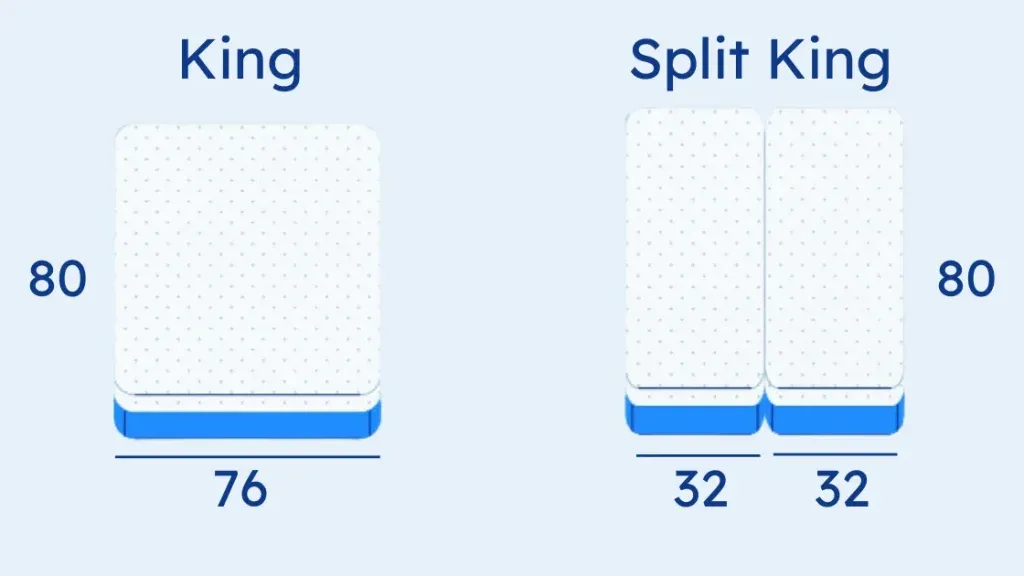
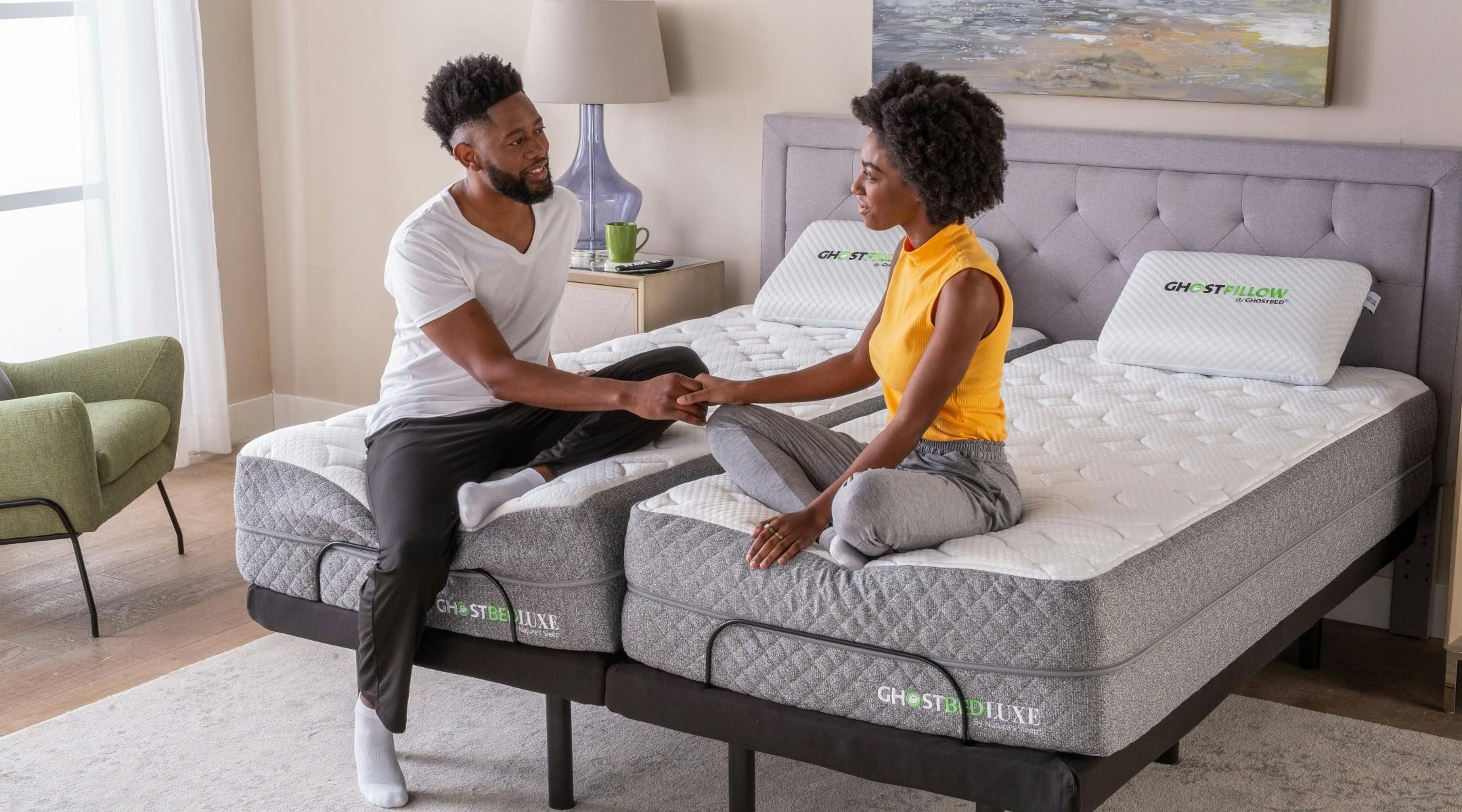
A split king is two twin XL mattresses sitting on two independent bases - perfect for couples who want different firmness or independent adjustable positions, but the design has one obvious flaw: the halves drift apart. The gap shows up as a cold seam down the middle of the bed, sheets that pull off at 3 a.m., and a perennial morning ritual of shoving the mattresses back together.
The good news: the fix is mechanical, not mysterious. Below are the seven approaches our team has actually used in our showroom and review lab, ranked by how well they hold over months of real-world use. Pick one - or stack two - and the gap stops being a daily problem.
Why split king mattresses pull apart in the first place
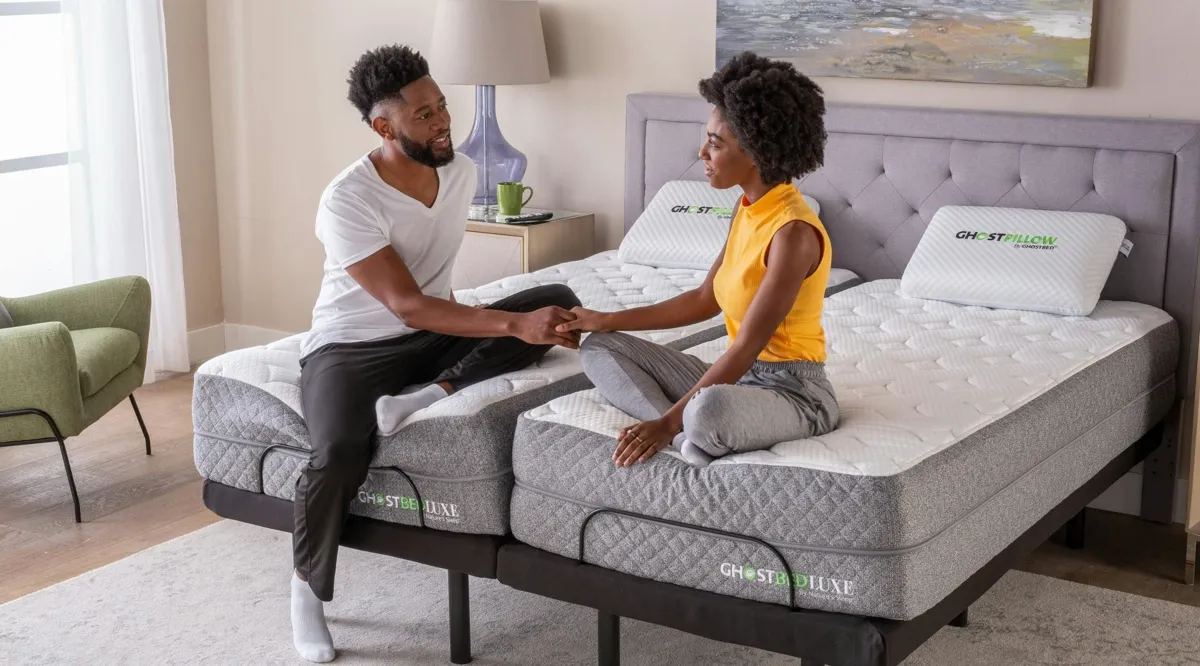
Two forces are at work. First, every time you climb in or shift in your sleep, lateral force gets transmitted into the mattress and bleeds out through whatever surface has the least friction - usually the slick top of an adjustable base. Second, an articulating base flexes the mattress as it raises, and each return-to-flat nudges the halves a millimeter or two outward. Multiply by 100 nights and you get a real gap. Anything you do to add friction underneath, lock the bases together, or hold the mattress tops in alignment will solve it.
1. Use the connector straps that came with your adjustable base
Most split king adjustable bases (Saatva, Tempur-Pedic, GhostBed, Reverie, Leggett & Platt) ship with a pair of nylon connector straps and either D-rings or buckle hardware on the inside frames. They are absolutely the first thing to try, and they are the single most common piece editors forget exists - they get tossed with the packaging. Dig through your manual or call the brand's support line. Threaded through the inside legs and cinched, they hold both bases rigidly together with no extra purchase.
2. Add a foam bed bridge (gap filler)
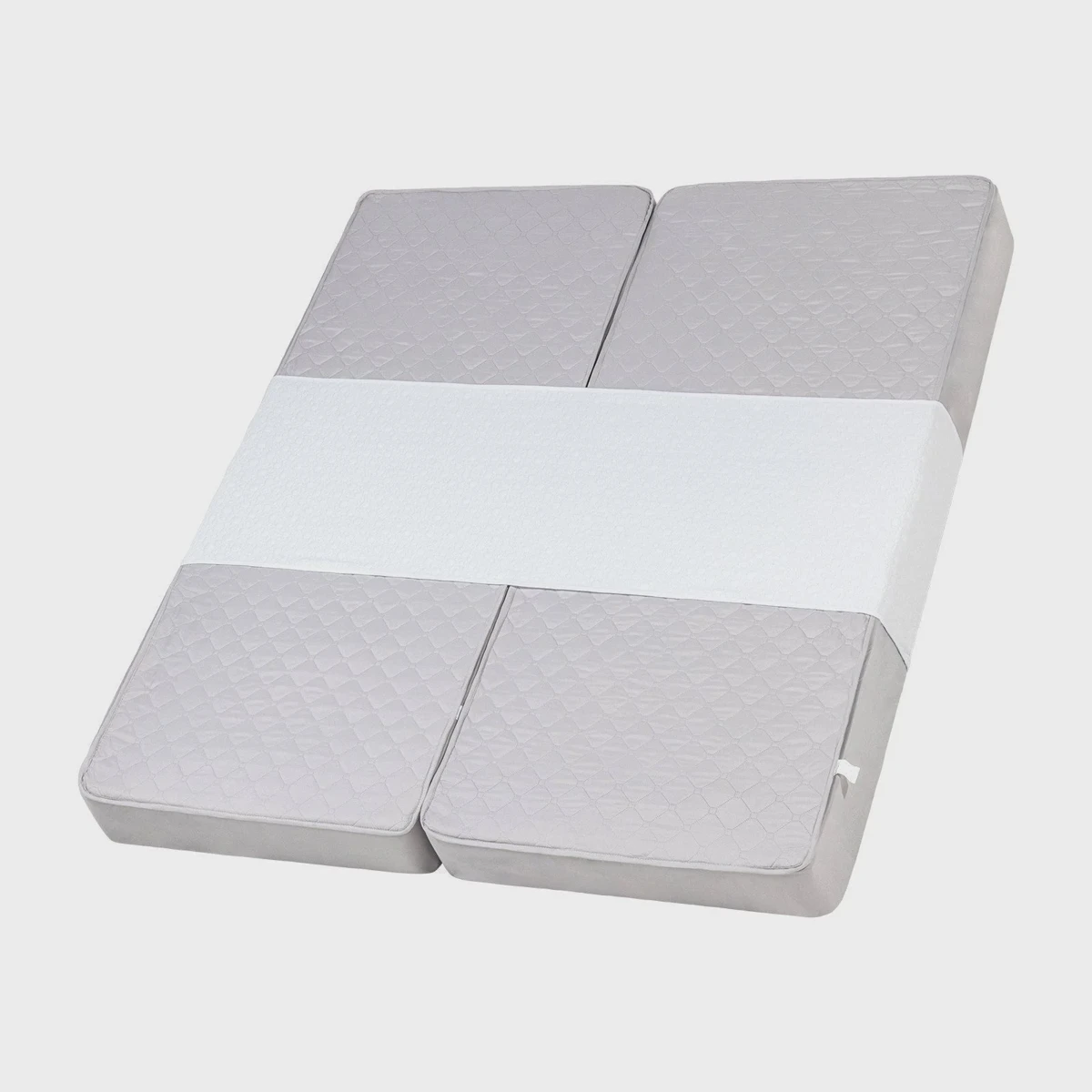
A bed bridge is a high-density foam wedge - usually 75-80 inches long and 8-12 inches wide - that you wedge between the two twin XLs. The better ones include a sheet strap that runs underneath and cinches both mattresses together. Run roughly $30-$60. The trade-off: a foam bridge is best when both halves stay flat together. If one partner habitually raises only their side, the bridge can compress at the hinge or pop out, so pair it with the strap fix below.
3. Wrap a connector strap around both mattress tops

Sometimes branded as a "bed binder" or "mattress slide stopper." These are wide nylon belts with a heavy-duty cam buckle that loop around the perimeter of both twin XLs and cinch them into one block. Unlike a foam bridge, a strap travels with both halves when the base articulates, so it is the right tool for a household where one partner runs the bed up to read or watch TV every night.
4. Put non-slip pads under each mattress
If your mattresses are sliding around on the deck of the base - not the bases sliding on the floor - non-slip rug-grip pads (the silicone or PVC kind) cut between the mattress and the base eliminate the underlying friction problem. Cheap, around $15 a sheet, and they double as a fix for any mattress that creeps on a slick foundation. We recommend this as a foundation step regardless of which other fixes you stack on top of it.
5. Lock the bases at the legs
If the bases themselves are creeping on the floor, the fix is at the leg, not the mattress. Two options: zip-tie or ratchet-strap the inside legs of the two bases together (works on any metal frame), or back the inside legs out one full turn so they sit a fraction lower than the outside legs. The slight inward cant pulls the bases together every time someone sits down. This is the technique most adjustable-base technicians use as a first pass on warranty calls.
6. Drop a king-size mattress topper across both halves
A 2- or 3-inch king-size memory foam or latex topper laid across both twin XLs disguises the seam, gives the surface a single-mattress feel, and adds enough mass to dampen lateral movement. Pair with a king-size deep-pocket fitted sheet over the top to lock the topper to both halves. This won't physically clamp the bases together - combine with #1 or #3 - but it eliminates the sensory reminder of the seam, which is what most people complaining about a split king actually want fixed. See our roundup of the best organic mattress toppers or our breakdown of 2-inch vs 3-inch toppers for picks.
7. Anchor the head with a king headboard
A king-width headboard bolted to both bases (or to the wall behind both) is the structural fix and the one we recommend if you intend to keep this bed for years. It immobilizes the bases at their most-leveraged point, so any drift downstream is small and easy to correct. Pair with connector straps (#1) and you can typically forget about the gap entirely.
Stop the bedding from making it worse
Two twin XL fitted sheets - each with elastic-band corner straps underneath - keep each half tidy. Then go a size up for the rest of the bedding: a king-size flat sheet, king-size duvet, and king-size mattress pad. The bigger top layers bridge the seam and add a small amount of weight that resists the daily creep. Avoid "split-king fitted sheets" with a slit down the middle unless you have an adjustable base that needs that geometry - they don't pull the halves together at all.
Quick maintenance check
Once a month, strip the bed and look at the inside leg of each base, the connector strap, the bridge, and the underside of each mattress. Tighten the strap if it has crept loose, vacuum any debris on the base deck (loose packing tape and dust pads are surprisingly common shifts-creators), and check that the inside feet still meet flush. Five minutes prevents the next month of midnight gap-shoving.
Why a split king is worth the hassle
- Each partner picks their own firmness without compromise.
- Independent adjustable positions for snoring, reflux, or reading.
- Two twin XL halves carry up the stairs where a king won't fit.
- Near-zero motion transfer between sides.
What to plan around
- The center seam needs an active fix (everything in this guide).
- Bedding strategy is more involved - twin XL fitted, king-size top sheet.
- Two bases means twice the warranty paperwork.
- Costs roughly 10-25% more than an equivalent solid king.
Split king gap - frequently asked questions
What is the single best fix for a split king that pulls apart?
Use the connector straps that shipped with the adjustable base first - they are the most secure point of contact and most owners don't realize they exist. If the base has none or you've lost them, a perimeter mattress strap (sometimes called a bed binder) is the next-most-secure option, because it travels with the mattresses when the base articulates.
Will a foam bed bridge work on an adjustable base that articulates?
It can, but with caveats. The bridge is most reliable when both halves are kept flat together. If one partner regularly raises their side independently, the foam compresses at the hinge and can pop out. In that case, pair the bridge with a perimeter strap, or skip the bridge and use a strap plus a king-size topper instead.
Do split king fitted sheets keep the mattresses together?
Generally no. Split-king fitted sheets are designed with a slit or two-piece construction so each half can move independently - they are the right product for couples who like independent inclines but they do not pull the halves together. To pull the halves together at the top, use a king-size flat sheet, duvet, or topper-and-king-fitted-sheet over the top of two twin XL fitted sheets.
Can I just zip-tie the bases together?
Yes, and adjustable-base technicians do this all the time on warranty calls. Loop a heavy-duty zip tie or ratchet strap through the inside legs of both bases and cinch. It's free, invisible, and rigid. Just trim the tail flush so it doesn't catch a sheet.
How much should I spend to fix a split king gap?
Most homes solve it for $15-$60. Non-slip pads run about $15, a foam bed bridge is $30-$60, a perimeter strap is $25-$40. Headboard upgrades and king-size toppers are bigger investments but they double as comfort upgrades, not just gap fixes.
Should I get a split king or a regular king?
Pick split king if either partner needs independent firmness, independent incline (snoring, reflux, post-surgery recovery), or needs to carry the mattress up tight stairs. Pick a solid king if you both sleep flat at similar firmness and the seam - even a fixed seam - would bother you. Our full breakdown is in our king vs split king comparison.