Wayfair does not manufacture most of the mattresses on its site - it's a marketplace listing thousands of SKUs from house brands (Sleep by Wayfair, Alwyn Home, Andover Mills, Mercury Row), independent labels (Nora, BlueRibbon, Linenspa, Zinus, Modway), and direct-from-factory imports. Toxicity, in other words, is per SKU, not per retailer. Some Wayfair listings are CertiPUR-US foam in a wool-blend cover with no fiberglass; others are budget Chinese-import builds where fiberglass is the only fire barrier and CertiPUR-US is nowhere on the spec sheet.
This guide covers what "toxic" actually means in a mattress context, which Wayfair categories carry the highest fiberglass and VOC risk, and the exact spec-sheet fields to check before you click Add to Cart.
Quick answer. Wayfair mattresses are not categorically toxic, but the assortment is wide enough that some models contain fiberglass fire barriers, and many cheap memory-foam imports skip third-party VOC certification. Check three things on every listing: CertiPUR-US foam, the flame-barrier material, and the cover-removal warning. If any one is missing or vague, treat the SKU as suspect.
What "toxic mattress" actually means
The word gets used loosely. In practice, four distinct concerns drive the search:
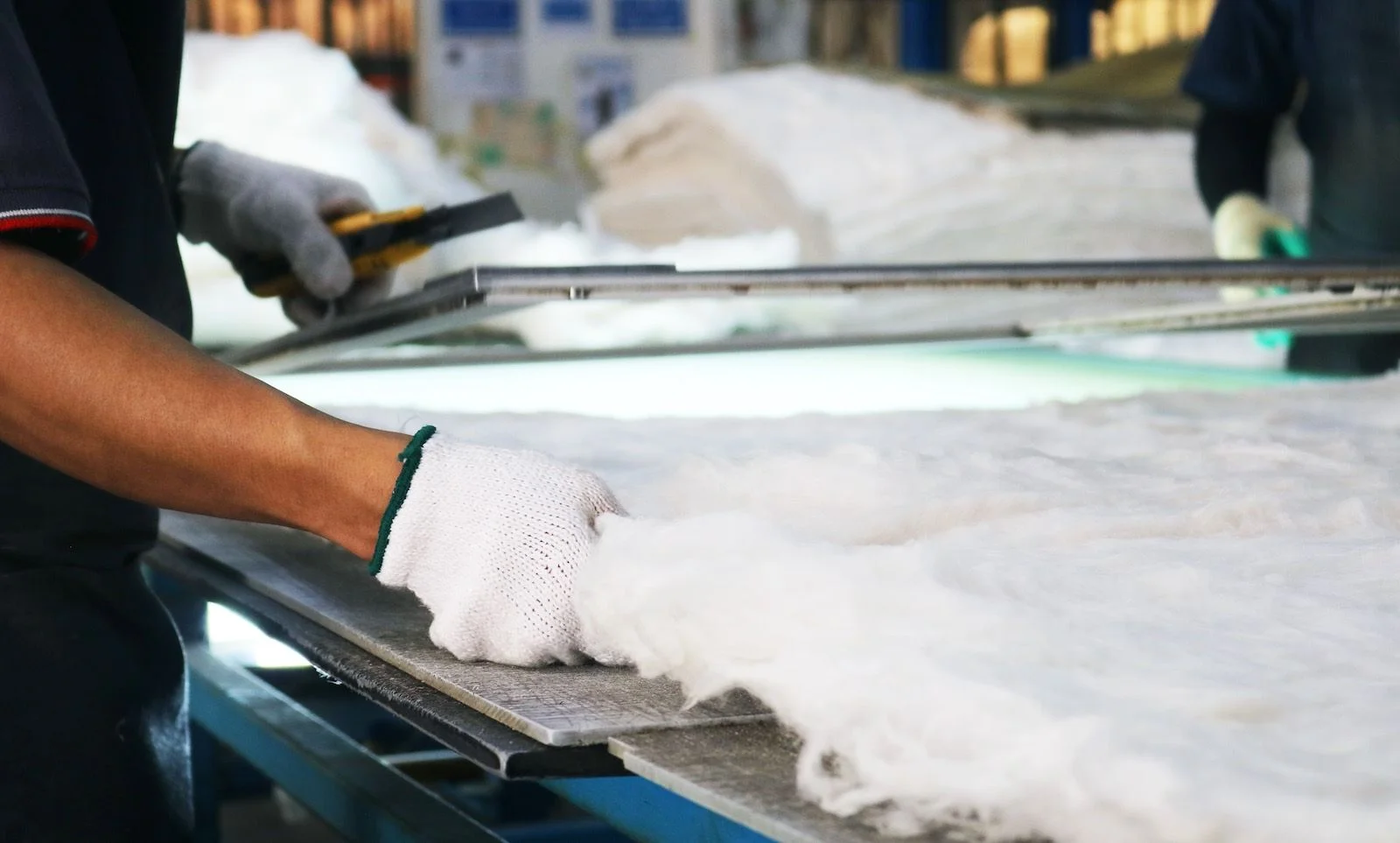
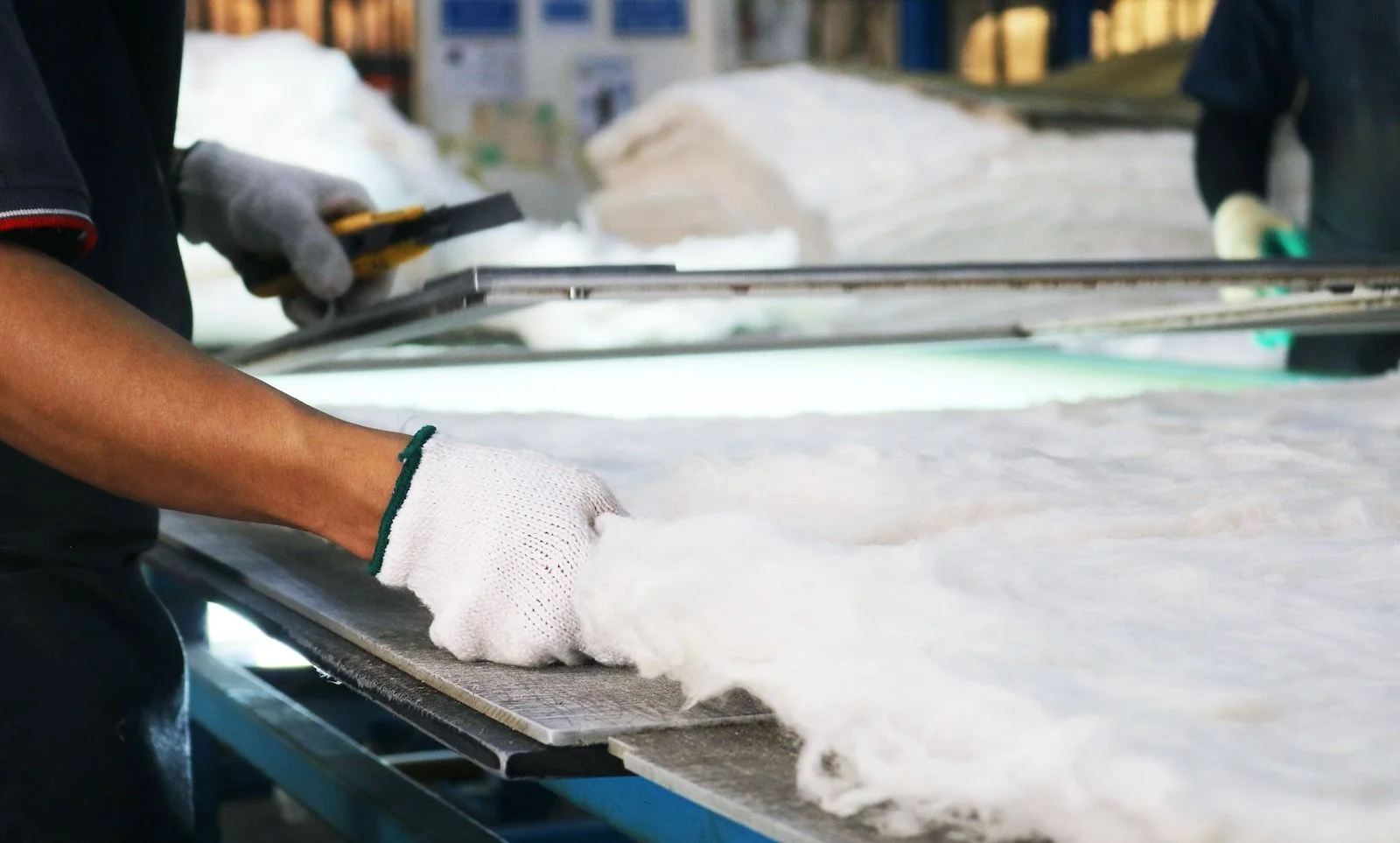
- Fiberglass. A glass-fibre layer, usually woven into the inner cover, used as a cheap federal-flammability-standard (16 CFR 1633) flame barrier. It is not toxic in the chemical sense, but if the outer cover is removed or torn the fibers can migrate through the home and cause skin, eye, and respiratory irritation. The CPSC has issued recall warnings on multiple budget brands sold through marketplace retailers including Wayfair.
- VOCs and off-gassing. Polyurethane foam releases small amounts of volatile organic compounds - most disperse within 1-2 weeks of unboxing. CertiPUR-US testing caps total VOCs at <0.5 ppm and bans formaldehyde, mercury, lead, and ozone-depleting blowing agents.
- Formaldehyde. Found historically in foam adhesives and some textile finishes. Both CertiPUR-US and GREENGUARD Gold testing screens for it.
- Flame retardants. PBDE flame retardants are now banned in US mattresses (since 2007). Modern legal options include wool, rayon-blend "fire socks," silica-treated fabrics, and - at the budget end - fiberglass.
If a Wayfair listing addresses all four explicitly, it is almost certainly safe. If it addresses none, you don't have enough information to judge.
Big-box DTC brands face the same scrutiny - see our breakdown of whether casper mattress toxic.
Which Wayfair mattresses are most likely to contain fiberglass
Fiberglass risk on Wayfair clusters around three patterns rather than specific brands:
- Sub-$300 boxed memory-foam imports. Listings under $300 with no named US brand, often shipped from overseas warehouses, are the highest-risk category. The flame barrier is rarely specified, and the listing photo usually shows a generic compressed roll. NapLab's fiberglass mattress database lists hundreds of these unbranded SKUs as fiberglass-confirmed.
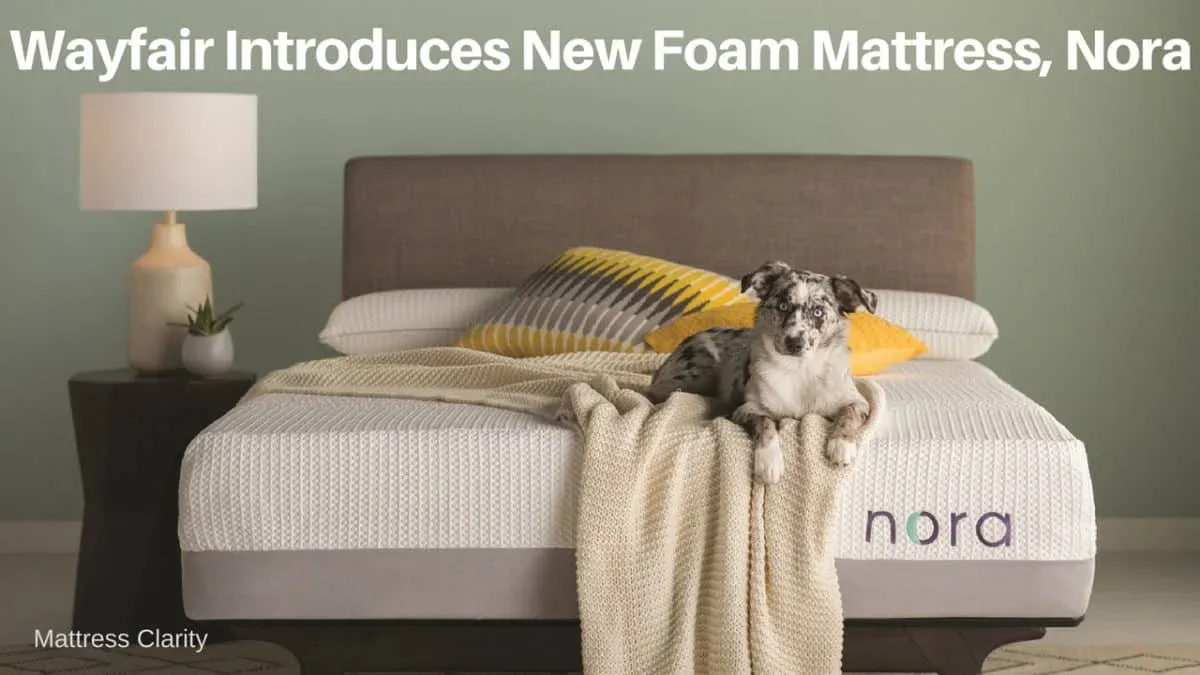
- Older Nora and "Sleep by Wayfair" memory-foam SKUs. EachNight's Wayfair fiberglass guide flagged the all-foam Nora line as fiberglass-bearing through 2023; current Nora listings now advertise fiberglass-free construction, but third-party-seller stock often pre-dates the change. Hybrid versions historically did not contain fiberglass.
- Listings with cover-removal warnings. Any mattress whose listing reads "do not remove the cover" or whose tag says "knit cover not intended for removal" almost certainly uses fiberglass underneath. Brands that use wool or rayon flame barriers do not need that warning and usually highlight a removable, washable cover as a feature.
By contrast, listings that explicitly call out a wool or rayon flame barrier - Aireloom, Avocado, Naturepedic, and select Sealy/Stearns & Foster lines sold through Wayfair - are not fiberglass-bearing.
The five spec-sheet fields to check on any Wayfair listing
Before buying, scroll the listing's Specifications tab and confirm each of these:
- Foam certification. Green: "CertiPUR-US Certified." Red flag: blank, or "tested for safety" with no certifying body named.
- Flame barrier. Green: "wool," "rayon blend," "FR rayon," or "silica-treated." Red flag: blank, "FR fiber," "knit fire sock," or any do-not-remove-cover note.
- Cover material. Green: "removable, washable," Tencel, or cotton. Red flag: "sewn-in" or "do not remove."
- VOC certification. Green: "GREENGUARD Gold" or "CertiPUR-US Low VOC." Red flag: nothing listed at all.
- Country of manufacture. Green: US, with a named factory state. Red flag: blank, or "imported" with no country named.
A SKU that hits all five green answers is functionally indistinguishable from a non-toxic mattress sold at any specialty retailer. A SKU that misses two or more is the one to skip.
Brands on Wayfair worth a closer look - and ones to skip
These groupings are based on consensus across the SERP audit (EachNight, NapLab, Reader's Digest non-toxic round-up) cross-referenced against current Wayfair listings.
Generally safer choices on Wayfair:
- Aireloom - wool flame barrier, CertiPUR-US, OEKO-TEX. See our Aireloom toxicity breakdown for the full certification map.
- Avocado - GOTS-organic wool, no fiberglass, MADE SAFE. See Avocado fiberglass coverage.
- Bear - fiberglass-free across every line, CertiPUR-US foams. See Bear fiberglass guide.
- Helix - rayon flame barrier, GREENGUARD Gold; review the full Helix safety breakdown.
- Tuft & Needle - CertiPUR-US and GREENGUARD Gold; details in our T&N toxicity write-up.
Categories to approach with skepticism:
- Generic "10-inch gel memory foam" listings under $200 from sellers without a named brand page on Wayfair.
- Older Allswell, Nora, and Sleep-by-Wayfair foam-only models - confirm the listing's Manufactured date is post-2024 and that fiberglass is explicitly disclaimed. (See our Allswell fiberglass coverage for context on the older lineup.)
- Any listing where the fire barrier line in Specifications is blank.
Off-gassing: what's normal, what isn't
Almost every memory-foam or hybrid mattress will release a faint chemical odour for 1-7 days after unboxing - that smell is residual VOCs from the foam expansion process, not formaldehyde. Air the mattress in a ventilated room and the odour clears.
Symptoms that are not normal off-gassing and warrant a return:
- Odour persisting beyond 2 weeks in a ventilated room.
- Visible white fibers or "glitter" on bedding, the floor, or pet bedding.
- Unexplained skin itching that maps to where you contact the mattress.
- Eye or respiratory irritation that resolves when sleeping elsewhere.
Wayfair's standard mattress return window is 100 nights for most boxed mattresses, though restocking fees and return-shipping treatment varies by seller - see our Wayfair mattress return policy guide for the exact mechanics, edge cases, and which categories are non-returnable.
How to off-gas a new Wayfair mattress safely
If you've already received a mattress and want to minimise exposure during the first weeks:
- Unbox in a well-ventilated room with windows open and a box fan running for the first 24-48 hours.
- Leave the mattress uncovered for at least 24 hours before adding sheets - the cover traps off-gassing.
- Use a sealed mattress encasement (zippered, not just an elastic-edge protector) for the first month if anyone in the home has chemical sensitivities, asthma, or is an infant.
- Never cut or remove the inner cover, regardless of brand. If the listing comes with a cover-removal warning, treat that warning as binding even after the off-gas period - it is a fiberglass containment indicator.
- If you suspect fiberglass migration after a tear, stop sleeping on the mattress, contain it in plastic sheeting, and contact the seller for a full refund citing the federal flammability standard.
When to skip Wayfair entirely
For shoppers who want zero ambiguity - newborns, severe allergy sufferers, pregnancy, post-surgery recovery, or anyone with multiple chemical sensitivities - Wayfair's marketplace model adds an information-asymmetry problem that specialty mattress retailers don't have. With a wool-flame-barrier, GOTS-organic mattress from a single-brand site, you know exactly what you're getting. With a Wayfair listing, you're trusting a third-party seller to have populated the spec sheet honestly.
If you're in that group, Reader's Digest's expert non-toxic mattress round-up and the Family Handyman picks skew almost entirely toward direct-to-consumer organic brands rather than marketplace listings - that's not a coincidence.
Wayfair mattress safety FAQ
Do all Wayfair mattresses contain fiberglass?
No. Wayfair lists thousands of mattresses from many brands. Some - particularly sub-$300 unbranded memory-foam imports and older Nora and Sleep-by-Wayfair foam SKUs - have used fiberglass as a flame barrier. Others, like Aireloom, Avocado, Bear, Helix, and Tuft & Needle, do not. Always check the listings spec sheet for the flame-barrier material before buying.
How can I tell if a Wayfair mattress has fiberglass?
Three signals: (1) the listing or law tag says do not remove the cover; (2) the flame-barrier field on the spec sheet is blank or vague; (3) the price is unusually low (often under $300 for a queen) with no named US brand. Brands using wool or rayon flame barriers normally call that out as a feature.
Is off-gassing the same as fiberglass exposure?
No. Off-gassing is a faint chemical smell from polyurethane foam during the first 1-7 days after unboxing - uncomfortable but generally short-lived and screened by CertiPUR-US. Fiberglass exposure happens when the mattress cover is torn or removed and tiny glass fibers escape, causing skin, eye, and respiratory irritation. They are different problems with different fixes.
Can I return a Wayfair mattress if I think its toxic?
Wayfair offers a 100-night trial on most boxed mattresses, though restocking fees and return shipping vary by seller and category. If you suspect fiberglass migration after a tear, document it and request a full refund citing the federal flammability standard. See our Wayfair mattress return policy guide for the exact mechanics.
Whats the safest mattress category to buy on Wayfair?
Listings from named US brands with three explicit specs: CertiPUR-US foam, a wool or rayon (not unspecified) flame barrier, and a removable, washable cover. Aireloom, Avocado, Bear, Helix, and Tuft & Needle all meet that bar on Wayfair listings as well as direct-to-consumer.
Need a fiberglass-free mattress with no spec-sheet guesswork?
Banner Mattress carries only models with disclosed flame barriers, CertiPUR-US foam, and clear materials documentation. Talk to our team and skip the marketplace lottery.