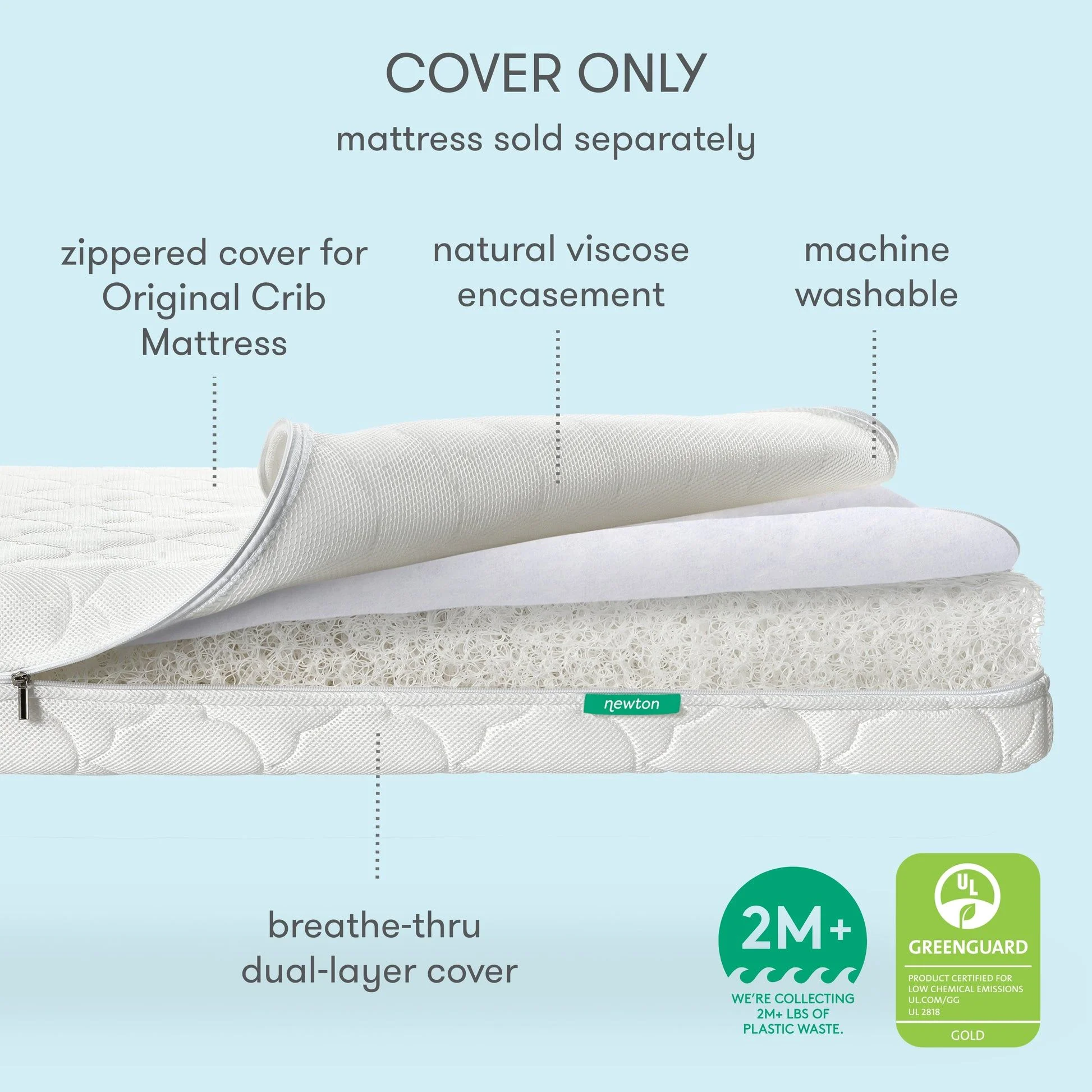
The Newton crib mattress is built to be cleaned - both the polyester cover and the food-grade Wovenaire® core are fully washable. The catch is heat. Hot water, hot dryers, hairdryers, and direct sunlight all permanently damage the spun core. Get the temperature right and the rest is straightforward.
Below is the full routine: a 30-second answer up front, then step-by-step instructions for the cover, the core, and the most common stains (pee, spit-up, blood, poop). Every step matches Newton Baby's official care guidance.
Quick answer
- Cover: unzip, machine-wash cold on delicate with mild detergent, tumble dry on low or hang to dry.
- Core: rinse in the shower or tub with cool water and a small amount of mild soap. Shake out water, stand on its side in a ventilated room. Dries in 4-8 hours.
- Stains: blot - don't rub - with cool water and a tiny bit of mild detergent. For pee, an enzyme spray made for baby fabrics works better than vinegar.
- Never: hot water, high-heat dryer settings, hairdryers, bleach, fabric softener, or direct sunlight. Heat collapses the Wovenaire spirals and you can't fix it.
For a traditional Japanese-style bed, the steps differ - see how to clean a japanese futon mattress.
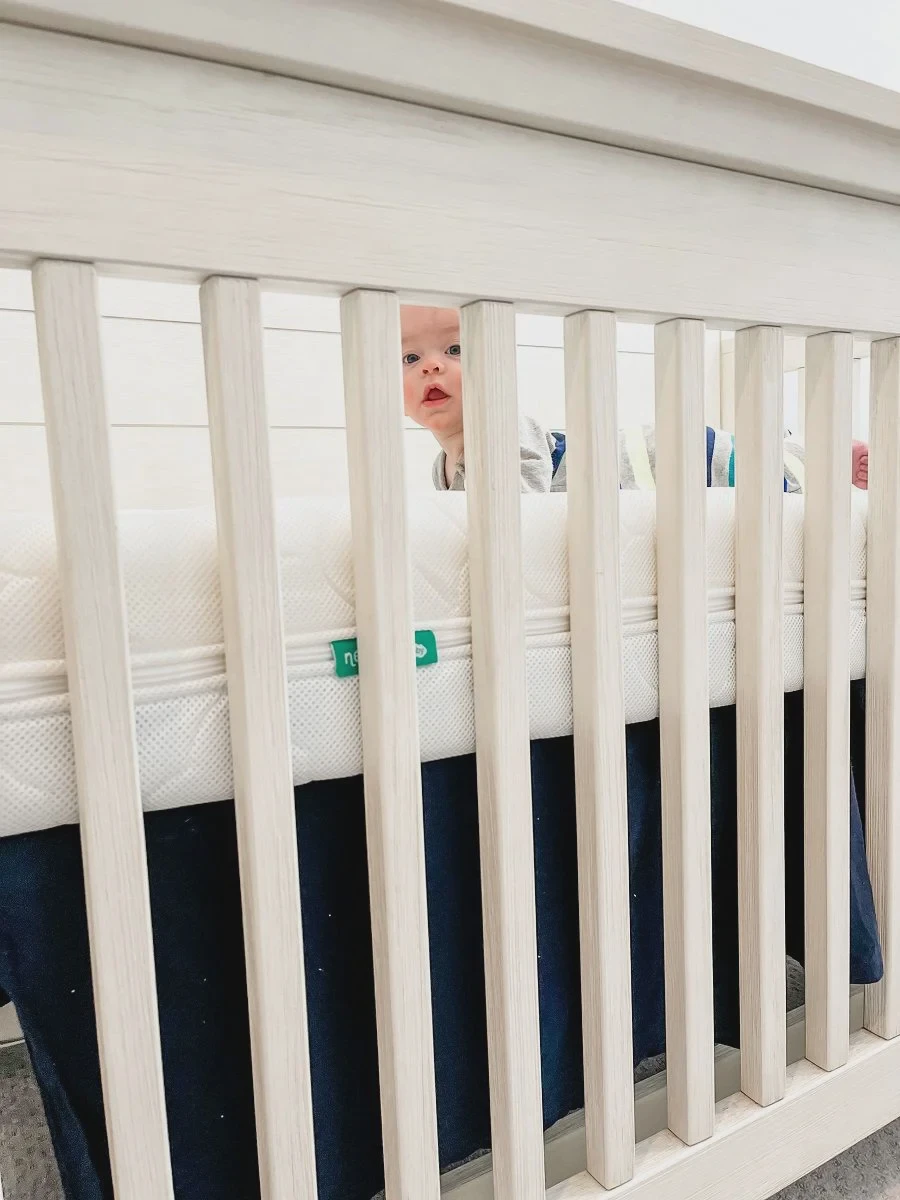
What you'll need
- A free-and-clear mild detergent (no fragrance, no optical brighteners, no fabric softener).
- Two clean microfiber cloths.
- A bathtub or stand-up shower for the core.
- A box fan or open window for drying.
- Optional: an enzyme stain spray formulated for baby/pet fabrics.
Step 1 - Wash the cover
- Unzip the cover all the way around the perimeter and slide it off the core.
- Pre-treat any visible stains by dabbing them with cool water and a drop of mild detergent. Let it sit 5 minutes.
- Machine wash on the gentle/delicate cycle in cold water. Wash the cover by itself - it's a balanced load and avoids snags.
- Tumble dry on low/cool or hang to dry. High heat will shrink the cover and warp the elastic, after which it won't sit flat on the core.
- Don't bleach, iron, or use fabric softener. Softener clogs the breathable mesh that makes Newton mattresses safer for infants.
Step 2 - Wash the Wovenaire core
The core is the white spaghetti-like layer underneath the cover. It's roughly 90% air, which is what makes it breathable - and also why standard washing-machine agitation is a bad idea. The official method is to rinse it in your shower or tub.
- Stand the core upright in a clean tub or stall shower.
- Run cool water over both sides until it runs clear. For seasonal deep cleans, work a small amount of mild soap into the surface with your hand, then rinse thoroughly.
- When rinsing is done, lift the core out, stand it on its long edge, and gently rock and shake it. A surprising amount of water is trapped between the spirals - keep going until it stops dripping.
- Move the core to a well-ventilated room. Stand it on its side (never flat) so air flows through both faces. A box fan blowing across it cuts drying time roughly in half.
- Expect 4-8 hours of drying time. In humid summer weather, it can take overnight. The core is fully dry when both faces feel cool and resilient with no damp spots when pressed.
- Reassemble only when the core and the cover are both bone dry. Trapped moisture causes mildew, especially under the waterproof encasement if you use one.
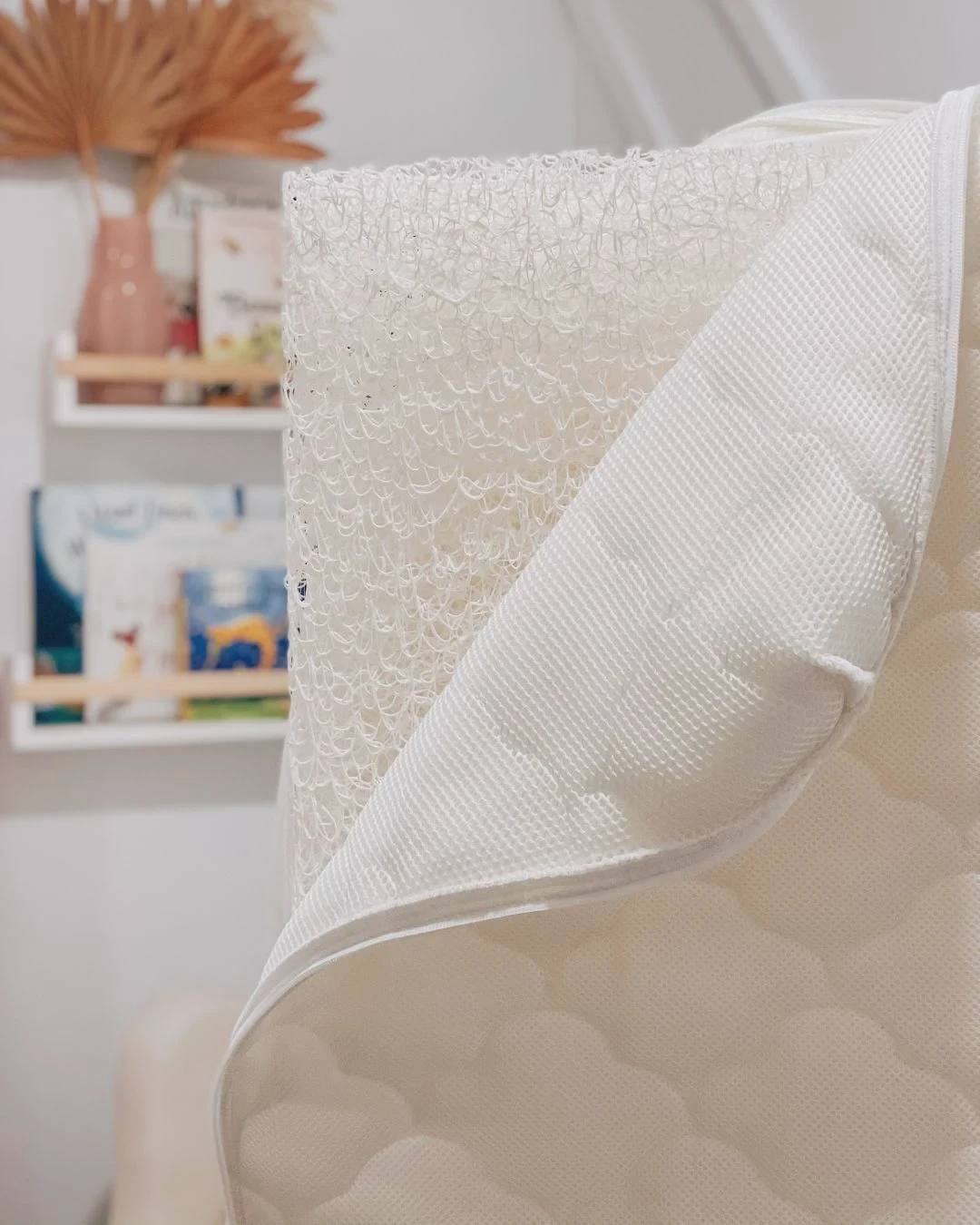
Step 3 - Spot-clean stains between deep cleans
For day-to-day messes you don't need to wash the whole mattress. Catch the stain early and most clean up cleanly with cool water alone. Always blot inward toward the center of the stain - rubbing pushes it deeper into the fibers.
Pee
Strip the cover, blot the wet area on the core with a dry cloth, then rinse that section under cool running water. For dried-on smell, an enzyme cleaner labeled for baby or pet fabrics works better than vinegar - enzymes break down uric acid, while vinegar only masks it temporarily.
Same airflow rules apply across mattress types - here's the full guide on how to dry a bed mattress fast.
Spit-up and milk
Blot first, then dab with a cool water + mild detergent solution. Rinse the area under cool water and air-dry. Don't let milk dry in - it's the most common cause of lingering odor.
Blood
Cool water only. Hot water sets blood proteins. If the stain is dried in, dab with a 3% hydrogen peroxide solution diluted 1:1 with cool water, then rinse. Test on a hidden spot first.
Poop
Scoop solids first. Rinse the area under cool water from the back of the core through to the front (gravity does most of the work). Follow with a mild detergent rinse and air dry on its side.
How often should you wash it?
- Cover: every 2-4 weeks, or any time it's visibly soiled. It's a fast cycle.
- Core: seasonally (every 3 months) is plenty for routine maintenance, plus any time a leak gets through the cover.
- Encasement (if used): follow the same routine as the cover - cold gentle wash, low or no heat to dry.
Speeding up the drying time
Drying is the longest part of the process and the biggest temptation to take a shortcut. Don't. The fastest safe method is a box fan blowing across the side-standing core in a room with the door open. Pressing the core between dry towels also pulls a lot of water out before you stand it up.
What you cannot do: hairdryers, heaters, ovens, dryers, or direct sun. Anything above roughly body temperature softens the Wovenaire fibers and they'll re-set in compressed shapes. The mattress will look fine but lose firmness in those spots - a real safety issue with infants.
Do
- Use cool or cold water for everything - cover, core, and spot cleaning.
- Stand the core on its side to dry, with airflow on both faces.
- Wash the cover separately on gentle/delicate to keep elastic intact.
- Pre-treat stains with cool water and mild detergent before washing.
- Check that the core is fully dry before reassembling - press-test both faces.
Don't
- Don't use hot water, high-heat dryers, hairdryers, or direct sunlight.
- Don't put the Wovenaire core in a washing machine - agitation deforms it.
- Don't use bleach, fabric softener, or scented detergents.
- Don't dry the core flat - both faces need air to prevent mildew.
- Don't iron the cover - heat ruins the breathable mesh layer.
Frequently asked questions
Is the Newton mattress fully washable?
Yes. Both the polyester cover and the Wovenaire core are designed to be cleaned with water. The cover goes in your washing machine; the core gets rinsed in the shower or tub. The only universal rule is no heat.
How long does a Newton mattress take to dry?
Plan on 4-8 hours for the core in average indoor conditions. With a box fan blowing across it in a ventilated room, 3-4 hours is realistic. In humid summer weather, leave it overnight. The cover dries in under an hour on a tumble-dry-low cycle.
Can I put the Newton core in the washing machine?
No. The Wovenaire core is roughly 90% air and machine agitation crushes the spirals into permanent flat spots. Always rinse it by hand in a tub or shower.
How do I get pee out of a Newton mattress?
Blot the wet area, rinse with cool water through the core, then treat any lingering smell with an enzyme cleaner made for baby or pet fabrics. Vinegar masks the odor briefly but doesn't break down the uric acid that causes it. Air-dry the core on its side.
Can I use a hairdryer to dry my Newton mattress faster?
No. Even on a cool setting, hairdryers concentrate enough heat to soften the Wovenaire fibers. They re-set in compressed shapes and you'll feel firmness loss in those spots. A box fan is the fastest safe option.
How often should I wash my Newton crib mattress?
The cover gets washed every 2-4 weeks or any time it's visibly soiled. The core only needs a deep rinse seasonally - every 3 months - or whenever a leak gets through the cover. Spot-clean any stains as they happen.
Do I need a waterproof encasement on a Newton mattress?
It's optional. A breathable, Newton-compatible encasement reduces how often you need to deep-clean the core, but the mattress is designed to be safe and washable on its own. Skip waterproof covers that aren't certified breathable for infants - they cancel out the airflow that makes Newton mattresses different in the first place.