There are dozens of bed sizes, but only about 14 distinct bed frame types worth knowing - and the right one depends on the room you're filling, the mattress you already own, and how much storage or guest capacity you need.
This guide is an encyclopedic walkthrough of every common bed-frame style you'll see in showrooms and online. For each type you'll find a plain-English description, pros and cons, the rooms and use cases it actually fits, a typical price band, and the mattress compatibility rules that quietly decide whether your new frame will void a mattress warranty.
What counts as a "type of bed"?
Bed types refer to the frame and base - not the mattress on top. The Sleep Foundation groups frames into platform, panel, and adjustable as the three foundational categories, with everything else (sleigh, canopy, bunk, Murphy, daybed, etc.) layered on top as stylistic or functional variants. Mattress compatibility comes down to two specs almost every retailer publishes: slat spacing (the gap between support slats) and foundation type (slat, solid platform, box spring, or adjustable base).
A few quick rules of thumb that apply to nearly every frame in this guide:
- Memory-foam and hybrid mattresses require slat spacing of 3 inches or less to avoid sagging and warranty voids - Saatva, Casper, and Purple all publish this minimum.
- Innerspring mattresses generally need a box spring or solid foundation; placing one on widely-spaced slats accelerates coil failure.
- Latex mattresses are heavy (often 100+ lb in queen) and need either a solid platform or a slatted base rated for 800+ lb of evenly distributed weight.
- Adjustable bases require a flexible mattress - almost always all-foam, latex, or a hybrid marketed as "adjustable-compatible." Pocketed-coil hybrids work; bonnell-coil innersprings will crack.
Frame choice also has to match standard mattress sizes: Twin (38 × 75 in), Twin XL (38 × 80 in), Full (54 × 75 in), Queen (60 × 80 in), King (76 × 80 in), and California King (72 × 84 in). The same frame style is offered in three or four of these sizes, so the practical question is whether the right size will fit your room and your existing mattress.
With that out of the way, here's the encyclopedic list.
1. Platform bed
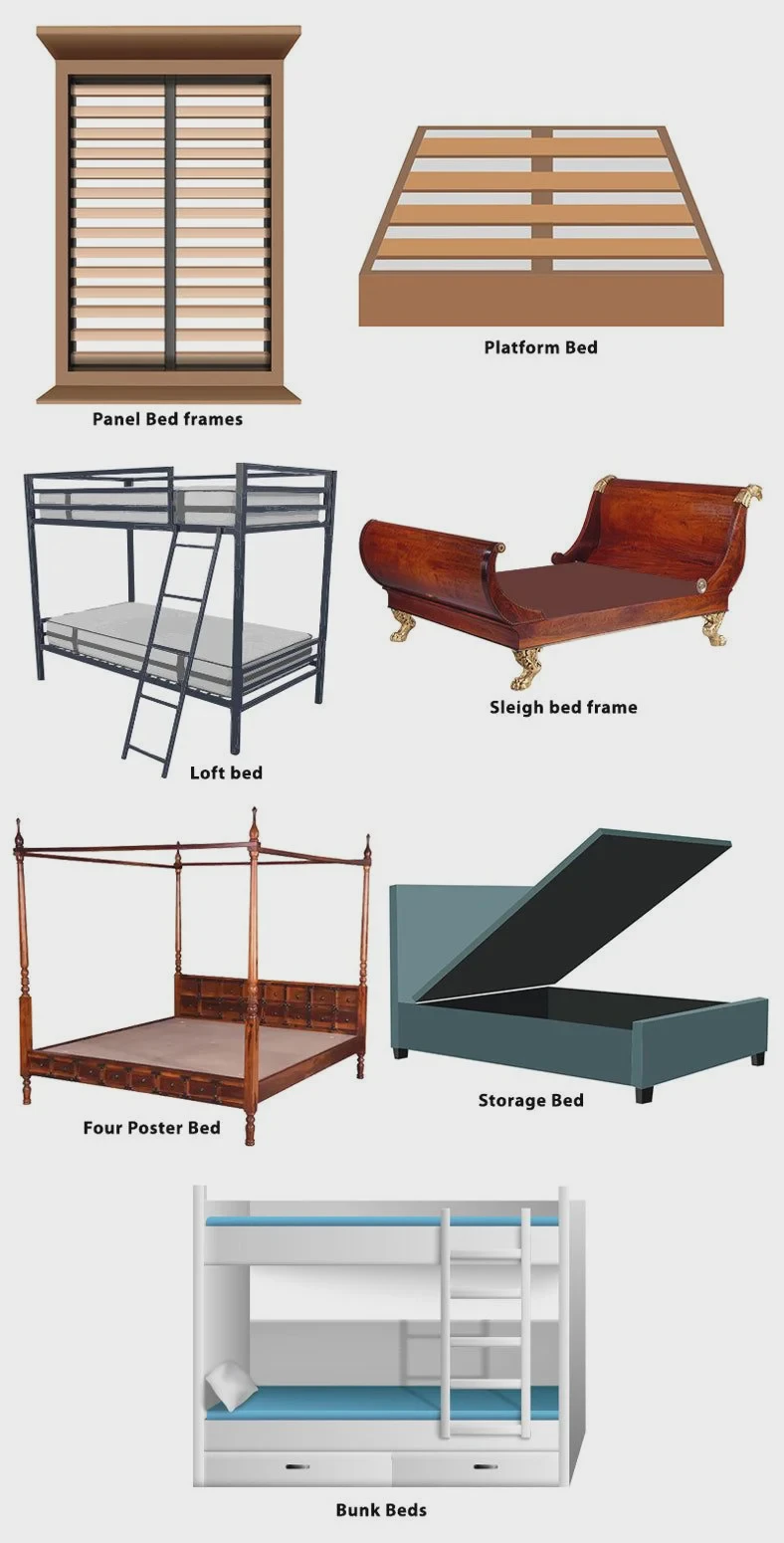
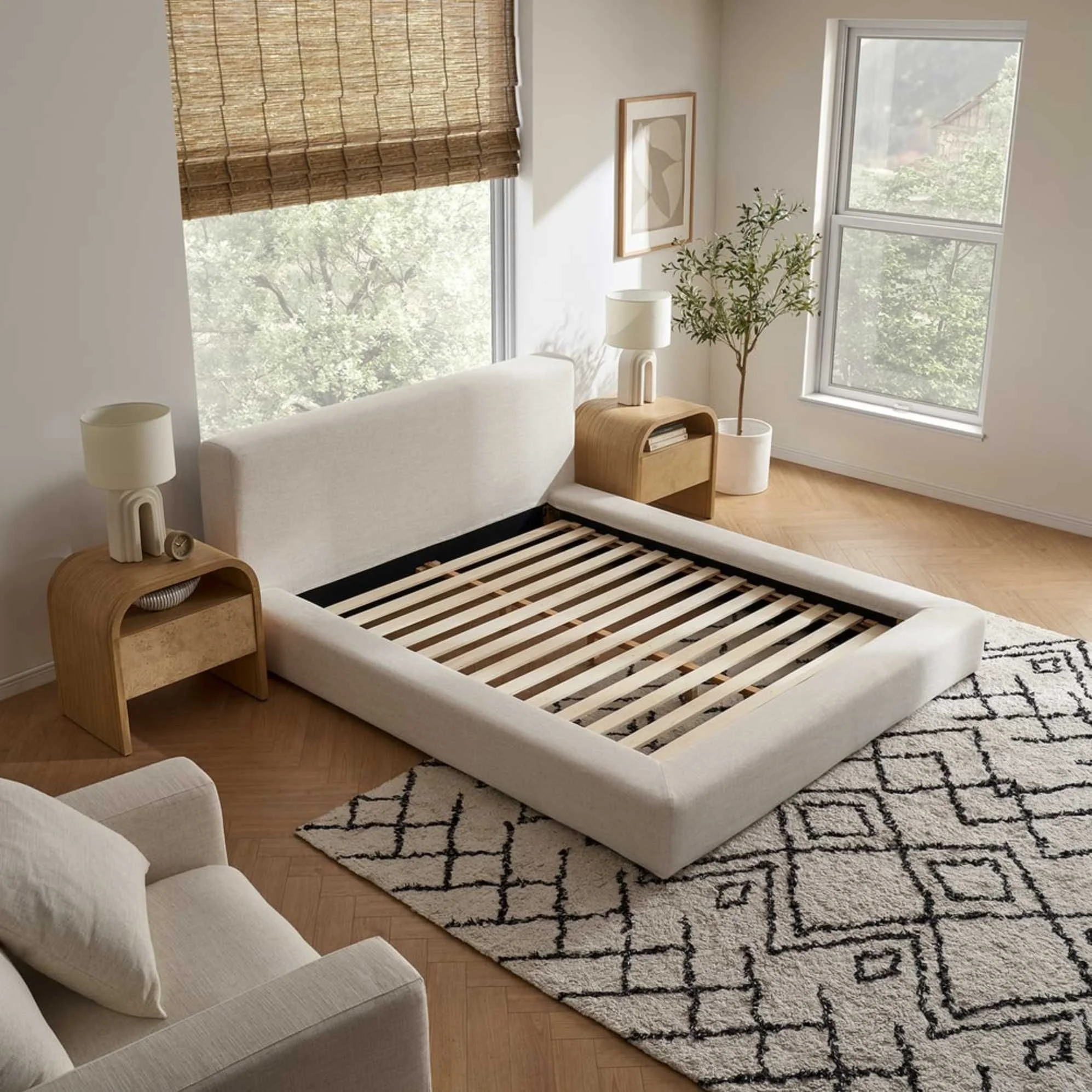
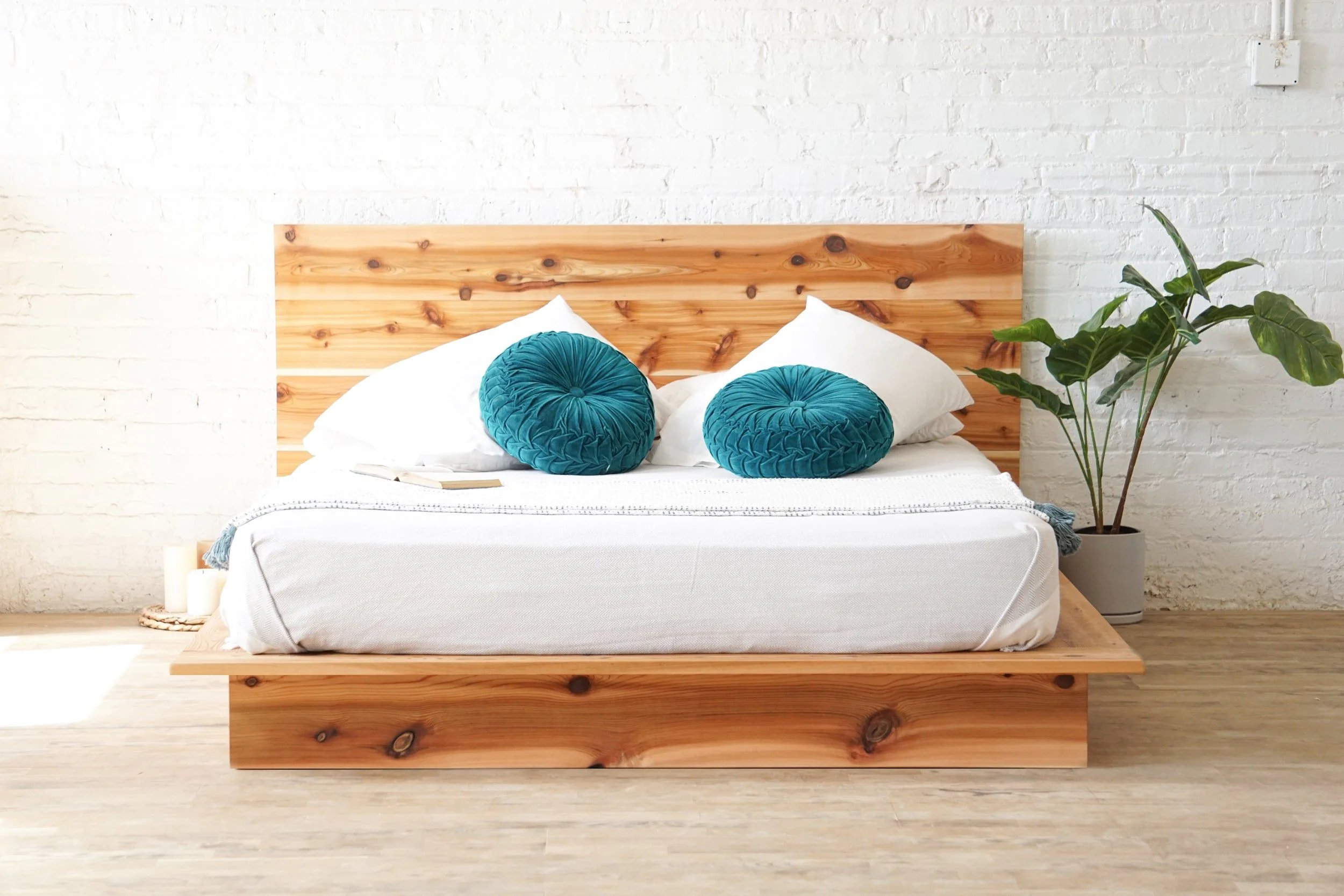
A platform bed has a built-in slat or solid base that supports the mattress directly - no box spring required. It's the most common modern frame and the default if you've bought a mattress online in the last decade.
Pros: Lower cost (no box spring), lower profile, often includes built-in storage, excellent airflow with slatted versions. Cons: Lower height can be hard for older sleepers to get out of; cheaper slat spacing sometimes exceeds the 3-inch foam-mattress maximum. Best for: Modern bedrooms, all-foam and hybrid mattress owners, renters who move often. Typical price: $200-$1,500 for queen. Mattress compatibility: Works with foam, hybrid, and latex if slat spacing is ≤ 3 inches. Innerspring buyers should confirm slat spacing or add a bunkie board.
2. Panel bed
A panel bed is the traditional frame with a headboard, footboard, and side rails that hold a separate box spring and mattress. It's what most people picture when they hear "bed frame."
Pros: Classic look, taller mattress height (good for ease of entry/exit), pairs with any mattress when used with the matching foundation. Cons: Requires a box spring or foundation (extra cost), heavier to assemble, less under-bed storage. Best for: Traditional and transitional bedrooms, innerspring mattress owners, master bedrooms. Typical price: $400-$3,000 for queen frame; box spring adds $150-$300. Mattress compatibility: Universal - but the mattress sits on the foundation, not the rails directly. Skipping the box spring usually voids warranty.
3. Sleigh bed
A sleigh bed has headboards and footboards that curve outward like the runners of a sled. Traditional sleigh beds are wood (mahogany, cherry, oak); modern interpretations use upholstery or metal.
Pros: Statement piece, sturdy hardwood construction, period-appropriate for traditional and Mission-style rooms. Cons: Heavy, expensive, the curved footboard reduces usable mattress length and steals under-bed storage. Not a good fit for tall sleepers - the footboard cuts off the last few inches. Best for: Traditional master bedrooms with at least 12 × 12 ft of floor space. Typical price: $800-$4,000 for queen. Mattress compatibility: Designed around a box-spring panel-bed setup. Some modern sleigh frames include slat platforms - check the listing.
4. Canopy bed
Canopy beds extend the four-poster idea by adding horizontal beams across the top of the posts, typically with fabric draping. The canopy itself doesn't change support - it's a styling layer over what's usually a panel-bed base.
Pros: Architectural drama, great for high-ceiling rooms, fabric provides light blocking and acoustic dampening. Cons: Requires 9-ft+ ceilings to look right, fabric collects dust, expensive, harder to make daily. Best for: Large primary bedrooms, vacation properties, rooms where the bed is the focal point. Typical price: $1,000-$6,000 for queen. Mattress compatibility: Same as panel beds - usually requires a foundation or box spring.
5. Four-poster bed
A four-poster bed has tall vertical posts at each corner without the horizontal canopy beams. It's the canopy bed's lower-maintenance cousin.
Pros: Strong vertical presence, traditional and farmhouse-friendly, works in narrower rooms than canopy beds. Cons: Posts make tight corners harder to navigate; tall posts can look out of scale in rooms with 8-ft ceilings. Best for: Traditional, colonial, and farmhouse bedrooms with at least 9-ft ceilings. Typical price: $700-$3,500 for queen. Mattress compatibility: Panel-bed-style - designed for a foundation or box spring.
6. Daybed
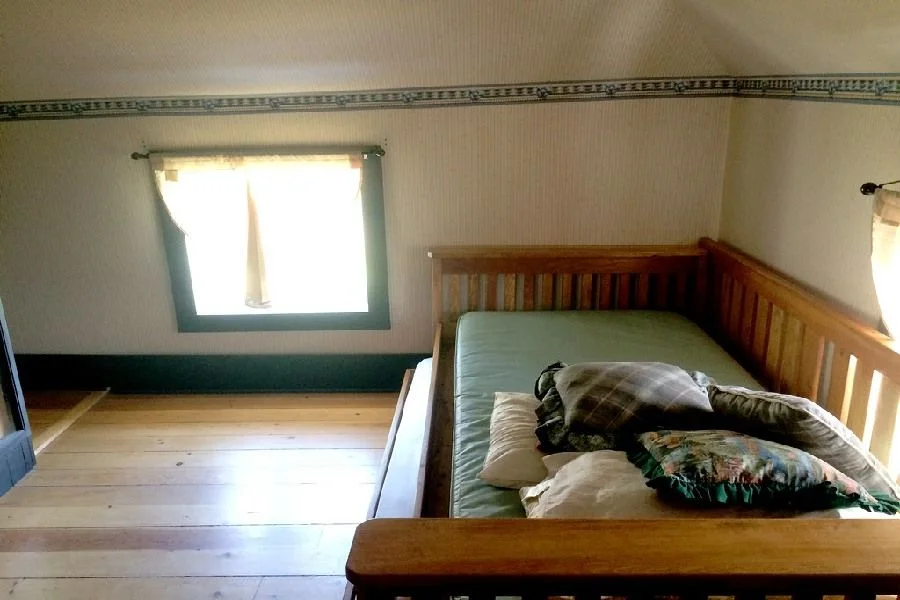
A daybed has a frame on three sides (back and two ends) so it works as a sofa during the day and a single bed at night. Most daybeds use twin-size mattresses; some take full.
Pros: Doubles as seating, fits home offices and guest rooms, often comes with a pull-out trundle for a second sleeper. Cons: Limited to twin or full mattress sizes, lower weight capacity than a standard bed, the "sofa" experience is firmer than a real sofa. Best for: Studio apartments, home offices that double as guest rooms, kids' rooms. Typical price: $200-$1,200. Mattress compatibility: Twin or full. Slatted bases accept foam or hybrid; metal mesh bases need a thicker foundation-style mattress.
7. Trundle bed
A trundle bed is a secondary low bed that rolls out from beneath a primary bed (often a daybed or captain's bed). Pop-up trundles raise to match the height of the host frame for a single larger sleeping surface.
Pros: Doubles guest capacity in the same footprint, hides flat under the bed, kids love them for sleepovers. Cons: Pull-out trundles are very low to the floor (uncomfortable for adults), 8-inch mattress height cap, 250-lb weight limit on most pop-ups. Best for: Kids' rooms, guest rooms, small apartments that occasionally host overnight guests. Typical price: $150-$700 for the trundle unit. Mattress compatibility: Twin or twin XL only; mattress must be ≤ 8 inches thick to clear the host frame.
8. Bunk bed
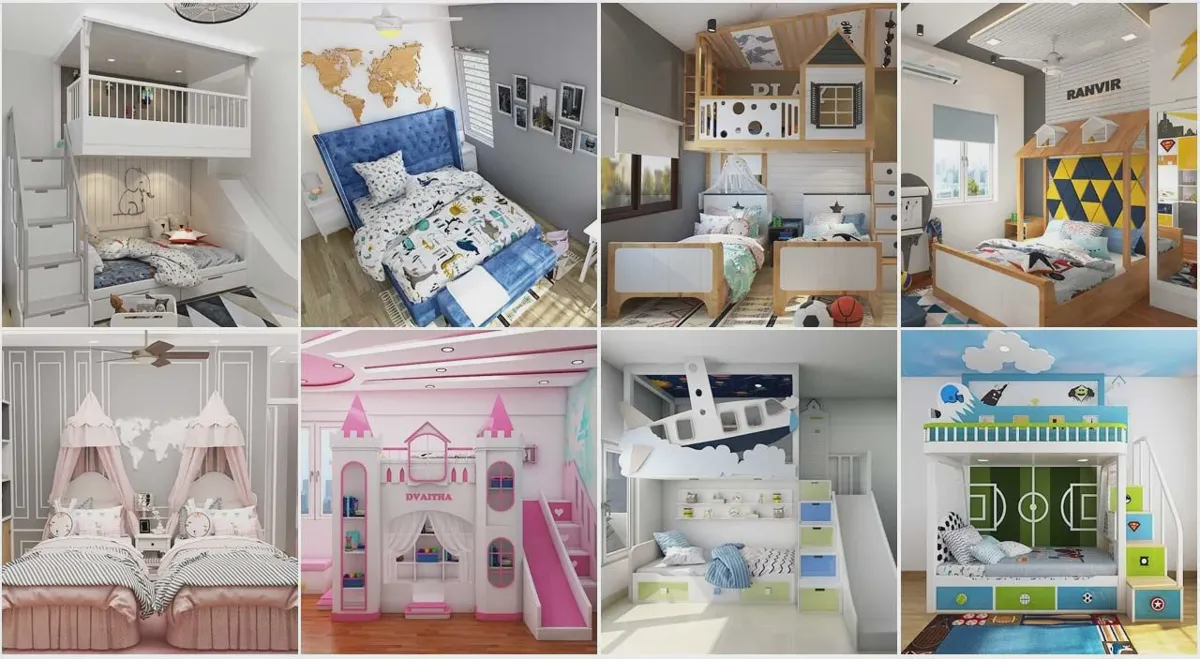
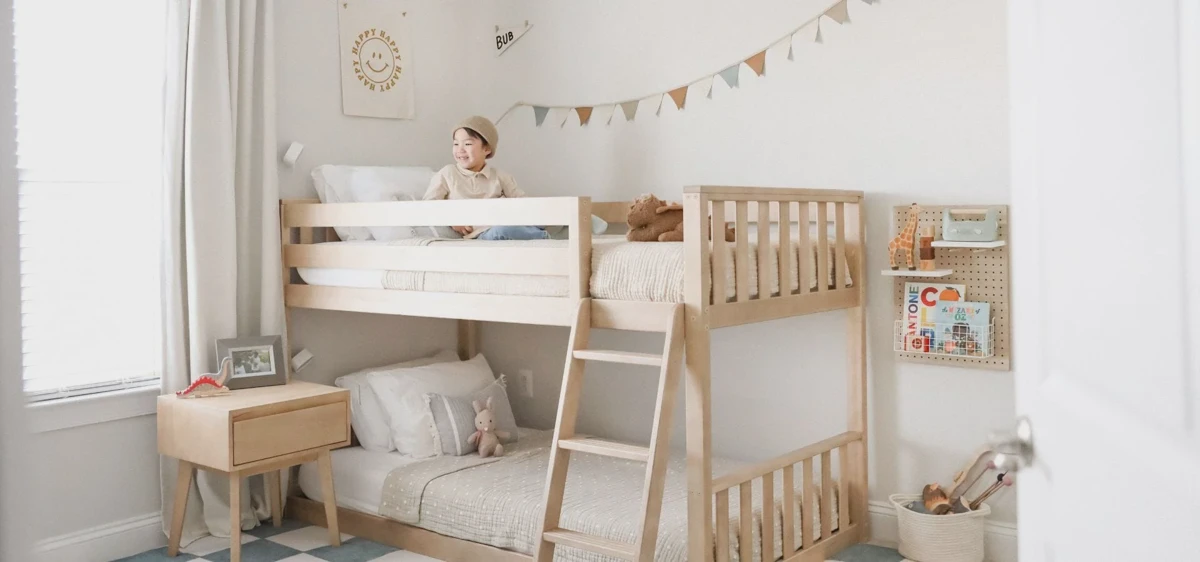
A bunk bed stacks two single mattresses vertically with a ladder for upper-bunk access. Variants include twin-over-twin, twin-over-full, full-over-full, twin-over-futon, and L-shaped configurations.
Pros: Doubles sleeping capacity in one room's footprint, ideal for siblings sharing a room or vacation rentals. Cons: Upper bunk has 6-inch mattress thickness limit (above the guardrail line) per CPSC safety standard 16 CFR 1213, age 6+ required for top bunk, harder to make. Best for: Kids' rooms with 2+ children, vacation cabins, hostels, cabin-style guest rooms. Typical price: $300-$1,800. Mattress compatibility: Top bunk mattress must be ≤ 6 inches thick (low-profile foam or innerspring); bottom bunk is unrestricted.
9. Loft bed
A loft bed elevates a single mattress on tall posts, leaving the space underneath open for a desk, dresser, or seating. Picture a bunk bed with the lower bunk removed. The reclaimed footprint is usually configured one of three ways: a study desk and chair, a play or seating area, or a second twin bed positioned crossways for a sibling or guest.
Pros: Reclaims roughly 30 sq ft of floor space - game-changing in studios and dorm rooms. Same 6-inch top-mattress rule as bunk beds. Cons: Climbing in and out gets old, low ceilings make it claustrophobic, vibrates if the mattress shifts. Best for: Dorms, studio apartments, kids' rooms that double as study spaces. Typical price: $300-$1,500. Mattress compatibility: Twin or twin XL, ≤ 6 inches thick.
10. Captain's bed (storage bed)
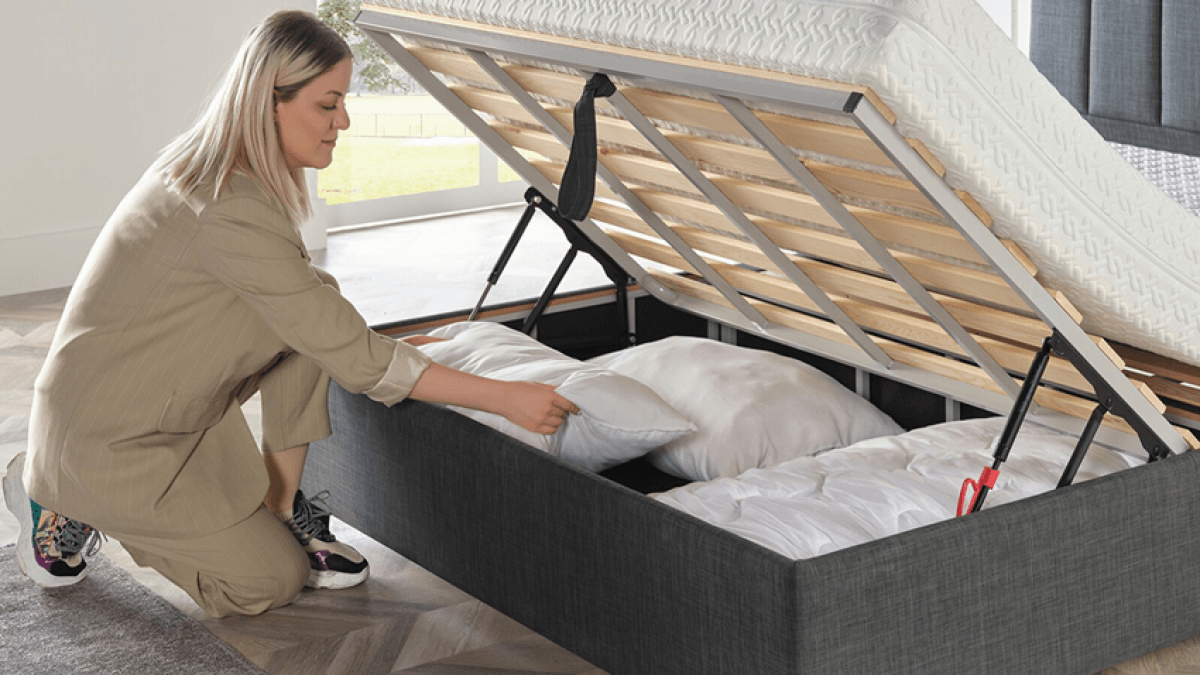
A captain's bed is a platform bed with built-in drawers or cabinets under the mattress, named after the high-storage berths on ships. Modern variants include hydraulic-lift "ottoman" beds where the entire mattress lifts to reveal a single deep cavity.
Pros: 4-8 cubic feet of dedicated drawer storage, especially valuable in homes without closets, no dust bunnies under the bed. Cons: Heavy, harder to move, drawers can be blocked by tight room layouts, hydraulic lifts add $300-$600. Best for: Small bedrooms, kids' rooms, master bedrooms with limited closet space. Typical price: $400-$2,500. Mattress compatibility: Standard slat platform - foam, hybrid, latex all work if spacing is ≤ 3 inches.
11. Murphy bed (wall bed)
A Murphy bed folds vertically into a wall cabinet when not in use, freeing the floor space entirely. Modern Murphy units integrate desks, sofas, or bookcases that stay in place when the bed is down.
Pros: Reclaims 100% of the bed's floor space, perfect for studios and home offices, modern mechanisms make daily operation effortless. Cons: Expensive ($1,500-$5,000 installed), requires wall anchoring, mattress thickness is mechanism-limited. Best for: Studio apartments, home offices that occasionally host guests, multi-use rooms in small homes. Typical price: $1,500-$5,000 installed. Mattress compatibility: Most Murphy units cap mattress thickness at 10-12 inches and require an all-foam or thinner hybrid. Innerspring mattresses are usually too heavy for the lift mechanism.
12. Adjustable bed (adjustable base)
An adjustable bed is a motorized base that elevates the head and feet independently, often with massage, USB ports, and zero-gravity presets. It replaces a foundation under any compatible mattress.
Pros: Clinically useful for snoring, GERD, sleep apnea, and circulation issues, excellent for reading or watching TV in bed, removes the need for stacked pillows. Cons: Expensive ($800-$3,500), requires a flexible mattress, heavier than a standard foundation, the motor noise is audible. Best for: Anyone with reflux, snoring, lower back pain, or circulation issues; couples who use the bed for non-sleep activities. Typical price: $800-$3,500. Mattress compatibility: Foam, latex, and pocketed-coil hybrids labeled "adjustable-compatible." Bonnell-coil innersprings will damage the unit.
13. Futon
A futon is a convertible frame that flips between a sofa and a flat bed, typically using a single thick mattress that doubles as both seat cushion and sleeping surface. Western futons are firmer than dedicated mattresses; traditional Japanese futons are floor mats stored away during the day.
Pros: Cheapest dual-purpose option, light enough for one person to move, covers wash easily. Cons: Comfort tradeoff in both modes - neither a great sofa nor a great bed, lifespan typically 3-5 years, mechanisms wear out. Best for: Dorms, first apartments, guest rooms, family rooms that occasionally host overnight guests. Typical price: $150-$700. Mattress compatibility: Uses a dedicated futon mattress - standard mattresses won't fold.
When two adults share a bed with different firmness needs, the trade-off is a king vs split king.
14. Hammock bed
A hammock bed suspends the sleeper in fabric or rope anchored at two points, either ceiling-mounted or in a freestanding stand. Outside of camping, hammock beds are a niche choice but have a small clinical literature behind them.
Pros: A 2011 study in Current Biology found gentle rocking deepens sleep stages; no pressure points, easy to move outside. Cons: Almost impossible to share with a partner, hard on people with back issues, requires solid ceiling anchors or a wide stand, no bedding stays put. Best for: Single sleepers, screen porches, vacation cabins, minimalist studios. Typical price: $80-$400. Mattress compatibility: None - the hammock fabric is the sleeping surface.
Quick reference
Bed frame types at a glance
Skim view of the most common frame types, who they suit, and their typical price band for queen size.
| Frame type | Best for | Footprint | Price (queen) | Mattress fit |
|---|---|---|---|---|
| $200-$1,500 | ||||
| $400-$3,000 | ||||
| $800-$4,000 | ||||
| $1,000-$6,000 | ||||
| $700-$3,500 | ||||
| $200-$1,200 | ||||
| $150-$700 | ||||
| $300-$1,800 | ||||
| $300-$1,500 | ||||
| $400-$2,500 | ||||
| $1,500-$5,000 | ||||
| $800-$3,500 | ||||
| $150-$700 | ||||
| $80-$400 |
Price bands reflect mid-range queen frames as of 2026. Mattress compatibility depends on slat spacing - see the relevant section above for each frame type.
How to actually choose between them
The bed-frame decision usually comes down to four constraints in this order:
- Mattress you already own. If you have a memory-foam or hybrid mattress, you need a frame with slats spaced ≤ 3 inches apart, or a solid platform. That eliminates most cheap metal frames immediately.
- Ceiling height. Anything with vertical structure (canopy, four-poster, loft, bunk) needs at least 9-ft ceilings to look right and stay safe. Standard 8-ft ceilings constrain you to platform, panel, sleigh, daybed, captain's, Murphy, adjustable, and futon.
- Room footprint. Sleigh and canopy beds eat 1-2 ft of floor space beyond the mattress dimensions. Murphy and futon beds reclaim that space. Captain's and storage beds create storage where there wasn't any.
- Shared use. If the room doubles as an office or guest space, Murphy, daybed, futon, and trundle dominate. If it's a dedicated bedroom, panel and platform beds give the most flexibility.
Once you've narrowed by those four, style preference (modern, traditional, farmhouse, industrial) breaks the final tie.
Frequently asked questions about bed types
What is the most popular type of bed?
Platform beds are the most popular type sold today, largely because they don't require a box spring and pair naturally with the foam and hybrid mattresses that dominate online sales. Panel beds remain the traditional standard in furniture stores.
Do platform beds need a box spring?
No. Platform beds have built-in slat or solid bases that support the mattress directly. Adding a box spring is unnecessary and raises the bed to an awkward height. Just confirm slat spacing is 3 inches or less if you have a foam or hybrid mattress.
What's the difference between a panel bed and a platform bed?
A panel bed has a headboard, footboard, and side rails that hold a box spring + mattress; a platform bed has built-in slats or a solid deck and supports the mattress directly. Panel beds sit higher; platform beds are lower-profile and skip the box spring cost.
Can adults sleep on a trundle bed long-term?
Trundle beds are designed for guests and kids, not nightly adult use. Most pop-up trundles cap weight at 250 pounds and mattress thickness at 8 inches. For an adult guest staying more than a few nights, a daybed with a pop-up trundle is a more comfortable choice than a pull-out trundle.
Are bunk beds safe for adults?
The CPSC bunk-bed standard (16 CFR 1213) is written around child safety, but adult-rated heavy-duty bunk beds exist with weight capacities of 800-1,000 pounds per bunk. Standard kids' bunks usually cap the top bunk at 250 pounds and require the mattress to be 6 inches or less so the guardrail still rises 5 inches above the sleeping surface.
What kind of bed is best for a small bedroom?
Captain's beds (built-in drawers), Murphy beds (fold into the wall), platform beds with under-bed clearance, and loft beds (free up floor space below) all work well in rooms under 100 square feet. Avoid sleigh, canopy, and four-poster frames - they need at least 12 by 12 feet to look right.
Can you put any mattress on an adjustable base?
No. Adjustable bases require a flexible mattress - usually all-foam, latex, or a hybrid marketed as 'adjustable-compatible.' Bonnell-coil innersprings have rigid coil networks that crack when the base flexes. Most major brands print compatibility on the mattress law tag or product page. <!-- CTA: Need help matching a frame to your mattress? -->